
Engineering the Unthinkable: When the Porsche Cayenne Electric Paced the Stratolaunch Roc
This was not your typical, gimmicky plane-versus-car drag race orchestrated for reality television. This was a highly calibrated, precision-driven engineering exercise. Porsche took the Porsche Cayenne Electric directly to the storied runways of the Mojave Air and Space Port. The objective? To rigorously test the vehicle’s high-speed chassis dynamics and aerodynamic stability while the Stratolaunch team performed a highly technical series of takeoffs and landings with its gargantuan Roc aircraft.
For those of us who have spent the last decade analyzing the intersection of automotive engineering and advanced mobility, the boundaries between terrestrial performance and aerospace innovation have always been clearly defined. Airplanes and automobiles occupy the same realm of motion for no more than a fleeting minute, usually separated by fences, tarmac protocols, and vast differences in operational velocity. Even rarer is the occasion when a production car is tasked with traveling side-by-side with an experimental aircraft. However, in a groundbreaking display of high-speed stability and raw electric power, the latest test of the Porsche Cayenne Electric has emphatically shattered these traditional rules of engagement.
As the world’s largest flying plane, the Stratolaunch Roc is an awe-inspiring testbed aircraft used by the hypersonic flight testing firm to launch rocket-powered aircraft into the stratosphere. Porsche, deeply invested in pushing the envelope of luxury electric SUV capabilities, wanted to see if its most powerful model ever could flawlessly keep up with an aircraft powered by six massive Pratt & Whitney engines.
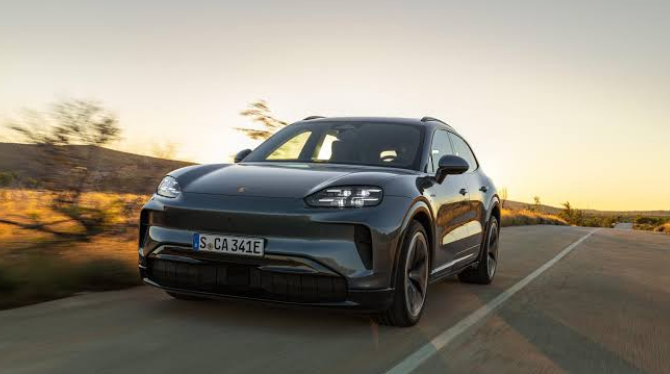
Redefining High-Performance EV Capabilities
To understand the magnitude of this event, one must first understand the machinery involved. The Porsche Cayenne Electric is not merely a battery-powered iteration of a legacy SUV; it is a profound reimagining of what a high-performance EV can achieve. With a staggering 1139 horsepower on tap, this vehicle represents a monumental leap in electric vehicle battery technology and powertrain integration.
Historically, pacing an aircraft of the Stratolaunch Roc’s magnitude would require a specialized, highly modified supercar, stripped of its interior and tuned specifically for high-speed runway runs. The fact that Porsche utilized a luxury electric SUV for this task speaks volumes about the current state of EV engineering. At the helm of the Porsche Cayenne Electric was former Porsche factory driver Patrick Long, a veteran who intimately understands the nuanced feedback of a chassis operating at its absolute limits.
During the extensive testing protocol at Mojave, the Porsche Cayenne Electric paced the Stratolaunch Roc through two grueling takeoff runs, effortlessly exceeding speeds of 160 mph. Matching the rotation speed of a six-engine aircraft is a feat that demands instantaneous torque delivery—a hallmark of top-tier electric motors. Unlike internal combustion engines, which must climb through a rev range to reach peak power, the Porsche Cayenne Electric delivers its 1139 horsepower with absolute immediacy, allowing Patrick Long to perfectly mirror the aircraft’s aggressive acceleration curve down the tarmac.
Threading the Needle: Aerodynamics and High-Speed Stability
One of the most fascinating aspects of this synchronized testing stunt was the aerodynamic interplay between the SUV and the aircraft. As Long paced the Stratolaunch Roc while it came in for landing, he performed a maneuver that few drivers will ever experience: threading the Porsche Cayenne Electric directly between the aircraft’s massive twin-fuselage setup.
At speeds exceeding 160 mph, aerodynamic efficiency and downforce are critical for survival, let alone stability. An aircraft displacing that much air generates immense wake turbulence. However, Porsche engineers and the Stratolaunch flight crew discovered a unique aerodynamic phenomenon during the runs. The Porsche Cayenne Electric actually benefited from an aerodynamically quiet area—a localized slipstream—nestled directly between the two fuselages of the aircraft.
This distinct “quiet zone” allowed the vehicle’s active aerodynamics, including its adaptive rear spoiler and active cooling flaps, to manage airflow efficiently without fighting the violent crosswinds typically generated by an aircraft’s wingtips. For a high-performance EV, minimizing drag at top speed is vital for maintaining battery efficiency and preventing thermal degradation. The ability of the Porsche Cayenne Electric to remain utterly planted on the runway, with minimal steering corrections required, highlights the brilliance of its advanced torque vectoring system and active air suspension.
“I had no doubts about the power of the Cayenne, but I was a bit apprehensive regarding how reactive the car would be to inputs, especially at speed,” Long noted after the runs. For an industry expert, this quote is telling. When a vehicle crests 150 mph, every millimeter of steering input is magnified. The suspension geometry must perfectly mitigate unsprung mass, while the electric power steering must provide hyper-accurate feedback. The Porsche Cayenne Electric executed this flawlessly, proving that a heavy luxury electric SUV can dance with the agility of a track-focused sports car.
The Logistics of Extreme Aerospace and Automotive Collaboration
Executing a test of this magnitude requires a logistical choreography that borders on the obsessive. When dealing with hypersonic flight testing firms and high-performance EV testing simultaneously, safety protocols are uncompromising. This operation at the Mojave Air and Space Port involved rigorous oversight, including the presence of an on-site FAA coordinator to ensure that the terrestrial vehicle did not interfere with the intricate flight paths of the experimental aircraft.
A critical component of this coordinated stunt was communication. At 160 mph, visual references begin to blur, and closing speeds can be deceptive. To mitigate this risk, the crew chiefs of the six-engined airplane, Shauntel Williams and John McKinney, rode shotgun in the back of the Porsche Cayenne Electric. Outfitted with specialized telemetry and aviation headsets, they maintained constant radio communication with the Stratolaunch flight crew operating hundreds of feet above them.
Patrick Long reflected on this unique challenge: “Surprisingly, the landings were a lot harder to time just right. The plane is so big that you don’t really have effective visual references for timing when to merge with the plane onto the runway. I’m grateful that we had the crew chiefs ride along and communicate directly with the flight crew so we wouldn’t under- or over-shoot the plane.”
This sensory disorientation is a well-documented phenomenon in aerospace pacing. Because the Stratolaunch Roc boasts a wingspan of 385 feet—longer than a professional football field—the human brain struggles to accurately judge its altitude and speed relative to the ground. The crew chiefs inside the Porsche Cayenne Electric acted as human telemetry relays, calling out altitude metrics and airspeed velocities to ensure Long perfectly synchronized the SUV’s speed with the aircraft’s touchdown point.
A Masterclass in Electric Vehicle Battery Technology
Beyond the sheer spectacle of the event, the data harvested from the Porsche Cayenne Electric during these runs offers a profound look into the future of automotive energy management. One of the most critical metrics evaluated by industry analysts during high-speed EV testing is the discharge rate and thermal stability of the battery pack under sustained, extreme load.
Driving a heavy luxury electric vehicle to speeds in excess of 160 mph requires a massive draw of continuous amperage. In earlier generations of EVs, repeating this feat four times consecutively would have likely triggered thermal throttling, a self-preservation mechanism where the vehicle reduces power output to prevent battery overheating. Furthermore, such aggressive runs typically decimate the vehicle’s state of charge (SoC).
Astonishingly, Porsche reported that only 13 percent of the SUV’s battery charge was utilized across the four flat-out runs. This single data point is perhaps the most impressive revelation of the entire Mojave test. It signals a paradigm shift in electric vehicle battery technology and thermal management. To expend only 13 percent of the battery capacity while deploying 1139 horsepower at terminal velocity repeatedly proves that Porsche has achieved an extraordinary level of energy density and cooling efficiency.
The thermal management systems in the Porsche Cayenne Electric utilize advanced liquid cooling circuits that actively pull heat away from the battery cells and the dual electric motors during peak output. By maintaining the battery pack within its optimal temperature window, the vehicle can deliver consistent, repeatable performance without suffering from the dreaded “limp mode” that plagues lesser EVs on the track. For the consumer looking for the best luxury electric cars, this translates directly to reliable, real-world performance, whether overtaking on the highway or navigating steep mountain passes.
The Broader Implications for the Luxury Electric SUV Market
What does pacing a colossal aircraft mean for the everyday consumer? In the automotive industry, the racetrack and the proving grounds serve as the ultimate crucibles for innovation. The extreme stresses applied to the Porsche Cayenne Electric at the Mojave Air and Space Port will directly influence the software algorithms, suspension tuning, and battery safety protocols in the vehicles that eventually roll off the dealership lot.
The luxury electric SUV segment is currently one of the most fiercely competitive arenas in the automotive world. Buyers in this high-CPC demographic demand not only opulence and advanced infotainment but also uncompromised driving dynamics and range assurance. By proving that its flagship EV can withstand the grueling demands of aerospace pacing, Porsche is cementing the Cayenne’s reputation as a vehicle of unimpeachable capability.
Furthermore, this test highlights the shifting paradigm in how we view zero-emission vehicles. Just a few years ago, the conversation surrounding EVs was strictly relegated to range anxiety and charging infrastructure. Today, we are witnessing an era where an electric SUV can seamlessly integrate into the high-stakes environment of hypersonic flight testing. The Porsche Cayenne Electric is not just a participant in this new era; it is actively setting the benchmark.
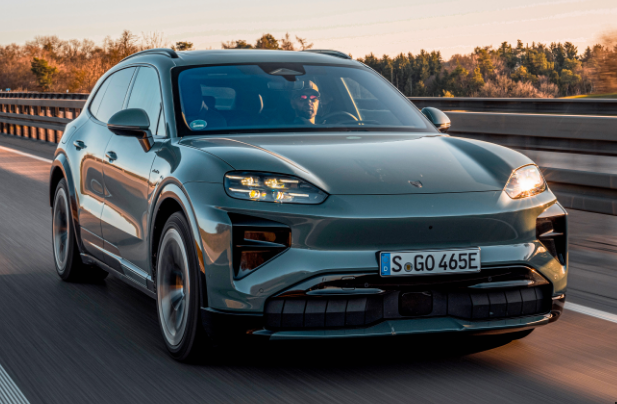
Engineering Harmony: Two Titans of Motion
When you analyze the footage of the Porsche Cayenne Electric threading the twin fuselages of the Stratolaunch Roc, you are witnessing a rare moment of engineering harmony. On one side, you have the pinnacle of contemporary aerospace design—a massive, six-engine leviathan built to conquer the stratosphere and launch the next generation of hypersonic technology. On the other side, you have the pinnacle of terrestrial automotive engineering—a sleek, utterly silent, 1139-horsepower machine representing the zenith of electric vehicle battery technology.
Both machines rely on the absolute manipulation of physics, aerodynamics, and energy transfer to achieve their goals. The fact that they could perform this delicate high-speed ballet on a sun-baked runway in California is a testament to the ingenuity of the engineers behind both projects. The FAA’s seamless integration into the testing protocol also foreshadows a future where terrestrial and aerial mobility may become increasingly intertwined, requiring new frameworks for high-speed ground testing.
Regardless of the specifics of battery energy capacity or the novelty of mixing an experimental aircraft with a high-speed run in an electric SUV, this event is fundamentally about pushing limits. It is the kind of bold, audacious stunt that ignites the imagination and gives us profound hope for the future of transportation. It proves that the transition to electric mobility does not require the sacrifice of soul, performance, or the sheer thrill of speed.
For automotive enthusiasts and aerospace aficionados alike, the sight of the Porsche Cayenne Electric effortlessly matching pace with the Stratolaunch Roc is a definitive statement. It boldly declares that the era of electric dominance is not approaching—it is already here, capable of running side-by-side with the giants of the sky.
If you are ready to experience this cutting-edge fusion of engineering, performance, and luxury for yourself, do not wait on the sidelines of the electric revolution. Visit your local luxury automotive center today to schedule a test drive, and discover firsthand how the groundbreaking technology behind the world’s most advanced high-performance EVs can elevate your daily drive.