



When Aviation Meets Automotive Peak Performance: Deconstructing the Porsche Cayenne Electric High-Speed Stratolaunch Test
High-speed dynamic testing on a open runway is nothing new in the automotive sector, but executing simultaneous telemetry validation alongside the world’s largest aircraft elevates performance engineering to an entirely different standard. When Porsche rolled out the prototype for its flagship battery-electric SUV at the historic Mojave Air and Space Port, the goal was not simply to orchestrate a dramatic visual display. The objective was rigorous baseline validation: putting the all-new Porsche Cayenne Electric through an extreme aerodynamic and high-speed stability evaluation alongside Stratolaunch’s massive six-engine testbed aircraft, the Roc.
Having spent a decade analyzing high-performance vehicle dynamics, track validation protocols, and the rapid evolution of luxury electric vehicle architecture, I view tests like this as essential proof points. In an era where raw zero-to-sixty acceleration has become cheap and ubiquitous across the EV landscape, high-speed stability, thermal management, downforce integration, and high-load power retention are the real markers of elite engineering.
Whether you are evaluating performance metrics for high-end luxury EV leasing, reviewing fleet acquisition options, or assessing how zero-emission technology is rewriting track dynamics, this tandem test between the Porsche Cayenne Electric and a massive dual-fuselage hypersonic launch carrier offers invaluable insight into the future of automotive performance.
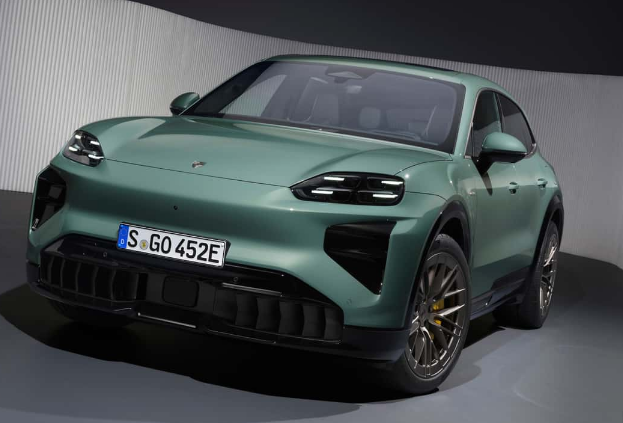
The Mojave Testbed: High-Speed Validation Beyond the Drag Strip
Standard track testing provides vital telemetry regarding lateral grip, braking degradation, and transient weight transfer. However, evaluating a high-end luxury performance SUV at continuous speeds above 160 mph presents a different set of aerodynamic and thermal challenges.
At the Mojave Air and Space Port in California—a legendary complex known for commercial aerospace development and experimental flight testing—Porsche paired the Porsche Cayenne Electric with Stratolaunch’s Roc. Designed to carry and air-launch hypersonic vehicles, the Roc features a colossal 385-foot wingspan powered by six Pratt & Whitney turbofan engines.
Pacing an aircraft of this scale requires matching its precise rotation and touchdown velocities. In automotive engineering terms, this means holding sustained triple-digit speeds while managing localized wind shear, complex turbulence patterns, and surface ground-effect forces generated by the giant aircraft.
Unlike traditional vehicle drag racing gimmicks, this high-speed pacing run served a genuine technical purpose: testing how the electric powertrain, active aerodynamic flaps, and air suspension system maintain vehicle composure and driver control within unstable localized slipstreams.
Unpacking the Powertrain: 1,139 Horsepower Under Extreme Load
To maintain lockstep positioning with a massive jet during takeoff and landing maneuvers, instant throttle response and massive torque overhead are non-negotiable. The Porsche Cayenne Electric delivers a staggering peak output of up to 1,139 horsepower, making it the most powerful production-bound model in Porsche history.
Electric Architecture and Dual-Motor Precision
Instantaneous Torque Delivery: Dual permanent magnet synchronous motors (PMSM) provide direct all-wheel-drive vectoring, delivering immediate response without the boost lag or shift delays associated with internal combustion engines.
800-Volt Charging and Thermal Infrastructure: Sustained high-speed runs generate tremendous thermal load across the lithium-ion cell modules. Porsche’s advanced high-voltage thermal architecture actively cools the battery pack and power electronics, preventing thermal throttling even under full-throttle launches.
Active Suspension Mechanics: Operating at 160+ mph alongside a dual-fuselage aircraft demands continuous dampening adjustments. Porsche’s active air suspension continuously calculates pitch, roll, and ride-height variables to keep the tire contact patch fully planted against high-speed lift forces.
From an engineering perspective, translating over 1,000 horsepower to the tarmac is easy in a straight line on dry pavement. Ensuring that power remains controllable when operating within the turbulent wakes of six massive jet engines is where elite vehicle dynamics engineering proves its worth.
Behind the Wheel: Patrick Long on Precision Merging at 160 MPH
Precision driving at high speeds requires absolute familiarity with mechanical limits, but pacing an aircraft adds an unpredictable dynamic: visual scale distortion. Legendary Porsche factory driver Patrick Long took the wheel for the Mojave test runs, tasked with keeping the Porsche Cayenne Electric aligned directly between the twin fuselages of the Roc during both takeoff runs and landing touch-downs.
“I had no doubts about the power of the Cayenne, but I was a bit apprehensive regarding how reactive the car would be to inputs, especially at speed,” Long noted after the exercise.
During the landing sequences, Long had to thread the needle, positioning the Porsche Cayenne Electric squarely in the center space under the aircraft’s high wing. Merging a high-performance EV into the path of an incoming aircraft at 160 mph presents unique spatial challenges. Because the Roc is so vast, conventional visual markers used for braking or turn-in points disappear.
To overcome this, Stratolaunch crew chiefs Shauntel Williams and John McKinney rode inside the cabin of the Porsche Cayenne Electric, providing real-time radio telemetry and speed coordination between the aircraft’s flight deck and the driver. This cross-industry collaboration ensured precise positioning, allowing the Porsche Cayenne Electric to remain nestled within the aerodynamically calm zone created between the two fuselages without overshooting or dropping behind during critical speed transitions.
Aerodynamic Interference and Thermal Efficiency in the Slipstream
One of the most compelling technical outcomes of the test was how the Porsche Cayenne Electric interacted with the aerodynamic wake of the twin-fuselage giant.
When a large aircraft moves down a runway, it displaces immense volumes of air, creating localized low-pressure zones and complex vortex patterns. Operating directly between the fuselages of the Roc meant the Porsche Cayenne Electric was running in a unique high-speed slipstream zone.
Key Aerodynamic and Energy Findings
Slipstream Aero-Shielding: When centered between the Roc’s fuselages, the high-speed electric SUV experienced reduced aerodynamic drag, enabling smooth high-speed stability without excessive atmospheric displacement.
Minimal Thermal and Battery Degradation: Over the course of four flat-out high-speed runs reaching speeds exceeding 160 mph, the Porsche Cayenne Electric consumed a mere 13 percent of its overall battery capacity.
Chassis Balance and Ground Effect Management: Advanced active floor underbody panels and real-time electronic dampening effectively counteracted localized buffeting, maintaining stable directional tracking across every run.
For prospective owners interested in luxury EV performance metrics or high-end electric car lease options, battery efficiency under extreme stress is a critical benchmark. Consuming just 13% capacity during multiple max-effort speed runs demonstrates that modern 800-volt high-performance EV battery management has matured dramatically, offering reliable, repeatable performance without severe thermal degradation.
The Evolution of the High-Performance Electric SUV Market
The transition of flagship performance models to all-electric platforms marks a major shift in the automotive landscape. For decades, vehicles like the Cayenne set the benchmark for high-performance combustion crossovers. Now, the Porsche Cayenne Electric is establishing a new standard for luxury electric crossovers.
Market Implications for Buyers and Fleet Managers
As high-performance electric vehicles take center stage, the criteria for evaluating luxury EV leasing deals, vehicle financing rates, and long-term ownership costs are evolving:
Commercial Electric Vehicle Financing & Lease Rates: Financial institutions now offer highly customized electric car lease deals and tailored business financing packages for high-end luxury EVs. Strong residual values backed by high-demand performance platforms make models like the Porsche Cayenne Electric attractive investments for executive fleets and luxury vehicle enthusiasts alike.
Auto Insurance Considerations for High-Output EVs: With power figures surpassing 1,000 horsepower, securing comprehensive high-performance auto insurance requires working with carriers that understand advanced driver assistance systems (ADAS), structural battery casing protection, and specialized repair networks.
Charging Infrastructure Integration: Operating a high-output EV daily requires access to ultra-fast DC fast-charging networks. Porsche’s 800-volt architecture allows rapid charging cycles, making it practical for high-speed highway cruising as well as daily commute duties.
Comparing Performance: How the Porsche Cayenne Electric Stands Out
To truly appreciate the engineering behind the Porsche Cayenne Electric, it helps to analyze how it measures up against current heavyweights in the luxury performance electric vehicle market.
| Performance Metric | Porsche Cayenne Electric | Competitor Flagship EVs | Industry Standard Luxury EV |
|---|---|---|---|
| Peak Horsepower | Up to 1,139 hp | 800 hp – 1,020 hp | 450 hp – 600 hp |
| Voltage Architecture | Advanced 800V High-Efficiency | 400V – 800V | 400V Standard |
| High-Speed Stability | Active Aero & Dual-Chamber Air Suspension | Adaptive Air Dampers | Standard Electronic Dampers |
| Thermal Endurance | Low Degradation (13% use in 4 max runs) | Variable Power Reduction | Moderate Power Throttling |
| Track & Pacing Capability | Aerospace-Grade Pacing Tested (160+ mph) | Straight-line Acceleration Focused | Highway / Daily Commute Focused |
While many electric vehicles excel in straight-line acceleration off the line, the Porsche Cayenne Electric stands out for its high-speed stability, heat dissipation under sustained loads, and precise driver feedback—traits honed directly on track and runway test facilities like Mojave.
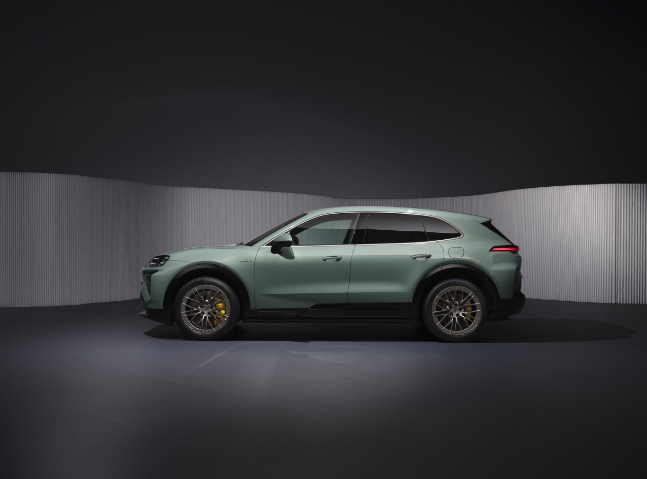
The Future of Aerospace-Automotive Co-Engineering
The joint test between Porsche and Stratolaunch represents more than just a captivating video clip; it highlights a growing trend of cross-industry technical collaboration. Aerospace engineering relies on lightweight composite materials, real-time telemetry, advanced aerodynamics, and high-density energy storage—the exact pillars driving the next generation of performance electric vehicles.
As electric powertrains continue to mature through 2025 and 2026, we can expect automakers to increasingly look to aerospace testing methods to validate cutting-edge dynamic systems. From evaluating active aerodynamic components against crosswind buffeting to refining high-voltage battery cooling under sustained full-throttle demands, high-speed runway testing pushes electric platforms to their structural limits in ways standard proving grounds cannot replicate.
For enthusiasts, auto industry analysts, and performance car buyers, tests like this confirm that the modern high-performance luxury EV is far more than a practical family mover—it is a sophisticated engineering platform capable of sharing the tarmac with the largest aircraft in human history.
Take the Next Step in Performance Electric Driving
The technological innovations proven in high-speed tests like Mojave are rapidly reshaping the luxury automobile market. Whether you are looking to explore luxury performance EV lease offers, compare top-tier electric vehicle insurance coverage options, or calculate commercial financing rates for your modern fleet, staying ahead of automotive technology trends is essential.
Ready to experience the future of high-performance electric vehicles firsthand? Explore your options with a localized electric vehicle specialist today, schedule an advanced EV test drive, or consult with a commercial vehicle financing expert to discover how the latest high-output electric platforms can elevate your daily drive.