
For most people, buying a home is the biggest financial move of a lifetime, and many make it only once or twice.
With so much hard-earned money committed, every option deserves a careful look. The market offers traditional villas, independent houses, and modern multi-story condominiums. Traditionalists still lean toward standalone structures. Yet for today’s homeowners, the apartment has become the most strategic, practical, and financially sound choice. The decision rests on three questions: lifestyle preferences, financial goals, and long-term asset management. On all three, apartments hold clear advantages over independent homes.
Begin with the price tag. In comparable neighborhoods, apartments consistently sell for far less than standalone houses or luxury villas. Even a premium luxury apartment, set next to an independent property, delivers better value per square foot. That gap lets a buyer secure a prime address without pushing the debt-to-income ratio to dangerous levels, and it leaves cash free for other investments.
Now consider what a single standalone lot would need in order to match an apartment complex: a private swimming pool, a fully equipped fitness center, an indoor gaming lounge, a badminton court, and its own security infrastructure. Each of those features would demand an astronomical investment, and together they could drain a family’s savings quickly. Apartment residents never see that bill. World-class amenities come with the shared property from day one, including resort-style pools, cutting-edge gymnasiums, landscaped gardens, and dedicated recreational zones. Because residents pool their finances, each household pays remarkably little for these high-end perks.
Location widens the gap further. Land is scarce and expensive, so independent homes and sprawling villas tend to land on suburban peripheries or the far edges of a city. Apartments are built strategically across prime urban centers instead. Residents can live close to major commercial business districts, corporate hubs, top-tier educational institutions, hospitals, and transit terminals. A shorter daily commute Improves work-life balance and gives valuable hours back to the week.
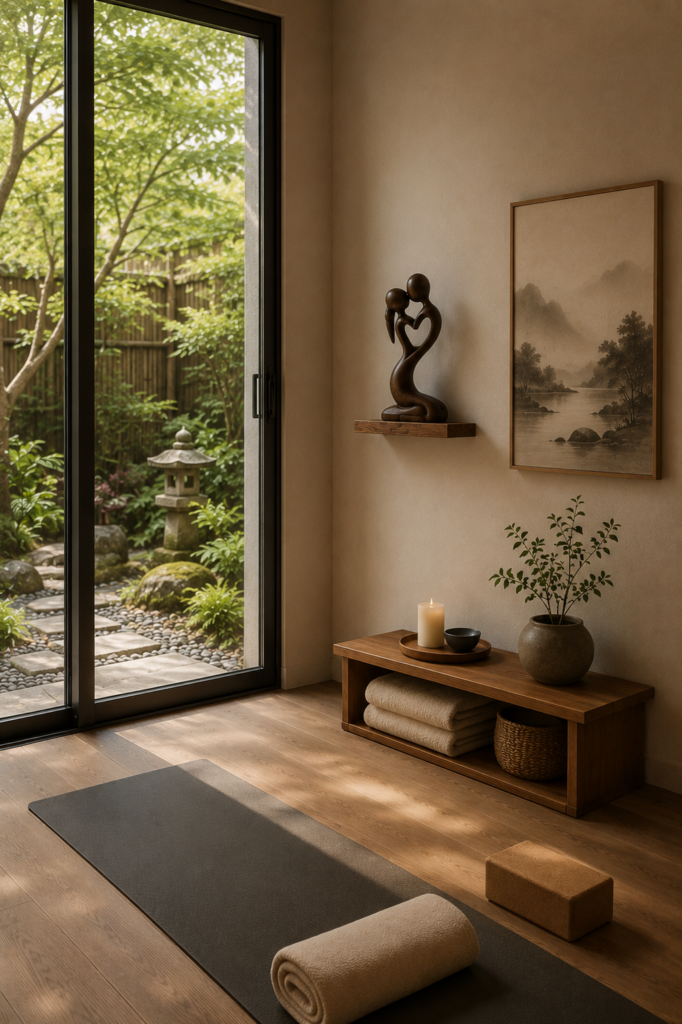
Upkeep tells a similar story. A standalone villa demands constant oversight. When a roof leaks, a plumbing line bursts, or exterior paint fades, the full financial and logistical burden falls on the owner. Apartment complexes operate under dedicated resident committees and professional property management teams. Routine repairs, common area cleaning, garbage disposal, elevator servicing, and facade maintenance all happen behind the scenes. Residents enjoy pristine, manicured lawns and vibrant botanical gardens without giving up their weekends to mowing grass or pruning hedges.
Daily utilities follow the same logic. In an independent house, residents often juggle a fragmented network of utility providers and municipal departments. Apartments streamline all of it through centralized building management systems. Residents benefit from uninterrupted power backups, reliable alternative water supply networks, reticulated gas pipelines, and advanced fire safety mechanisms. Digital portals handle monthly utility bills and maintenance dues, so nobody waits in long queues at municipal offices.
Security matters most to people who travel for work or stay away for long periods, because an empty independent house carries significant risk. Apartment complexes answer that risk with layered protection. Modern buildings employ round-the-clock security personnel, high-definition CCTV surveillance, biometric access control gates, and intercom systems. Together, these safeguards protect both family and property, and they give residents priceless peace of mind, whether they are asleep upstairs or on the other side of the world.
Flexibility is another strength. Multi-family developments are engineered for diverse demographics, so buyers can pick a unit that fits their household size and space needs. A single professional can choose a compact urban studio, while a growing household can take a three-bedroom layout. Standards span a wide spectrum too, from functional starter units to luxury penthouses with high-end architectural finishes, designer fittings, and smart home automation.

Families with children gain one more benefit, because apartment living fosters a strong sense of community. Children get instant access to peer groups in a controlled environment with minimal traffic. Parents, in turn, build lasting relationships with neighbors through shared spaces and community association events.
Put together, an apartment purchase blends financial prudence, modern convenience, and community living. A buyer who prioritizes security, location efficiency, low maintenance overhead, and access to premium amenities sets the stage for long-term lifestyle satisfaction and solid asset appreciation. Readers ready to explore available properties, evaluate financing options, or schedule a personalized consultation with a real estate specialist can reach out to take the next step toward their property investment goals.
Security, location, upkeep, amenities, and cost all point in the same direction, and where and how a buyer purchases matters as much as the price. Each buyer still has to decide how much those factors weigh against the appeal of a standalone house.
If this breakdown helped, hit the subscribe button so the next video finds you right away. A quick like tells us it was worth your time. And switch on the notification bell, so the latest news reaches you the moment it goes live.”