
A decade spent advising buyers and tracking urban housing trends points to one consistent conclusion: the modern apartment has outgrown its old reputation.
Today’s developments are not stacked boxes. They are planned communities designed around comfort, security, and financial return. Eight advantages explain why they now outperform traditional housing, and the first is the simplest one to measure.
Cost comes first. Even a luxury unit in a prime downtown location usually sells for much less than a house or villa of similar square footage. That difference ripples outward. A lower upfront payment leaves money available for other investments or an emergency fund, and it allows a buyer to own a tangible asset without straining household finances. For many people, this efficiency is the most compelling argument for choosing an apartment.
The choice deserves careful thought. Purchasing property is among the largest financial decisions anyone makes, and most people make it only once or twice in their lives. The money behind it was hard earned, so caution is warranted. The market offers independent houses, large villas, and modern multi-family units. Judged by long-term value, daily convenience, and the efficient use of capital, though, the apartment repeatedly comes out ahead.
Location is the second factor. Land in major metropolitan centers is scarce, which pushes independent houses toward distant suburban edges and burdens their owners with exhausting daily commutes. Apartments, by contrast, are built strategically in central districts and along established transit corridors. Residents can live near their workplaces, top-tier schools, healthcare facilities, and commercial districts. A shorter commute gives hours back to family, leisure, and personal well-being.
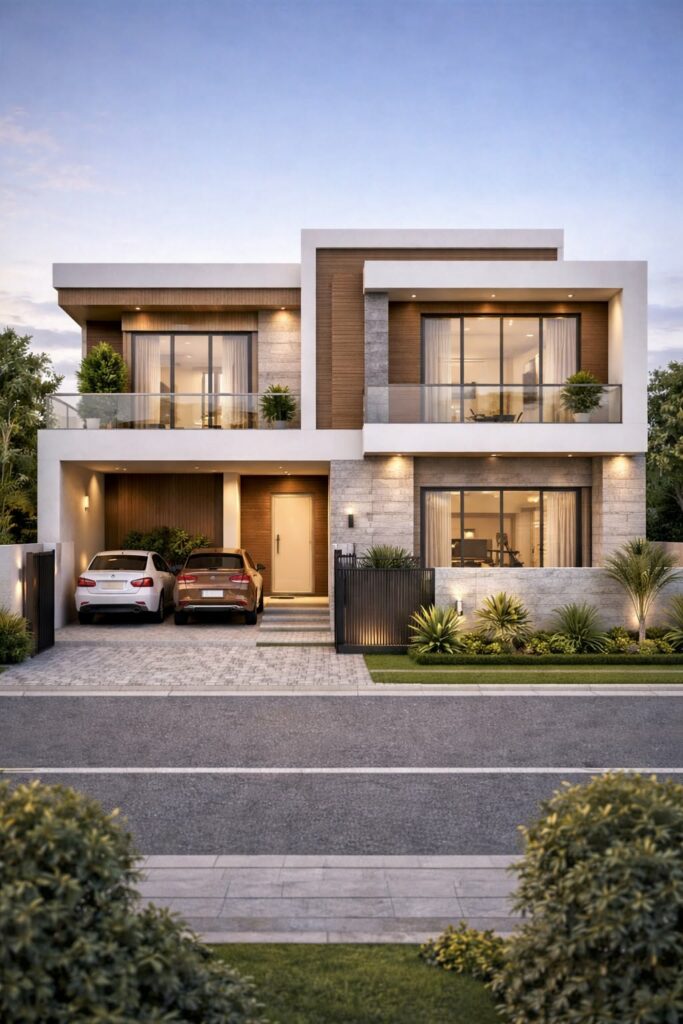
Amenities are the third. On a single-family property, luxury features drain the budget. Private swimming pools, fully equipped fitness centers, indoor gaming zones, children’s play parks, tennis courts, and landscaped rooftop terraces all carry heavy installation and maintenance costs. Apartment residents get Immediate access to world-class versions of these facilities at a fraction of the price, because the community association spreads the expense across all residents. With such features steps from the front door, quality of life goes up while savings stay intact.
Security is the fourth, and it matters most to professionals who travel often or work demanding schedules. Apartments offer a multi-layered security system that independent homes can rarely match at a reasonable price. Cameras operate around the clock, entry points are gated, intercom systems are installed, and trained security personnel are on duty twenty-four hours a day. The property remains protected even when its owner is thousands of miles away. Families and frequent travelers both value that peace of mind.
Utilities are the fifth. Running a standalone home means coordinating services nonstop, hunting for maintenance contractors, and troubleshooting failures in the municipal supply. Apartment communities rely instead on robust, centralized infrastructure. Residents have uninterrupted backup power, alternative water reserves, piped gas networks, and integrated fire safety systems. Utility bills, maintenance accounts, and facility requests can all be handled through digital tenant portals or resident committees, which spares owners the hassle of dealing with bureaucratic municipal offices.
Upkeep is the sixth, and it follows the same pattern. For the owner of an independent house, physical maintenance never ends. Roofs leak and need repair, exterior walls need repainting, lawns need mowing, and hedges need trimming, and the whole burden lands on the homeowner. In an apartment building, a dedicated facility management team or a resident caretaker committee handles those chores. Common areas, manicured lawns, building facades, and shared elevators receive professional care all year long. Residents enjoy pristine surroundings without lifting a finger.
Community is the seventh, and it is something an independent home struggles to replicate, especially for growing families. A shared residential complex fosters a lively social atmosphere where children easily find playmates their own age. They develop essential social skills in a safe neighborhood. Adults gain too. Neighbors often become lifelong friends and form a supportive local network, which eases the isolation that can come with life in gated suburban enclaves. Shared spaces serve as natural gathering points and turn a housing complex into a tight-knit neighborhood.
The eighth is fit. Apartments come in a wide range of configurations, layouts, and square footage, so buyers can find a home that matches both Immediate needs and future plans. A young professional, a newly married couple, and an expanding household can each pick a unit size suited to their lifestyle without paying for space they will not use. Architectural standards, interior fittings, and structural layouts vary widely as well, with choices running from compact studios to luxury penthouse suites equipped with high-end smart-home automation.
Taken together, the case rests on these points: lower cost, central locations, shared amenities, layered security, centralized utilities, professional upkeep, a built-in community, and flexible sizing. Anyone buying a first property or expanding an investment portfolio will find that understanding these details is the key to getting maximum value from the purchase. Which of these advantages would carry the most weight in your own search for a home?
If this breakdown gave you a clearer picture of the apartment market, subscribe to the channel so the next one finds you right away. Hit the like button if you found it useful, and turn on the notification bell so our latest reports reach you the moment they go live.”