
The 2026 Toyota Land Cruiser Commercial: The Ultimate Off-Road Cargo Rig for Fleet and Field
Travel to the most unforgiving, rugged, and isolated corners of the globe, and you will quickly realize one undeniable truth: the Toyota Land Cruiser reigns supreme. For decades, its legendary durability has made it the default choice in environments where mechanical failure doesn’t just mean a tow truck—it means a genuine threat to survival. From the sun-baked expanses of the Australian Outback to the shifting dunes of the Sahara Desert, this platform is the undisputed king of reliability. This reality was hammered home on a recent expedition to Morocco, where dozens of trail-hardened Land Cruisers across various generations dominated the landscape.
However, within this storied lineage, an oddball offshoot has emerged, targeting a very different kind of survival: corporate financial efficiency. Enter the Toyota Land Cruiser Commercial. This unique cargo conversion of the highly anticipated J250 generation takes the world’s most capable SUV, strips out the rear seating, and transforms it into a two-seat, heavy-duty workhorse.
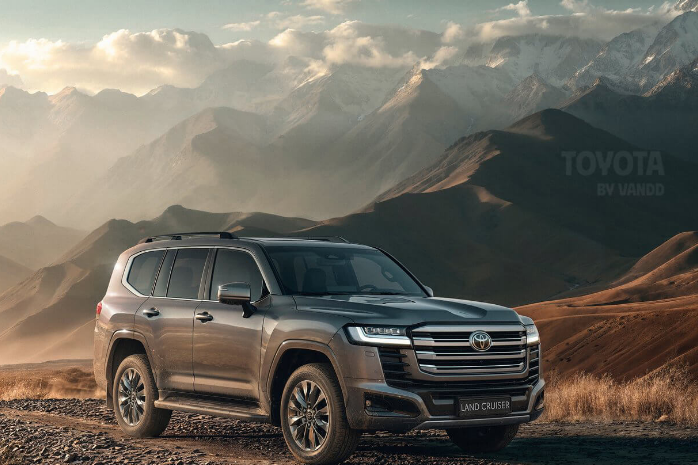
Primarily sold in the UK, the Republic of Ireland, and select European markets, the Toyota Land Cruiser Commercial is not rolling off the primary assembly line in Japan in this configuration. Instead, it arrives in Britain as a standard, passenger-carrying luxury SUV. It is then systematically adapted at Toyota’s Derbyshire facility—the exact same manufacturing hub responsible for producing the US-bound GR Corolla. The result is a highly capable, trail-ready van designed specifically for businesses looking to capitalize on aggressive commercial vehicle tax deductions while maintaining elite off-road capability.
The Financial Engine: Commercial Vehicle Tax Deductions
To understand the existence of the Toyota Land Cruiser Commercial, you have to understand the modern landscape of business vehicle financing and taxation. While this rig can undoubtedly haul larger and more awkwardly shaped payloads than its standard passenger counterpart, the core motivation behind its design is to slash corporate tax liabilities.
In the UK and several European nations, drivers and companies utilizing vans for professional purposes are subject to drastically reduced tax burdens compared to standard passenger cars. This applies to both purchase taxes and ongoing usage taxes. By classifying the vehicle as a commercial asset, businesses can unlock significant commercial vehicle tax deductions and secure much more favorable rates on commercial auto insurance.
Let’s look at the hard numbers. In the British market, operators of the Toyota Land Cruiser Commercial face a Vehicle Excise Duty (VED) charge of merely £345 (roughly $460 USD). Conversely, a buyer purchasing the standard passenger version of the exact same vehicle is slammed with a £5490 ($7340 USD) VED bill. That staggering difference is precisely why commercial SUV conversions are experiencing explosive growth. Fleet managers are actively seeking heavy-duty commercial SUVs that can bypass luxury vehicle taxes while delivering the rugged utility required for demanding fieldwork. It is a formula that competitors have noticed, with Land Rover and Ineos offering similar commercial configurations for the Defender and the Grenadier.
The Conversion Process: Building the Toyota Land Cruiser Commercial
When you get up close to the Toyota Land Cruiser Commercial, it becomes immediately apparent that this vehicle began its life intended for a completely different purpose. The luxury SUV DNA is baked deeply into its chassis, making the cargo modifications feel both ingenious and slightly surreal.
The rear passenger doors still retain their factory glass, but the windows are permanently fixed. Heavy-duty protective screens are installed behind the glass to prevent shifting cargo from shattering the panes from the inside. Interestingly, if you pull off the interior door panels, the electronic window motors are still fully installed in the side doors. Toyota has simply fitted blanking plates over the window switches to disable them. Up front, the driver’s door switchgear for the rear windows is similarly obscured by custom plastic moldings.
In the newly formed cargo bay, all passenger grab handles and seatbelts have been meticulously removed. Yet, in a nod to its passenger-car origins, the Toyota Land Cruiser Commercial retains what used to be the third-row cupholders, sitting somewhat comically in the rear side moldings next to industrial lashing points.
Toyota is acutely aware that the massive tax savings might tempt less scrupulous buyers to purchase the Toyota Land Cruiser Commercial and illegally retrofit it back into a multi-passenger family hauler. To prevent this, the factory mounting points for the second and third-row seats are physically cut out of the chassis. A heavy-duty, completely flat load floor is then bolted and sealed over the altered subframe. To protect the driver and passenger, a full-height, steel mesh bulkhead is installed directly behind the front seats, ensuring that heavy payloads remain securely in the rear compartment during sudden stops or off-road descents.
An Anomaly of Luxury: The Premium Work Truck
Because it is based on the highly equipped European-specification J250, the Toyota Land Cruiser Commercial boasts an equipment roster that you will never find in a standard panel van.
Despite lacking rear seats, it retains the power-operated tailgate, complete with a separately opening upper glass hatch. Practically speaking, the disappearance of a traditional trunk floor makes this pop-up glass slightly redundant, as any gear tossed through the window now drops significantly further to the flat cargo floor.
However, in the cabin, the Toyota Land Cruiser Commercial is a revelation for fleet drivers. Operators are treated to fully power-adjustable front seats featuring both heating and active ventilation. The dash is dominated by a high-specification audio system, dual-zone climate control, and advanced radar adaptive cruise control. When it comes to 4×4 commercial trucks for sale, you will be hard-pressed to find a more luxurious environment for a driver tasked with hauling equipment to a remote logging site or agricultural facility.
Powertrain Dynamics: The 2.8-Liter Turbodiesel Hybrid
Driving the European-market Toyota Land Cruiser Commercial provides a rare opportunity to evaluate a powertrain completely restricted from the American market: the 2.8-liter turbocharged inline-four diesel. In the realm of off-road fleet management, this engine is considered the gold standard for global wilderness operations.
For the 2026 model year, this rugged diesel displaces 2.8 liters and generates 202 horsepower alongside a robust 369 lb-ft of torque. Crucially, it is now integrated with a 48-volt mild-hybrid system designed to smooth out power delivery and improve low-end efficiency. On paper, 202 horsepower might seem underwhelming for a vehicle with an unladen curb weight hovering around 5200 pounds. However, peak torque is unleashed at a remarkably low 1600 rpm. Managed by a brilliantly calibrated eight-speed automatic transmission, the Toyota Land Cruiser Commercial rarely feels sluggish or short on breath.
That being said, this engine prioritizes industrial longevity over acoustic refinement. The gruff, clattery idle of the four-cylinder diesel stands in stark contrast to the silky inline-six diesels found in the commercial variants of the Land Rover Defender and Ineos Grenadier. Under heavy throttle, cabin noise increases significantly, and the engine exhibits a distinct aversion to high RPMs—even by diesel standards. When left in automatic drive mode, the transmission aggressively short-shifts, never surpassing 3800 rpm even with the accelerator pinned to the floorboard. If you want to force the digital tachometer to its 4400-rpm redline, you have to manually paddle through the gears.
Once up to highway speeds, however, the Toyota Land Cruiser Commercial settles into an acceptable rhythm, offering far better NVH (noise, vibration, and harshness) isolation than a traditional box van. Toyota claims a 0-62 mph sprint of 10.2 seconds. This is a metric that exactly zero fleet managers will care about, especially since hard acceleration causes the suspension to squat deeply in the rear, lifting the nose significantly.
High-speed interstate cruising is not its primary mandate. Riding on aggressive Dunlop AT23 Grandtrek tires, the vehicle requires minor but constant steering corrections to maintain a lane at 75 mph, and the windshield wipers begin to struggle against the wind resistance at those speeds.
Payload, Towing, and Cargo Practicality
Where the Toyota Land Cruiser Commercial truly earns its keep is in its hauling metrics. While the interior dimensions—66.4 inches in load length, 50.6 inches in width, and 42.9 inches in height—are smaller than a dedicated commercial van like a Ford Transit, its capabilities are formidable.
The vehicle is engineered to carry a maximum payload of 1,780 pounds directly on the rear cargo bed. Furthermore, it boasts a staggering towing capacity of 7,700 pounds, hitting the absolute maximum permissible weight for a vehicle in this class under European road regulations.
There are functional trade-offs, however. Because the Toyota Land Cruiser Commercial is built on an off-road chassis, the load floor sits significantly higher off the ground than a standard commercial van. This higher lift-over height requires more physical effort when loading heavy or awkwardly shaped equipment, though access is somewhat mitigated by the fully functional rear side doors. Additionally, the massive, top-hinged rear tailgate requires substantial vertical and rearward clearance to open, making it less practical in tight urban loading zones compared to traditional side-hinged barn doors.
Off-Road Dominance: Engineering for the Extreme
Like the majority of heavy-duty commercial SUVs, the Toyota Land Cruiser Commercial actually benefits from having weight over the rear axle. Unladen, the heavy-duty rear suspension feels slightly underdamped over broken pavement, transmitting a jagged ride quality into the cabin. However, load it up—as we did during testing with a 220-pound historic industrial fire pump strapped to the floor lashing points—and the vehicle’s composure transforms. The extra mass settles the suspension, allowing the chassis to absorb undulations and rough terrain with signature Toyota grace.
Make no mistake: this is a fully uncompromised off-roader. The Toyota Land Cruiser Commercial retains the exact same mechanical hardware as the passenger version. This includes a robust two-speed transfer case for low-range crawling, a manually locking center differential, and an advanced electronic traction-management suite designed to pull the rig through deep mud, sand, and snow. During field testing, the vehicle gleefully scrambled through deep, sunbaked ruts and dried-out mud tracks, rarely requiring more than a steady throttle foot to maintain momentum.
The Ultimate Workhorse Utility
Ultimately, criticizing the Toyota Land Cruiser Commercial for not being a perfect cargo van is missing the point. Nobody is cross-shopping this vehicle with a front-wheel-drive city delivery van. It is a specialized tool engineered for utility fleets, agricultural managers, mining supervisors, and field engineers who need to transport vital equipment into environments where pavement doesn’t exist.
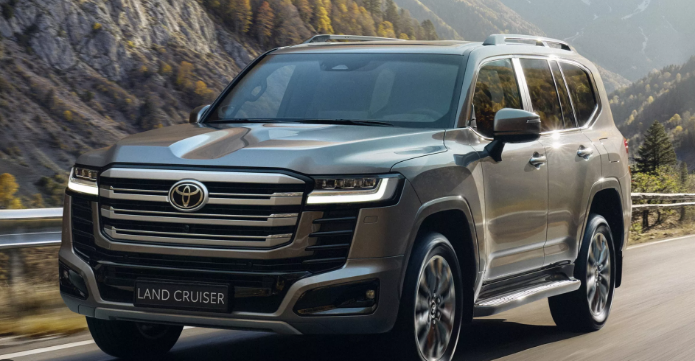
It is a phenomenal oddball—a luxurious, highly capable machine that sacrifices passenger capacity to master the intricacies of tax codes and wilderness terrain alike. With a pre-tax starting price of £50,640 (approximately $67,800 USD), the Toyota Land Cruiser Commercial undercuts the cheapest passenger-carrying J250 model by nearly £9000 ($12,000 USD). When you factor in the massive commercial vehicle tax deductions, lower commercial auto insurance rates, and unmatched depreciation curve of a Toyota 4×4, the financial argument becomes undeniable.
This rig is proof that you can conquer the world’s toughest terrain while simultaneously keeping your corporate accounting department exceptionally happy.
Are you a fleet manager or business owner looking to optimize your vehicle assets while tackling the toughest jobs? Contact your local commercial dealership today to explore customized business vehicle financing options for the new Toyota Land Cruiser Commercial and see how upgrading your fleet can revolutionize your bottom line.