
Beyond the Tarmac: Engineering the Extreme with the Porsche Cayenne Electric and the Stratolaunch Roc
The realms of aviation and automotive engineering rarely intersect outside of the occasional, heavily staged marketing gimmick. We have all seen the traditional runway drag race: a supercar lines up against a fighter jet, the flag drops, and for about sixty seconds, they share a horizontal trajectory before the aircraft inevitably pitches upward into the stratosphere. However, what recently unfolded on the sun-baked tarmac of the Mojave Air and Space Port in California was not a superficial drag race. It was a rigorous, coordinated exercise in high-speed stability, aerodynamic interaction, and extreme-load battery management.
In an unprecedented testing event, Porsche brought its most formidable battery-electric SUV to the desert to pace the world’s largest flying aircraft. The goal was to determine if the Porsche Cayenne Electric could maintain high-speed stability while running in tandem with the Stratolaunch Roc, a colossal six-engine testbed aircraft used for hypersonic flight testing. As an automotive industry analyst who has spent the last decade tracking the evolution of high-performance electric vehicles, I can confidently say this test shatters our preconceived notions of what a luxury electric SUV is truly capable of achieving.
The Convergence of Aerospace and Automotive Innovation
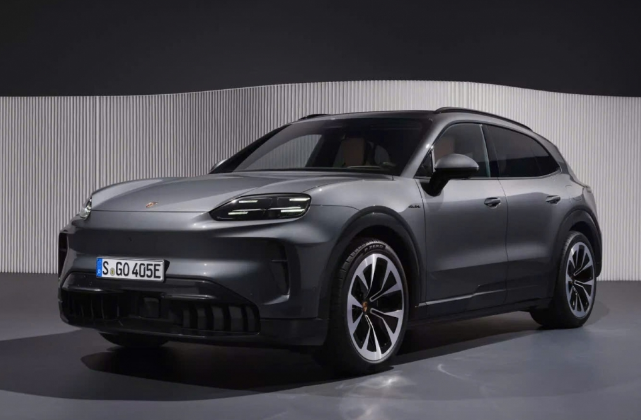
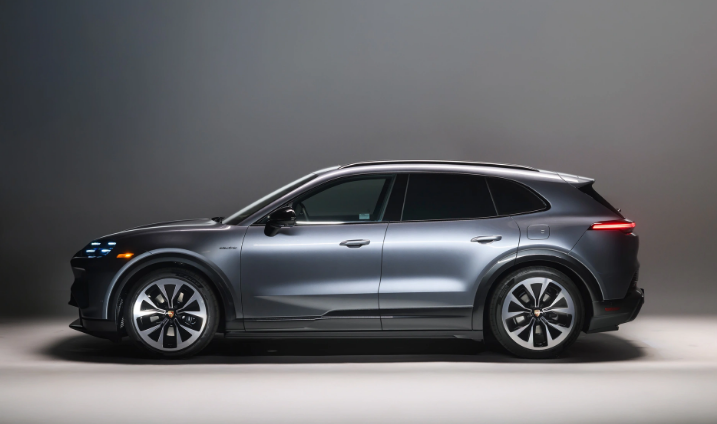
To understand the magnitude of this event, we must first examine the two engineering marvels that shared the runway. On one side, we have the Porsche Cayenne Electric. This vehicle represents a pivotal shift for the Stuttgart-based manufacturer, transitioning one of its most profitable and historically significant internal combustion platforms into the electric era. Producing a staggering 1,139 horsepower, the Porsche Cayenne Electric is not merely a family hauler; it is a hypercar-slaying utility vehicle engineered with an unyielding focus on sustained power delivery and chassis dynamics.
On the other side sits the Stratolaunch Roc. To call this aircraft “large” is a profound understatement. Featuring a massive twin-fuselage design and a wingspan of 385 feet—longer than a professional football field—the Roc is powered by six Pratt & Whitney PW4056 engines. It serves as a specialized high-altitude launch platform for hypersonic vehicles. Coordinating any ground vehicle to pace an aircraft of this scale requires immense precision, relentless power, and flawless communication.
The objective was not to beat the aircraft to a finish line. The mission was to pace the Stratolaunch Roc during its critical takeoff and landing phases, matching its velocity up to the exact moment of rotation—the point at which the aircraft’s nose lifts and it takes flight. For the Porsche Cayenne Electric, this meant executing repeated, sustained acceleration runs exceeding 160 mph while operating in the turbulent aerodynamic wake of a 500,000-pound leviathan.
The Mojave Proving Grounds: A Crucible for High-Speed EV Testing
Choosing the Mojave Air and Space Port as the venue for this extreme testing was no accident. Located in the arid high desert of California, this facility has long been the epicenter for experimental aerospace testing and high-speed automotive validation. The sprawling, ultra-wide runways provide the necessary real estate for an aircraft of the Roc’s unprecedented dimensions, while simultaneously offering the tarmac required for a high-performance electric SUV to stretch its legs.
For engineers developing a luxury electric vehicle, the Mojave desert presents a uniquely grueling environment. The ambient heat mercilessly tests the EV battery thermal management systems. When a battery pack is subjected to the massive current draw required to push a heavy SUV past 160 mph, heat is generated exponentially. If the cooling architecture cannot shed this thermal load efficiently, the vehicle’s software will initiate thermal throttling, violently cutting power to protect the cells. The fact that the Porsche Cayenne Electric was deployed in this environment to pace a hypersonic testbed aircraft speaks volumes about the manufacturer’s confidence in its 800-volt battery architecture and active cooling loops.
Executing the Run: Patrick Long at the Helm
Driving a ground vehicle in close proximity to an accelerating aircraft requires a unique set of skills. To pilot the Porsche Cayenne Electric, the team enlisted former Porsche factory driver Patrick Long. With multiple endurance racing championships under his belt, Long is intimately familiar with high-speed vehicle dynamics and split-second decision-making. Yet, pacing the Stratolaunch Roc presented an entirely new psychological and physical challenge.
During the primary test phases, Long piloted the Porsche Cayenne Electric through two full takeoff runs. As the Pratt & Whitney engines spooled up, generating a deafening roar and immense thrust, Long had to aggressively deploy the SUV’s 1,139 horsepower to stay alongside the aircraft. The Porsche Cayenne Electric effortlessly matched the aircraft’s acceleration, surging past the 160 mph mark with linear, uninterrupted electric torque.
However, the true test of the vehicle’s high-speed stability came during the landing phase. Long was tasked with pacing the Stratolaunch Roc as it descended from the California sky, requiring him to thread the SUV directly between the aircraft’s twin fuselages on the runway.
“I had no doubts about the power of the Cayenne, but I was a bit apprehensive regarding how reactive the car would be to inputs, especially at speed,” Long noted after the runs. The challenge of visual reference at these velocities cannot be overstated. When a driver is navigating a runway at 160 mph, they typically rely on fixed environmental markers to judge braking zones and relative positioning.
“Surprisingly, the landings were a lot harder to time just right,” Long explained. “The plane is so big that you don’t really have effective visual references for timing when to merge with the plane onto the runway.”
This phenomenon is a known factor in both aviation and high-speed ground testing. The sheer scale of the Stratolaunch Roc distorts the driver’s perception of speed and distance. To mitigate this risk, the Porsche Cayenne Electric was not operating in isolation. Shauntel Williams and John McKinney, the crew chiefs for the six-engine aircraft, rode in the cabin of the luxury electric SUV. Armed with direct radio uplinks to the flight crew, they provided Long with real-time telemetry and pace adjustments, ensuring the Porsche Cayenne Electric neither overshot nor undershot the aircraft’s landing zone.
Aerodynamics at the Limit: The Slipstream Effect
One of the most fascinating technical revelations from this test involved the aerodynamic interaction between the aircraft and the SUV. Aerodynamics play a critical role in the efficiency and high-speed stability of any modern battery electric vehicle. At speeds exceeding 150 mph, air resistance becomes a highly destructive force, aggressively draining battery capacity and threatening to destabilize a vehicle with a higher center of gravity.
When threading the needle between the Stratolaunch Roc’s twin fuselages, the Porsche Cayenne Electric entered a highly unique aerodynamic environment. According to Porsche’s engineering data, the SUV actually benefited from an aerodynamically quiet zone created between the two massive structures of the aircraft.
In fluid dynamics, when two large bodies move rapidly through the air, they displace the atmosphere and create complex wake structures. The Roc’s twin-fuselage design essentially acted as a massive windbreak, funneling the air in a way that created a localized pocket of lower pressure and reduced parasitic drag right down the center line. As the Porsche Cayenne Electric occupied this space, the active aerodynamic systems on the vehicle—including the adaptive rear spoiler and active front cooling flaps—were able to optimize downforce without fighting the extreme headwind typically encountered at 160 mph. This sustained the vehicle’s high-speed stability, keeping the chassis planted and allowing the torque vectoring systems to maintain absolute directional control.
Deconstructing Battery Efficiency Under Extreme Load
For those of us analyzing the high-performance electric SUV sector, the most impressive metric from this Mojave test was not the top speed, but rather the energy consumption. After completing four flat-out, high-speed runs—including maximum acceleration to V-speeds and sustained pacing at over 160 mph—the Porsche Cayenne Electric consumed a mere 13 percent of its total battery charge.
Let that sink in. In the early days of electric mobility, a single VMAX run in a high-performance EV could visibly drain the battery gauge, severely derate the motors, and force the vehicle into a prolonged cool-down mode. The fact that this luxury electric SUV executed four back-to-back extreme-load scenarios while utilizing only 13 percent of its pack capacity is a masterclass in modern EV battery efficiency and powertrain optimization.
This efficiency is largely attributed to the advanced silicon-carbide (SiC) inverters and the highly refined thermal management system utilized in the Porsche Cayenne Electric. When you buy a high performance electric SUV in today’s market, you are not just paying for raw horsepower; you are investing in the sophisticated software and cooling hardware that allows that power to be used repeatedly without degradation. The 800-volt architecture ensures that the massive flow of electrons from the battery cells to the dual-motor setup encounters minimal electrical resistance, reducing waste heat.
Furthermore, the integration of heavy regenerative braking at the end of these high-speed runs likely recaptured a significant amount of kinetic energy, funneling it back into the battery pack and contributing to the low overall depletion rate. This test proves that range anxiety in high-stress track or testing environments is rapidly becoming a relic of the past.
The Future of the Luxury EV Market
The automotive landscape is evolving at a breakneck pace, and consumer expectations are shifting accordingly. Today, buyers looking into the luxury EV market demand zero compromises. They expect the quiet refinement of a premium cabin, the eco-conscious benefits of a battery electric vehicle, and the visceral, unyielding performance historically reserved for exotic supercars.
By taking the Porsche Cayenne Electric to the Mojave Air and Space Port to play tag with a hypersonic flight testing aircraft, Porsche has laid down a definitive marker. They have proven that their electrified platforms are not fragile garage queens reliant on ideal conditions. They are highly capable, aerodynamically sophisticated, and thermally resilient machines that can perform flawlessly under the most extreme conditions imaginable.
This event also highlights the stringent safety and regulatory frameworks surrounding such high-stakes testing. With an FAA coordinator on-site overseeing the maneuvers, the synergy between automotive and aviation regulations was on full display. As we look toward the future, the data gathered from the Porsche Cayenne Electric during these runs will undoubtedly bleed down into the brand’s broader consumer lineup, influencing everything from the aerodynamics of future sedans to the EV battery thermal management of their daily drivers.
The Stratolaunch Roc will continue its vital mission of launching hypersonic test vehicles, pushing the boundaries of aerospace engineering. But for a brief, glorious window on a California runway, it met its match on the ground. This wasn’t just a stunt; it was a definitive proof of concept for the electric era.
If you are ready to experience the pinnacle of automotive engineering and feel the 1,139-horsepower surge that allowed an SUV to pace the world’s largest aircraft, we invite you to explore the future of driving. Contact your local Porsche center today to schedule a consultation and discover how the Porsche Cayenne Electric is rewriting the rules of performance.