
The Most Unique Toyota Tundra Recall in History: When a Single Weight Sticker Triggers Federal Action
In the vast, highly regulated world of modern automotive manufacturing, we have become completely desensitized to massive recall campaigns. It is not uncommon to see automakers pulling back hundreds of thousands—sometimes millions—of vehicles for faulty airbags, malfunctioning software, or defective transmission components. However, after a decade of analyzing automotive industry trends, vehicle safety standards, and federal compliance laws, I recently came across an anomaly that genuinely stands out. A newly issued Toyota Tundra recall has made headlines not for its massive scale, but for its microscopic scope.
According to official filings with the National Highway Traffic Safety Administration (NHTSA) in July 2026, exactly one unit of the 2026 Toyota Tundra pickup is being recalled. Yes, you read that correctly. A single, solitary truck located in the southeastern United States is the sole focus of a federal safety campaign.
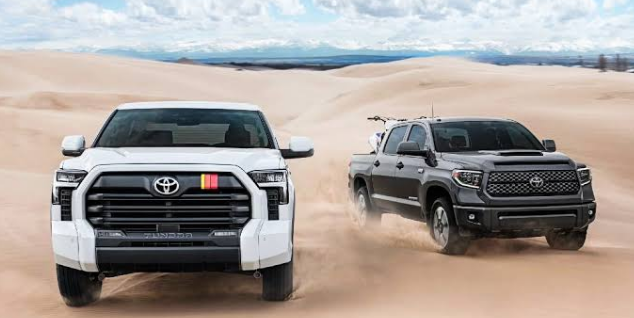
This hyper-specific Toyota Tundra recall involves a Toyota distributor based out of Florida and centers entirely on an incorrectly calculated load-carrying capacity modification label—commonly known as the weight sticker. While recalling a single pickup truck for a sticker might sound like bureaucratic overkill, it opens up a fascinating discussion about federal safety standards, aftermarket truck modifications, Gross Vehicle Weight Rating (GVWR), and the hidden legal liabilities that vehicle owners and dealerships face every day.
The Anatomy of the Single-Vehicle Toyota Tundra Recall
To understand how a single truck triggers federal action, we have to look at the supply chain. The vehicle in question was processed and sold through Southeast Toyota Distributors, a massive independent Toyota distributor operating primarily in Florida and the surrounding regions. In the automotive industry, vehicles often pass through regional distributors or port facilities where they receive specific add-ons before they ever reach a local dealership showroom.
During this intermediate phase, the distributor maintains an exhaustive internal database tracking every single vehicle identification number (VIN) and the specific accessories installed on that unit. In April 2026, the company was alerted by a dealer regarding a truck that arrived with an accessory package not accurately reflected on its official build sheet. Due to what the company termed an “inadvertent accessory package deletion,” the extra weight of these undisclosed aftermarket parts was never factored into the vehicle’s final weight certification.
While a modified weight label was technically applied to the truck, the mathematical calculation printed on that sticker was wrong. Under federal law, if a vehicle’s payload capacity label is inaccurate by more than 1% of the added accessory weight, it fails compliance. Because Southeast Toyota Distributors maintains such meticulous records, they were able to pinpoint the exact truck affected by this mathematical error, resulting in a one-of-a-kind Toyota Tundra recall.
Decoding GVWR: Why a Single Weight Sticker Matters
To the average driver, a sticker inside the driver’s side door jamb might seem like trivial paperwork. However, as any seasoned automotive engineer or fleet manager will tell you, the Gross Vehicle Weight Rating (GVWR) is one of the most critical safety metrics on any vehicle. The GVWR is the absolute maximum safe operating weight of a vehicle, which includes the truck’s curb weight plus the weight of all passengers, fuel, cargo, and aftermarket accessories.
When you purchase a rugged, capable vehicle like a pickup, you are buying it for its utility. Drivers routinely load the bed with heavy equipment, tow massive trailers, and install aftermarket upgrades. Every single item added to the truck eats into the available payload capacity.
The core issue driving this particular Toyota Tundra recall is the potential for accidental overloading. The NHTSA recall documents explicitly state that the current load-carrying capacity label on this single truck does not reflect an accurate value. Even though the physical weight of the newly installed accessories does not instantly push the truck past its maximum payload limit, the inaccurate label provides the owner with a false sense of capacity. In a worst-case scenario, an owner relying on that flawed sticker might unknowingly overload the truck with heavy cargo.
Overloading a vehicle fundamentally alters its driving dynamics. An overloaded truck suffers from extended braking distances, increased tire wear, massive stress on the suspension system, and an exponentially higher risk of a high-speed blowout or rollover accident. Federal motor vehicle safety standards strictly mandate accurate labeling precisely to prevent these catastrophic physical failures.
The Booming Market of Aftermarket Accessories and Payload Math
The aftermarket truck accessory industry is a multi-billion-dollar juggernaut. From the moment a pickup rolls off the assembly line, owners and dealerships begin adding heavy modifications. Steel winch bumpers, oversized all-terrain tires, heavy-duty bed liners, camper shells, and suspension lift kits all add significant weight to the vehicle.
In my ten years of evaluating automotive compliance, I have seen countless trucks unknowingly driving over their legal weight limits simply because the owner never recalculated their payload after bolting on 500 pounds of steel accessories. When you buy a truck from a Toyota dealership in Florida—or any other state—and request dealer-installed options, the dealership is legally required to update the load-carrying capacity modification label if those accessories exceed a certain weight threshold.
In this Toyota Tundra recall, it remains unclear exactly which accessories were added to the vehicle. However, whether it was a set of heavy-duty running boards or a comprehensive TRD suspension package, the math failed. Dealerships and distributors must weigh these components down to the exact pound to ensure the final consumer knows exactly how much cargo they can safely haul.
Liability, Insurance, and the Financial Ripple Effect
While this specific Toyota Tundra recall might easily be fixed with a piece of mail, the broader implications of incorrect GVWR labels represent a massive financial and legal minefield. Let’s explore the high-stakes world of automotive liability.
If you are involved in a severe crash while driving an overloaded vehicle, the legal and financial consequences can be devastating. Insurance adjusters and crash investigators routinely check a vehicle’s payload status after major accidents, particularly those involving commercial use or towing. If an investigation reveals that a truck was loaded beyond its legal GVWR, the driver could be found entirely at fault for the collision.
When this happens, auto insurance providers can aggressively deny coverage, leaving the driver personally liable for property damage and medical bills. In severe cases involving injuries, victims will immediately seek out the best truck accident lawyer they can find to file personal injury claims against the driver of the overloaded vehicle. If a dealership or manufacturer provided an inaccurate weight sticker that led to the overloading, they too could face massive corporate liability and class-action lawsuits.
This is why federal agencies do not play games with weight stickers. A deviation of just 1% in the calculated weight of installed accessories is enough to trigger a federal mandate. If you are using your truck for business purposes, operating an improperly labeled and overloaded vehicle can also skyrocket your commercial auto insurance premiums or result in severe fines from the Department of Transportation. Should you find yourself purchasing a new truck with ongoing, unfixable documentation or manufacturing defects, it might even require consulting a lemon law attorney to force the manufacturer into a buyback.
Federal Compliance: Inside the NHTSA’s Strict Oversight
The National Highway Traffic Safety Administration operates with zero tolerance for compliance failures, which perfectly explains why a one-vehicle Toyota Tundra recall was officially filed and published. The NHTSA exists to standardize safety across millions of miles of American roadways. They do not care if a defect impacts two million sedans or a single pickup truck; the law is the law.
When an automaker or a regional distributor discovers a non-compliance issue, they are legally obligated to report it within a strict timeframe. Hiding a one-vehicle defect might seem tempting for a massive corporation to avoid bad press, but the penalties for covering up NHTSA compliance failures run into the hundreds of millions of dollars. Southeast Toyota Distributors did exactly what they were supposed to do: they caught a database discrepancy, identified the physical truck, reported the failure to the federal government, and initiated a formal Toyota Tundra recall.
How Dealerships Track Port and Dealer-Installed Accessories
To appreciate the logistics behind this Toyota Tundra recall, you must understand how modern vehicles are built and tracked. Most consumers assume a truck is completely finished the moment it leaves the factory floor in Texas, where the Tundra is manufactured. In reality, the build process is highly modular.
Vehicles often undergo “Port Installed Options” (PIO) or “Dealer Installed Options” (DIO) phases. During these phases, regional distributors install highly profitable accessory packages based on local market demands. For example, a dealership in Miami might request a batch of Tundras fitted with specialized marine-grade bed liners and towing mirrors suited for boaters.
Every time a technician touches that truck and bolts on a new part, a barcode is scanned, and the vehicle’s master digital manifest is updated. Software calculates the exact weight of the new components and automatically generates a modified load-carrying capacity label. In the case of this specific 2026 Toyota Tundra, an “inadvertent accessory package deletion” in the software meant the physical parts went onto the truck, but the digital brain managing the vehicle’s compliance thought they were removed. The result was a physical label with bad math.
The Simplest Automotive Fix in History
Automotive recalls are usually synonymous with massive logistical headaches. Typically, an owner receives a scary letter in the mail, has to schedule an appointment with a local auto repair service or authorized dealership, wait weeks for backordered parts to arrive, and spend a day sitting in a dealership waiting room drinking stale coffee while a mechanic rips apart their dashboard or drops their transmission.
This Toyota Tundra recall, however, boasts what might be the most hilariously simple remedy in automotive history. Because this is essentially a paperwork dispute regarding an inaccurate label, no wrenches will be turned. No mechanic needs to inspect the suspension. No parts need to be unbolted.
The remedy outlined in the federal documents is brilliantly straightforward: The owner of this specific Tundra will be mailed a formal notice of noncompliance along with a brand-new, mathematically correct load-carrying capacity modification label. The owner simply peels the backing off the new sticker, places it over the old incorrect sticker in the driver’s side door jamb, and the vehicle is instantly road-legal and federally compliant once again.
Keeping the Big Picture in Perspective
As an industry expert, I find this single-vehicle Toyota Tundra recall to be a refreshing reminder of the incredible quality control systems currently active in the automotive sector. It is easy to criticize automakers when massive safety failures occur, but we rarely praise the intricate digital tracking systems that can detect a mathematical error on a single sticker out of the hundreds of thousands of trucks manufactured annually.
The modern Toyota Tundra remains a technological marvel, balancing twin-turbocharged hybrid powertrains with massive towing capacities and luxury-grade interiors. While this specific recall is a bizarre footnote in the truck’s history, it proves that the safety nets designed to protect consumers are functioning exactly as intended. Distributors are continuously auditing their internal databases, and when a discrepancy is found, they take immediate action, regardless of how small the affected population is.
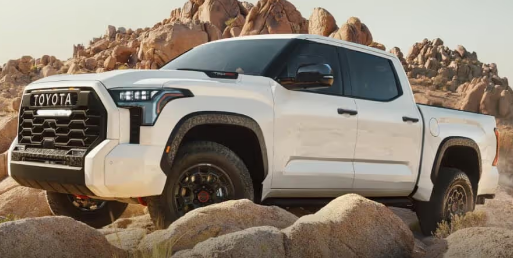
For current truck owners, this strange event should serve as a wake-up call to check your own vehicle’s door jamb. Have you added aftermarket bumpers, a winch, a heavy toolbox, or a bed cap? If so, your factory payload sticker is no longer accurate. Knowing exactly how much weight your vehicle can handle is the absolute best way to protect your transmission, preserve your suspension, keep your auto insurance premiums low, and ensure the safety of everyone sharing the road with you.
What’s Your Truck Actually Hauling?
Understanding your vehicle’s true capabilities goes far beyond reading a brochure. Whether you use your pickup for weekend camping trips or demanding commercial construction work, accurate payload knowledge is your first line of defense against mechanical failure and liability.
Have you ever weighed your truck after adding aftermarket accessories, or are you blindly trusting the factory sticker? Don’t leave your safety—and your legal liability—up to guesswork. Check your door jamb today, recalculate your payload if you’ve added heavy parts, and ensure you are operating within your legal limits. If you found this deep dive into the industry’s most unique Toyota Tundra recall helpful, share this article with your fellow truck owners and subscribe to our newsletter for more expert automotive analysis, safety updates, and insider industry news!