
The Definitive 2025 Porsche 911 GT3 S/C Review: Does a Track-Bred Convertible Actually Make Sense?
For over a quarter of a century, the automotive industry has come to expect a certain rhythm from Weissach. The periodic release of a new GT-series 911 is as predictable—and highly anticipated—as a blockbuster action franchise. The formula is rarely disrupted: the new iteration will be fundamentally similar to its predecessor, but amplified. We expect more aerodynamic downforce, increased mechanical grip, sharper steering, and a more explosive, dynamic track experience. It is a recipe that has cemented Porsche’s status at the pinnacle of naturally aspirated performance.
So, when rumors surfaced that the notoriously strict GT department was developing something entirely unorthodox, the purist community was understandably skeptical. Imagine a legendary action movie franchise suddenly releasing a sequel without its beloved, adrenaline-fueled lead actor. How could it possibly do justice to the legacy? That is the exact dilemma facing the brand-new Porsche 911 GT3 S/C. By completely removing its roof—thereby stripping away the fixed-head rigidity that serves as the very foundation of its race-derived, track-centric focus—how can this vehicle possibly justify wearing the hallowed GT3 badge?
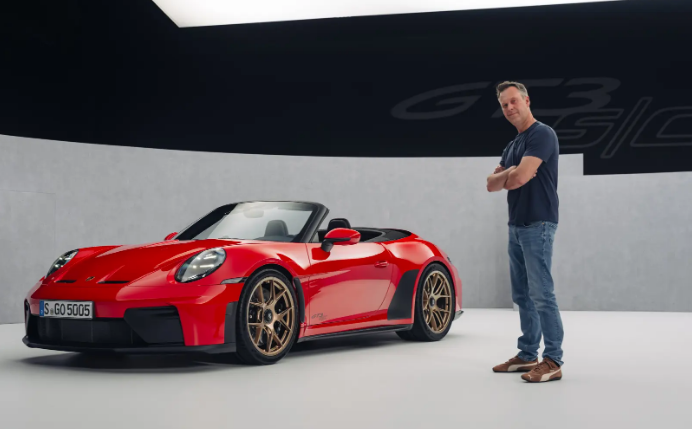
To uncover the truth, I traveled to Stuttgart. With over a decade of experience testing high-performance vehicles, evaluating chassis dynamics, and analyzing the shifting landscape of the exotic car market, I arrived with three pressing questions. Is a convertible GT car fundamentally an oxymoron? Does the Porsche 911 GT3 S/C genuinely know what its purpose is? And finally, keeping a strictly open mind to the unthinkable: could losing the roof actually make the GT experience better?
The Heresy of a Drop-Top: Conversations with the GT Boss
When I sat down with Andreas Preuninger, the visionary director of Porsche’s GT division, I wasted no time presenting the skepticism surrounding the Porsche 911 GT3 S/C. I bluntly mentioned that many track enthusiasts argue a car cannot authentically be a GT3 without a rigid roof. Preuninger did not hesitate for a microsecond. He dismissed the suggestion outright with the calm confidence of an engineer who knows something the rest of the world has yet to discover.
I will readily admit my own biases heading into this evaluation. Historically, I have never been a fan of cabriolet variants derived from fixed-roof sports cars. The engineering process usually introduces a host of frustrating compromises. You gain significant weight from the hydraulic folding mechanisms and necessary structural bracing, which inherently dulls the car’s sporting edge. Structural wobble and chassis flex often ruin the precision of the suspension geometry. Furthermore, the impact on interior packaging and wind refinement can become highly annoying when you are simply trying to commute. And, from a purely aesthetic standpoint—a crucial factor for an exotic vehicle meant to generate desire—cabriolets almost always look worse with the roof closed than their coupe counterparts. In unpredictable climates, the roof will likely remain up for a vast majority of the ownership experience.
But Preuninger’s response to these traditional grievances forced me to recalibrate my expectations for the Porsche 911 GT3 S/C. The genesis of this specific model came directly from the GT product team, not the marketing department. However, Preuninger green-lit the project under two uncompromising conditions: the vehicle had to weigh under 1,500 kilograms (fully fueled and filled with vital fluids), and it had to flawlessly maintain the razor-sharp dynamic standards expected of any car wearing the GT badge.
Engineering the Impossible: Weight Savings and Chassis Rigidity
To truly understand the Porsche 911 GT3 S/C, we must strip it down to its simplest mechanical definition. In essence, it is a 911 GT3 Touring without a roof. Nestled behind the rear axle is the familiar, glorious 3996cc naturally aspirated flat-six engine. Mated exclusively to a spectacularly engaging six-speed manual gearbox—there is refreshingly no PDK automatic option available here—it utilizes identical suspension hardware and geometry to its coupe sibling.
The raw statistics speak volumes: 503 brake horsepower, a curb weight of just 1,497 kilograms, a 0-62 mph sprint handled in a blistering 3.9 seconds, and a terminal velocity of 194 mph. These performance figures are virtually identical to the 1,461-kilogram manual Touring, save for a highly negligible weight penalty. The fact that Porsche managed to engineer a fully automatic convertible roof—one that stows or deploys in just 12 seconds—while keeping the car within 36 kilograms of its notoriously svelte coupe counterpart is an astonishing feat of modern material science.
To achieve this stringent weight target, Weissach’s engineers ruthlessly plundered the parts catalog of the ultra-exclusive 911 S/T. The Porsche 911 GT3 S/C features the S/T’s exotic carbon fiber doors, front wings, frunk lid, rear anti-roll bar, and structural shear plate. In addition, forged magnesium wheels and Porsche Ceramic Composite Brakes (PCCB) are fitted as standard equipment. Large sections of the folding roof mechanism itself are cast from lightweight magnesium. Combined, these aggressive lightweighting measures perfectly offset the 40-kilogram penalty of the reinforced cabriolet body shell and the 36-kilogram roof mechanism.
The challenge of maintaining dynamic chassis stiffness was equally daunting. Because double-wishbone front suspension is entirely non-negotiable for a modern GT car, the engineers started with the roofless Carrera 4 body-in-white and heavily modified it to accept the hardcore GT3 mounting points. The Carrera 4 shell was explicitly chosen over the Carrera 2 because the central void typically housing the front differential allowed the engineers to install a larger, long-range fuel tank.
The resulting torsional stiffness of the Porsche 911 GT3 S/C is rated at a remarkable 27,000 Nm/degree. This represents a massive 25 percent improvement over the previous generation 991 GT3 Speedster, putting its structural rigidity on par with purpose-built, fixed-roof aluminum chassis sports cars like the Lotus Emira. According to Preuninger, this level of stiffness guarantees that chassis flex is entirely imperceptible on public roads.
Aerodynamics and the Art of Connection
Aerodynamics are the lifeblood of any modern Porsche GT product. While the Porsche 911 GT3 S/C lacks the massive swan-neck rear wing of the standard car, it retains the intricate underbody strakes and aggressive rear diffuser, supplemented by a subtle Gurney flap integrated into the rear tail to stabilize high-speed airflow.
While it generates a modest 16 kilograms of positive downforce at speed—a figure Porsche doesn’t heavily advertise compared to the massive downforce of its winged siblings—this represents a night-and-day difference in the convertible segment. Comparable high-performance drop-tops often generate between 150 to 200 kilograms of dangerous aerodynamic lift at Autobahn speeds, making the Porsche 911 GT3 S/C remarkably planted when pushing the speedometer toward the 200 mph mark.
Furthermore, interior specification choices directly impact the vehicle’s dynamic behavior. The carbon fiber full bucket seats are not just an aesthetic upgrade over the standard 18-way electric sports seats; they are a critical engineering component. The vehicle’s shock damping was specifically honed in perfect harmony with the rigidity and resonance of the carbon seat. Because road texture and feedback transmitted directly through the seat of your pants are vital to the GT experience, opting for the buckets is essential for the Porsche 911 GT3 S/C.
Perhaps the most fascinating revelation from the engineering team was a note on handling balance. Due to the slightly altered front-to-rear weight distribution caused by the roof mechanism, the Porsche 911 GT3 S/C is officially the most drift-happy and playful of all current GT3 iterations. When asked what the GT badge truly represents if not pure track-day lap times, Preuninger summarized it brilliantly: “The most connected, immersive driving experience for either road or track.”
Removing the roof of a naturally aspirated, manual-transmission sports car undeniably heightens the visceral connection to the mechanical process of driving. By engineering out the traditional cabriolet compromises, Porsche has created a machine that perfectly aligns with the modern GT ethos.
First Drive: A Steep and Revealing Learning Curve
The morning after my technical briefing, I approached our Slate Grey Neo test vehicle with high expectations. Sliding into the carbon bucket seats of the Porsche 911 GT3 S/C, the cabin feels instantly familiar. The analog tachometer takes center stage, physical switchgear remains thankfully present, and the driving position can be micro-adjusted to suit any driver perfectly. Given my extensive history testing 911s, I fully expected to feel at home the moment I turned the key.
That did not happen.
As I pulled out of the staging area to trail the camera car, my inputs felt incredibly clumsy. I struggled to match engine revs on downshifts, my braking inputs lacked smoothness, and I even managed to stall the engine while attempting to merge from a lay-by. Despite a decade of evaluating the world’s most capable supercars, I felt like a novice driver kangarooing a manual transmission for the very first time.
The roads an hour south of Stuttgart are a driver’s paradise—smooth, sweeping, heavily cambered A-roads cutting through spectacular, traffic-free countryside. As I pulled out to execute an overtake, dipping the clutch to find third gear mid-maneuver, the Porsche 911 GT3 S/C tracked a slight imperfection in the road’s camber. Because my left hand had shifted just a fraction of an inch without the stabilizing counter-weight of my right hand on the wheel, the car darted aggressively to the side.
The steering rack is so hyper-responsive, and the front axle so utterly devoid of slack, that even the most microscopic steering inputs are translated instantly to the tires. Make no mistake, the Porsche 911 GT3 S/C is blisteringly fast, and overtaking happens at speeds that command absolute respect. That brief moment of instability forced me to exhale sharply and re-evaluate my entire driving approach.
The epiphany hit me a few miles later. For the past month, I had been exclusively driving vintage analog sports cars, which require heavy, deliberate, and almost brutal inputs. You have to wrestle with unassisted steering, forcefully shove gear levers into gates, and stomp on heavy brake pedals. The Porsche 911 GT3 S/C demands the exact opposite. Honed to a microscopic level of precision, it violently rejects heavy-handed driving. It requires a delicate, fingertip touch and smooth, measured inputs.
Finding the Rhythm on the Open Road
The sheer focus required by the Porsche 911 GT3 S/C becomes even more apparent when navigating the tight, twisty sections of the Schwäbische Alb region. Restricted by local traffic and rural speed limits, I quickly realized that this is not a traditional convertible designed for relaxed, top-down coastal cruising.
At low speeds, the Porsche 911 GT3 S/C feels like a highly strung racehorse trapped in a paddock. It is tense, vibrating with pent-up mechanical energy, and utterly focused on the road ahead. Every control surface is engineered for maximum two-way communication, meaning the car relays every pebble on the tarmac directly to your palms and spine. If you drive this car at anything less than seven-tenths of its capability, it feels restless. There is a constant, underlying tension between the aggressive chassis damping, the hyper-alert steering, and the driver.
However, when the road finally opens up and you can unleash the 9,000-rpm flat-six, a profound transformation occurs. Once you adapt to its language, the engine, damping, and steering find a breathtaking harmonic fluency. The slight hesitancy at partial throttle vanishes completely when you pin the accelerator to the floor. The sound of the naturally aspirated flat-six howling into the open cabin without a roof to filter the mechanical symphony is an intoxicating, spine-tingling experience that no turbocharged rival can replicate.
By the end of the day, my neural pathways had entirely rewired themselves to match the car’s frequency. Leaving a small German village at 30 km/h, the car was still quivering on its haunches. But as the derestricted speed limit sign flashed past, revealing miles of deserted, winding asphalt, the Porsche 911 GT3 S/C finally made perfect, glorious sense. It is a scalpel in a world of sledgehammers.
The Market Reality: Navigating Ownership in 2025
For those fortunate enough to secure an allocation, the financial realities of owning a vehicle of this caliber require strategic planning. The Porsche 911 GT3 S/C occupies a highly specific niche in the ultra-luxury market. Because of its limited production numbers and the esteemed GT division pedigree, this vehicle is heavily insulated against the steep sports car depreciation rates that typically plague standard luxury convertibles.
When navigating the purchase process, whether you are consulting an elite Porsche dealership in Los Angeles or sourcing a specific specification through the high-end Miami exotic car market, buyers should be prepared for intense demand. Many owners utilize specialized exotic car financing options to structure their purchase, keeping capital liquid while securing a highly appreciating asset.
Furthermore, protecting this investment is critical. Given the vehicle’s track-ready nature and low ground clearance, applying a full-body paint protection film and scheduling professional ceramic coating services immediately upon delivery is essentially mandatory to prevent high-speed debris damage. Finally, for those who intend to use the car as Preuninger intended, securing comprehensive luxury auto insurance quotes that include specific high-performance track day insurance coverage is a vital step before taking this 503-horsepower masterpiece to your local racing circuit.
Final Verdict: Is the 911 GT3 S/C the Ultimate Sports Car?
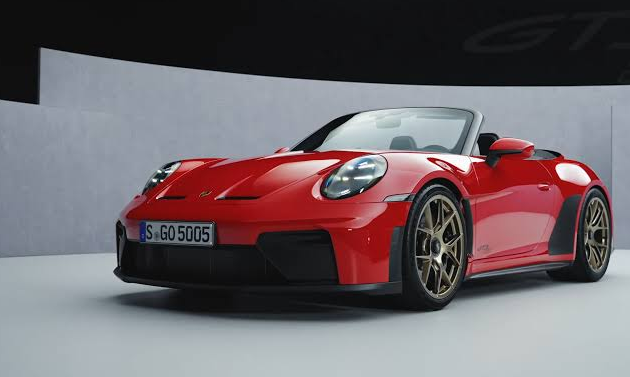
The decision to remove the roof from one of the world’s most revered track cars was a monumental risk, but Weissach has executed it with uncompromising brilliance. The Porsche 911 GT3 S/C defies the traditional logic of convertible sports cars. It successfully retains the raw, visceral intensity of the GT3 Touring while elevating the sensory experience to an entirely new echelon through open-air motoring. It demands your absolute attention, punishes clumsy driving, and rewards precision with an unmatched wave of mechanical euphoria.
If you are seeking a relaxed, comfortable grand tourer for Sunday drives, look elsewhere in the Carrera lineup. But if you desire the most unfiltered, immersive, and thrilling driving experience available on the market today, the GT department has just delivered a masterpiece.
Ready to experience the pinnacle of naturally aspirated performance? Contact your local premier Porsche center today to explore available allocations, or speak with an exotic vehicle specialist to structure the ultimate high-performance addition to your garage.