
2026 Porsche 911 GT3 S/C Review: The Ultimate High-Performance Convertible?
For over a quarter of a century, the periodic release of a new track-focused Porsche from Weissach has followed a remarkably predictable, yet entirely welcome, script. It has been the automotive equivalent of a blockbuster action franchise: the new iteration will be fundamentally similar to the old one, but amplified. We expect more aerodynamic downforce, higher mechanical grip, more visceral thrills, and an increasingly explosive dynamic envelope.
So, what happens when the director suddenly changes the fundamental formula? Imagine a major action franchise suddenly dropping its lead star. How could it possibly do the legacy justice? This is precisely the existential question facing the highly controversial Porsche 911 GT3 S/C. Stripped of its defining characteristic—the rigid roof that guarantees its race-derived, track-centric focus—how can this drop-top variant possibly live up to the legendary badge?
Traveling to Stuttgart as an automotive journalist with a decade of experience critiquing high-performance machines, I had three critical questions. First, is a convertible GT car a complete oxymoron? Second, does the Porsche 911 GT3 S/C actually understand its own identity? And third—the most unthinkable prospect of all—could this compromised, roofless experiment actually be better than the coupe?
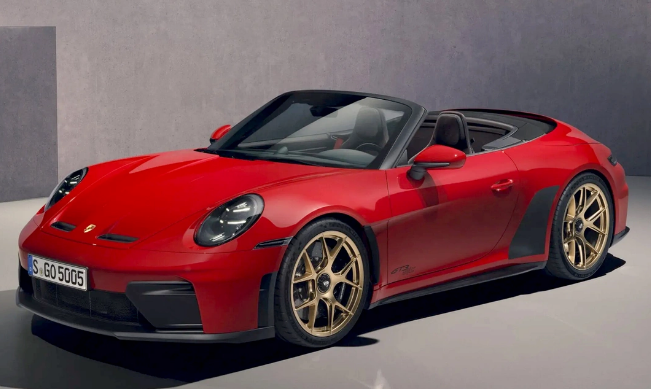
The Purist’s Dilemma: Can a Drop-Top Earn the Badge?
I sat down with Andreas Preuninger, the mastermind and director of Porsche’s GT division, to address the elephant in the room. I bluntly suggested that a vocal contingent of purists believes the Porsche 911 GT3 S/C cannot be a true GT3 without a fixed roof. Preuninger did not hesitate for a microsecond. He dismissed the notion entirely, defending the car with the absolute conviction of a man who knows he has just engineered a masterpiece.
I must confess my own biases here. Historically, I despise convertible versions of purpose-built sports cars. Chopping the roof off traditionally introduces a cascade of dynamic compromises. You gain unnecessary weight from the folding mechanisms, you lose torsional rigidity, and you introduce cowl shake that ruins the handling precision. These factors make the vehicle objectively worse at its primary job. Furthermore, the packaging constraints often ruin the aesthetic lines. Let us be brutally honest: most convertibles look vastly inferior with the fabric roof raised compared to their coupe counterparts.
However, evaluating the Porsche 911 GT3 S/C requires leaving those preconceived notions at the door. To understand this machine, we have to look past the fabric roof and dissect the hardcore engineering that lies beneath.
Engineering the Porsche 911 GT3 S/C: Weissach’s Wizardry
In the most reductive terms, the Porsche 911 GT3 S/C is a GT3 Touring that has been decapitated. It utilizes the exact same 3,996cc naturally aspirated flat-six engine and the glorious six-speed manual gearbox. Splendidly, for purists, there is no PDK automatic option available here. It also carries over the identical suspension hardware and aggressive track-focused geometry.
The raw statistics speak volumes: 503 brake horsepower, a staggering 0-60 mph time of 3.9 seconds, and a top speed of 194 mph. But the most shocking figure is the curb weight. Tipping the scales at just 1,497 kilograms (3,300 lbs), the Porsche 911 GT3 S/C is a mere 36 kilograms heavier than its notoriously svelte Touring sibling.
How did a convertible with a fully automated roof—one that retracts in a brisk 12 seconds—manage to stay so light? I initially assumed this floppy spin-off was a cynical cash grab engineered by the marketing department to cater to buyers seeking a luxury sports car investment rather than a true driving tool. I was spectacularly wrong.
The genesis of the Porsche 911 GT3 S/C came straight from the hardcore GT product team, but it advanced under two non-negotiable mandates from Preuninger. First, fully fueled and loaded with fluids, it had to weigh under 1.5 metric tons. Second, it had to remain absolutely true to the exacting dynamic standards of the GT division.
To achieve this obsessive weight target, Porsche’s engineers raided the ultra-exclusive S/T parts bin. They integrated high-end automotive performance upgrades straight from the factory, including carbon fiber doors, front fenders, the front trunk lid, the rear anti-roll bar, and the shear panel. Forged magnesium wheels were added to reduce unsprung mass, and Porsche Ceramic Composite Brakes (PCCB) were made standard equipment. Furthermore, large structural sections of the folding roof mechanism are crafted from magnesium. These extreme weight-saving measures effectively neutralized half of the mass gained from the heavier convertible body shell and the roof motors.
Chassis Dynamics and Aerodynamic Wizardry
Addressing the dynamic challenge was equally complex. Retaining the GT3’s double-wishbone front suspension was non-negotiable. Consequently, the engineers utilized the wider, roofless body-in-white of the Carrera 4, heavily modifying it to accept the aggressive GT hardware.
The resulting torsional stiffness of the Porsche 911 GT3 S/C is rated at an impressive 27,000 Nm/degree. To put that into perspective, this represents a massive 25 percent improvement over the previous 991-generation Speedster and makes it structurally comparable to modern fixed-roof sports cars featuring bonded aluminum chassis.
During a deep dive with Preuninger, I pressed him on the specific engineering choices. Why use the Carrera 4 shell instead of the lighter Carrera 2? He explained that the GT team required the cavernous central space normally occupied by the front differential to install an extended-range fuel tank. As for chassis flex, Preuninger is adamant that it is physically impossible for a human driver to discern any structural compromise on public roads.
Interestingly, the ultra-lightweight single-mass flywheel from the S/T was left on the shelf. The Porsche 911 GT3 S/C has a distinctly different, slightly more usable mandate. However, aerodynamics remain purely GT-focused. The car generates 16 kilograms of actual downforce at high speeds. While this number seems paltry compared to the massive wing-equipped coupe, it is a game-changer when you realize that comparable high-performance drop-tops typically generate 150 to 200 kilograms of dangerous aerodynamic lift at highway speeds. By keeping the full underbody aero strakes and adding a subtle Gurney flap to the rear deck, the Porsche 911 GT3 S/C remains completely planted.
The First Drive: A Humbling Experience
Thoroughly convinced by the engineering briefing, I was eager to get behind the wheel. The following morning, I dropped into the carbon fiber bucket seats of a striking Slate Grey Neo example. (These lightweight buckets are a mandatory specification over the 18-way electric seats, as the car’s suspension damping was explicitly tuned to harmonize with the seat’s rigid structure).
I expected to feel instantly at home. Instead, I was immediately humbled.
As I pulled out of the hotel to follow our camera car, I found myself completely incapable of executing a smooth gear change. My braking was jerky, my throttle applications lacked grace, and keeping the Porsche 911 GT3 S/C tracking perfectly straight felt like a chore. To cement my embarrassment, I stalled the brilliant naturally aspirated flat-six engine while trying to pull out of a scenic layover. I felt like a teenager learning to drive a manual transmission for the first time, kangarooing down the pristine German tarmac.
For a vehicle that commands such a premium—often requiring buyers to navigate complex exotic car financing or seek out premium sports car insurance just to get it out of the showroom—the initial learning curve is exceptionally steep.
The roads an hour south of Stuttgart are a driver’s paradise: sweeping, beautifully surfaced A-roads cutting through spectacular, traffic-free countryside. Yet, mid-way through a third-gear overtake, I took one hand off the steering wheel to shift. The Porsche 911 GT3 S/C instantly reacted to a microscopic change in road camber, darting aggressively toward the edge of the lane.
My initial frustration gave way to an epiphany. My muscle memory was corrupted. I had just spent a week wrestling a heavy, 45-year-old classic car where every input—steering, braking, shifting—required immense physical effort and wide, sweeping motions.
The Porsche 911 GT3 S/C detests that driving style. Honed to a razor’s edge, it demands absolute finesse. Every control interface is engineered for maximum two-way communication, meaning the inputs it requires are granular and telepathic.
Unleashing the Beast on Open Roads
As we navigated the tighter, technical sections of the Schwäbische Alb, slowed by local traffic, I realized another critical truth about the Porsche 911 GT3 S/C. Because it lacks a roof, you might assume it is happy to be driven like a traditional grand tourer. It is not.
This car is a highly-strung athlete. At low speeds, it feels like a hunting dog straining against a leash. It quivers on its haunches, muscles taut, waiting for the exact moment it can explode toward the horizon. If you drive this car at anything less than eight-tenths of its capability, it feels restless. There is an undeniable tension between the chassis, the tarmac, and the driver. The steering, the aggressive damping, and the high-revving engine do not find their harmonic fluency until you are pushing hard.
But when you finally find the space to let the Porsche 911 GT3 S/C breathe, it delivers an automotive religious experience.
Once my brain rewired itself to the car’s hypersensitive language, the magic happened. Leaving a small village, the derestricted speed limit sign appeared. I pinned the throttle. The naturally aspirated flat-six shrieked toward its 9,000-rpm redline, the mechanical symphony entirely unfiltered by a roof.
Because of a slight adjustment to the front-to-rear weight distribution, the Porsche 911 GT3 S/C is surprisingly the most drift-happy of all current GT3 variants. It rotates around your hips with startling clarity, communicating exactly how much grip remains through the spectacular carbon bucket seats.
When Preuninger stated that the GT badge stands for “the most connected, immersive driving experience for either road or track,” he was not speaking in marketing platitudes. Removing the roof of a manual, lightweight, naturally aspirated sports car inherently connects you more viscerally to the sensation of speed. The rushing wind, the intake howl, and the mechanical clatter of the gearbox all flood the cabin, elevating the emotional appeal without sacrificing the dynamic brilliance.
The Verdict: A Masterpiece for the Discerning Driver
In today’s rapidly changing automotive landscape, finding a naturally aspirated, manual-transmission sports car is incredibly rare. Finding one engineered to this obsessive standard is nearly impossible. The Porsche 911 GT3 S/C defies logic. It takes the compromises normally associated with drop-top engineering and completely obliterates them through relentless, uncompromising Weissach engineering.
For those looking to buy a Porsche 911 GT3 online or source one through exclusive dealership allocations, the S/C presents a fascinating proposition. It is more than just a track toy; it is a blue-chip luxury sports car investment that offers an unmatched sensory experience on public roads. Yes, you will need to secure premium sports car insurance, and the price tag dictates that many will utilize bespoke exotic car financing. But the financial hurdles pale in comparison to the driving reward.
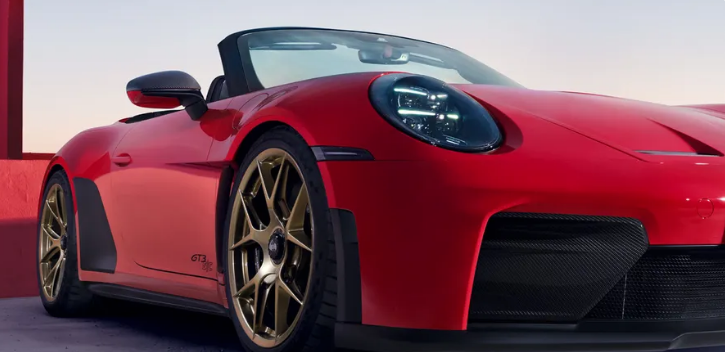
The Porsche 911 GT3 S/C is not just a real GT car; for the majority of driving enthusiasts who spend their weekends carving canyons rather than chasing lap times, it might actually be the best GT car Porsche currently makes. It retains all the explosive, dynamic action of its hardtop siblings but adds a layer of theatrical, open-air engagement that is entirely unmatched in the modern era.
Are you ready to experience the pinnacle of open-top analog performance before the era of electrification silences the naturally aspirated flat-six forever? Contact your local Porsche ambassador today to inquire about exclusive S/C allocations and secure your place in automotive history.