
2026 Chevrolet Corvette ZR1X Review: The 1,250-Horsepower American Hypercar That Redefines Exotic Performance
After a decade of evaluating the world’s most elite performance vehicles, you start to develop a natural skepticism toward spec-sheet hyperbole. When an automaker promises a revolutionary leap in driving dynamics, it usually translates to incremental improvements wrapped in marketing speak. But occasionally, a machine arrives that shatters the established paradigm so violently that the entire industry is forced to recalibrate. The 2026 Chevrolet Corvette ZR1X is exactly that kind of machine.
By taking the mid-engine C8 platform to its absolute, electrified, twin-turbocharged zenith, Chevrolet hasn’t just built America’s greatest sports car. They have engineered a legitimate, world-beating hypercar that democratizes 1,250 horsepower.
The Anatomy of a Monster: Merging V8 Fury with EV Precision
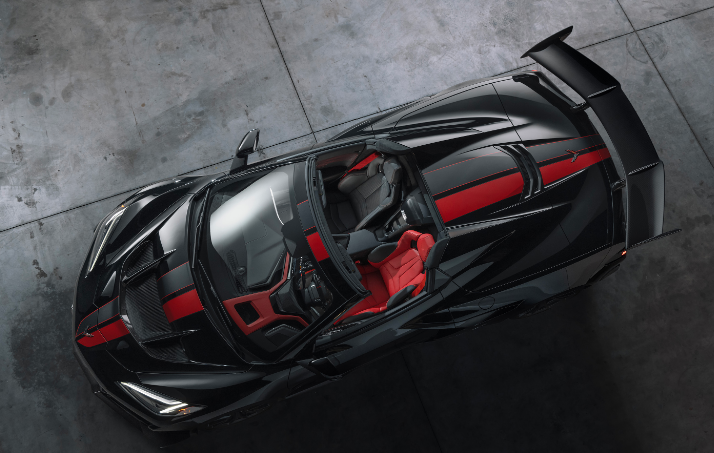
To understand the sheer audacity of the 2026 Chevrolet Corvette ZR1X, we have to trace the evolutionary steps of the C8 generation. First came the Stingray, which proved that an American mid-engine layout could offer exotic-level balance for under $60,000. Next was the Z06, introducing a naturally aspirated, flat-plane crank 5.5-liter V8 that howled like a Maranello thoroughbred. Then Chevrolet integrated a front-mounted electric motor and battery pack in the E-Ray, establishing a sophisticated all-wheel-drive hybrid system. Last year, the ZR1 bolted twin 76-millimeter turbochargers onto the Z06’s block, generating a demonic 1,064 horsepower.
Now, the 2026 Chevrolet Corvette ZR1X combines the ZR1’s forced-induction V8 with the E-Ray’s electrified front axle. The result is a combined output of 1,250 horsepower.
At a recent automotive media launch at the Circuit of the Americas (COTA)—one of the most demanding technical tracks in the country—the ZR1X immediately proved it was more than just a straight-line bruiser. Going into the event, industry whispers focused heavily on curb weight. By bolting an electric powertrain to an already heavy twin-turbo chassis, the math suggested the ZR1X would eclipse the 4,000-pound mark when fully loaded with fluids and a driver. Yet, out on the sweeping corners of COTA, the mass was meticulously masked. And with credible rumors circulating about Nürburgring lap-time battles against the Ford Mustang GTD, it became clear that Chevy’s engineering team had pulled off a miracle in chassis calibration.
Straight-Line Violence and the Hybrid Advantage
Track days are one thing, but living with a vehicle in the real world is the true test. When a bright Sebring Orange 2026 Chevrolet Corvette ZR1X arrived in my Los Angeles driveway for a week-long loan, I set out to answer one question: Can a 1,250-horsepower track weapon function as a daily driver, a canyon carver, and a dragstrip demon simultaneously?
Equipped with the high-wing carbon fiber aero package, the car possesses zero subtlety. It looks like it belongs on a Le Mans starting grid. But subtle is irrelevant when you engage Launch Control. Hitting the throttle in the 2026 Chevrolet Corvette ZR1X delivers a visceral shock to the nervous system. While high-performance EVs like the Rimac Nevera or Lucid Air Sapphire deliver instantaneous, silent g-forces, the ZR1X offers a dramatically more engaging theater of speed.
The immediate torque of the front electric motors snaps you into the seat, but then the mechanical symphony begins. The twin turbos spool with a high-pitched whine, the rear tires briefly fight for traction before the ECU intervenes, and the flat-plane V8 erupts into a deafening roar as it races toward redline. It is absolute sensory overload. You arrive at triple-digit speeds laughing, bewildered, and physically breathless.
For context, I spent the previous week testing the Lamborghini Revuelto, a $600,000-plus plug-in hybrid V12 exotic producing 1,001 horsepower. Carving through the sweeping turns of the Angeles Crest Highway, the Lamborghini felt like the pinnacle of modern performance. But jumping directly into the 2026 Chevrolet Corvette ZR1X renders the Italian exotic feeling surprisingly sluggish by comparison. The only vehicle that offers a comparable sensation of acceleration is the Czinger 21C—a hypercar that matches the 1,250-horsepower figure but commands a multi-million dollar price tag and lacks the seamless traction control precision of the Chevrolet.
Carving the Canyons: Pushing the Limits of Grip
Despite its drag-strip capabilities, my automotive passion lies in lateral g-forces and technical cornering. To truly evaluate the chassis, I took the 2026 Chevrolet Corvette ZR1X into the tight, twisting canyons of Malibu.
Even in Sport mode, the sheer power of the powertrain easily overwhelmed the Michelin Pilot Sport 4 S tires. The mass transfer—both fore-and-aft under heavy braking and side-to-side through switchbacks—is palpable. The torque is available instantly in any gear, meaning every corner exit requires extreme throttle discipline. If you get greedy, the traction control works overtime, reigning in the power until the steering wheel unwinds, pushing the car aggressively into the ABS zone at the next braking marker. The sheer pace evaporates straightaways faster than your brain can process the closing distance.
However, switching into Track mode awakens an entirely different beast. The electronic nannies step back, allowing a generous degree of slip. Driven hard, the 2026 Chevrolet Corvette ZR1X transforms into a tarmac rally car. You can dive aggressively toward apexes, induce a few degrees of highly controllable oversteer, and use the front electric motors to claw your way out of the corner.
Crucially, Chevrolet’s software engineers have mastered the handshake between the front EV system and the rear internal combustion engine. In earlier E-Ray models, drivers occasionally experienced a jarring “reverse torque steer” where the front motors seemed to fight the initial turn-in. In the ZR1X, that sensation is entirely eradicated. The integration is flawless, allowing the two independent powertrains to operate as a single, cohesive organism.
The sheer physical toll of driving this car at eight-tenths is staggering. After 20 minutes of canyon carving, I was left with a sore neck, a mild headache, and a fading adrenaline rush—the exact same physical fatigue I experience after riding a superbike on a circuit. Yet, I experienced this while sitting in ventilated leather seats with the air conditioning running.
Everyday Drivability and the Value Proposition
The most incomprehensible aspect of the 2026 Chevrolet Corvette ZR1X is its duality. Once my canyon run was over, I toggled the drive selector back to Tour mode. Instantly, the hypercar relaxed. The MagneRide suspension soaked up broken Los Angeles pavement with astonishing compliance. The 50-millimeter front axle lift seamlessly protected the expansive carbon fiber splitter from steep driveways.
Inside the cabin, the 2026 model year updates shine. Chevrolet has finally addressed the claustrophobic center console layout that plagued early C8s, replacing the awkward wall of buttons with a highly ergonomic, streamlined interface accompanied by a dedicated performance data screen. While the aggressive track alignment causes the massive tires to tramline on grooved highways, and the engine boom remains prevalent even with the exhaust valves closed, it is remarkably easy to live with.
Then there is the financial reality. In the elite tier of automotive performance, buyers are accustomed to navigating complex luxury sports car leasing structures, exorbitant high-performance vehicle insurance premiums, and crushing depreciation. The 2026 Chevrolet Corvette ZR1X disrupts this entirely.
With a base MSRP of $216,400 (and my heavily optioned tester ringing in at $242,060), this car is arguably the greatest performance bargain of the 21st century. It costs a third of a Lamborghini Revuelto, a fifth of an Aston Martin Valhalla, and a tenth of a Czinger 21C, yet it will happily gap all of them at a stoplight and chase them down on a track.
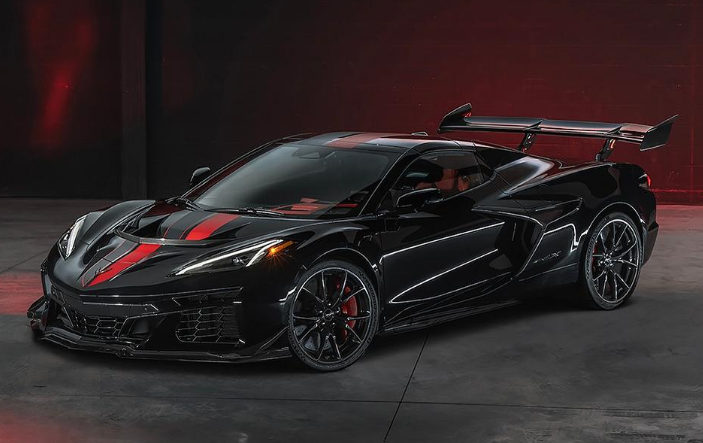
If I were ordering one tomorrow, I would skip the $10,495 carbon aero package and the massive rear wing. I would opt for a subtle metallic silver paint, retain the standard wheels, and immediately swap the rubber for Michelin Pilot Sport Cup 2s. The result would be the ultimate sleeper—an approachable, reliable, American-made machine that casually houses the power of a Bugatti Veyron.
The automotive landscape is shifting rapidly, but Chevrolet has proven that the internal combustion engine still has a magnificent, roaring role to play when paired with cutting-edge electrification. If you have the means and the driving pedigree to handle the most capable production vehicle ever built on American soil, do not wait for the allocation lists to close. Contact your local premium Chevrolet dealership today, configure your ideal spec, and prepare to experience the pinnacle of hypercar evolution.