


The Most Exclusive Auto Recall in History: Inside the One-Truck 2026 Toyota Tundra Recall
In the sprawling, high-stakes automotive industry, safety campaigns usually involve tens of thousands, if not millions, of vehicles. From faulty airbags to software glitches, the standard narrative is one of mass production yielding mass correction. However, every so often, a regulatory anomaly occurs that completely flips this script. Today, we are looking at an incredibly unique event: a Toyota Tundra recall that affects precisely one single vehicle. Yes, you read that correctly. A recent Toyota Tundra recall issued through the National Highway Traffic Safety Administration (NHTSA) applies to a lone 2026 pickup truck. As an automotive industry analyst with over a decade of experience tracking manufacturing compliance, I find this hyper-specific Toyota Tundra recall to be a fascinating case study in federal regulations, dealership logistics, and aftermarket truck customizations.
To understand how a Toyota Tundra recall can target just one buyer, we have to look at the regional distribution networks that supply vehicles to local dealerships. The entity responsible for this specific regulatory action is Southeast Toyota Distributors, a massive independent franchise distributor based in the Southeast United States. Operating heavily out of the Florida Toyota dealerships network, this distributor processes thousands of vehicles annually. Yet, their internal compliance database flagged just one unit. According to the official NHTSA documents filed in early July 2026, this Toyota Tundra recall centers entirely around federal regulations governing the Gross Vehicle Weight Rating (GVWR) and load carrying capacity modification labels.
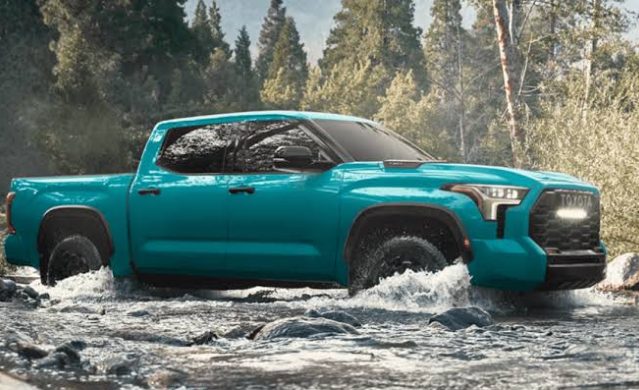
Typically, when a truck arrives at a regional port or distributor, it is fitted with various aftermarket accessories before it reaches the retail lot. In the case of this specific Toyota Tundra recall, the installed accessories were inadvertently deleted from the vehicle’s digital build sheet during processing. Because these undisclosed accessories were physically bolted onto the truck, they added mass. However, that extra mass was not calculated into the vehicle’s final certified GVWR tag before its first retail sale. Consequently, this Toyota Tundra recall was initiated not because the truck is mechanically defective, but because its paperwork and doorjamb sticker are mathematically inaccurate.
Why go through the immense bureaucratic effort of filing a Toyota Tundra recall for a sticker? The answer lies in strict federal motor vehicle standards. The law dictates that any load carrying capacity modification label must be accurate to within one percent (1%) of the total weight of accessories installed between final factory certification and the first retail sale. Because this truck’s label exceeded that razor-thin 1% margin of error, a formal Toyota Tundra recall was legally mandatory.
From an engineering and legal standpoint, payload capacity is not a mere suggestion; it is a hard limit dictated by suspension strength, braking thermal capacity, and tire load indexes. If a consumer relies on an inaccurate sticker, they might overload the bed or attach a trailer that exceeds safe operating parameters. When trucks are overloaded, the risk of a crash increases exponentially due to prolonged stopping distances and an altered center of gravity. In the realm of high-stakes litigation, a truck accident lawyer or commercial vehicle accident attorneys frequently look at GVWR compliance after a severe collision. If a manufacturer or distributor fails to provide an accurate load sticker, they open themselves up to massive automotive liability. Therefore, executing this Toyota Tundra recall—even for one truck—is a crucial risk mitigation strategy against potential future lawsuits and surging auto insurance premiums.
To fully grasp why a seemingly minor labeling error triggered this specific Toyota Tundra recall, we must explore the underlying engineering of a modern pickup truck. The Gross Vehicle Weight Rating is not an arbitrary number pulled from thin air by marketers; it is a meticulously calculated maximum threshold determined by the truck’s structural integrity. Engineers calculate GVWR by evaluating the Gross Axle Weight Rating (GAWR) of both the front and rear axles, factoring in the spring rates of the suspension, the thermal dissipation limits of the brake rotors, and the load index of the factory-installed tires. When aftermarket accessories are bolted onto the frame, they eat into the available payload capacity. If a driver, relying on a faulty sticker, loads the bed to what they believe is the maximum capacity, they are actually pushing the truck past its mechanical limits. This can cause catastrophic failure at highway speeds. A compromised suspension alters the pinion angle of the driveshaft, potentially leading to driveline failure, while overloaded brakes can experience fluid boiling, resulting in a total loss of stopping power. This is the precise mechanical danger that this Toyota Tundra recall aims to prevent.
While the exact parts that triggered this safety campaign haven’t been explicitly detailed by the manufacturer, anyone familiar with the Florida truck market knows the types of modifications popular in this region. From heavy-duty steel bumpers and winch mounts to fiberglass tonneau covers, bed extenders, and upgraded suspension leveling kits, modern aftermarket accessories can easily add hundreds of pounds to a pickup’s curb weight. When a customer buys a fully loaded rig from Florida Toyota dealerships, they expect the payload figures on the doorjamb to reflect the truck as it sits on the lot. This isolated Toyota Tundra recall highlights a critical vulnerability in the supply chain: the gap between digital build sheets and physical wrench-turning.
The distributor realized in April 2026 that a dealership had received a truck featuring an accessory package that somehow vanished from the digital ledger. While a supplemental weight label was technically added to the vehicle, the math was wrong because the baseline accessory data was missing. Thus, the foundation for the most exclusive Toyota Tundra recall of 2026 was laid.
In today’s hyper-connected manufacturing landscape, identifying a single flawed unit among hundreds of thousands of trucks is a testament to modern data tracking. Southeast Toyota Distributors utilized advanced internal inventory and compliance databases to isolate this exact VIN. The fact that a Toyota Tundra recall could be narrowed down to a single truck proves that automotive auditing systems have reached an unprecedented level of granularity. In decades past, an error like this would likely have slipped through the cracks, leaving the owner completely unaware. Today, however, the NHTSA requires distributors and manufacturers to maintain flawless chains of custody regarding vehicle modifications. This one-unit Toyota Tundra recall is essentially the system working exactly as intended. It demonstrates that the safety nets designed to catch regulatory noncompliance are functioning at a microscopic level. As an expert who has audited numerous OEM production lines, I can attest that catching a singular labeling error before an incident occurs—and launching a formal Toyota Tundra recall to fix it—is a massive win for quality assurance teams.
Let’s delve deeper into why this matters on the pavement. The 2026 Tundra is a highly capable machine, boasting impressive towing and payload metrics. However, when an owner buys a truck, they rely on that specific door sticker to calculate how much gravel, lumber, or camping gear they can safely haul. If the sticker overestimates the remaining payload because heavy accessories were ignored, the driver might unintentionally push the truck beyond its physical limits. Operating an overloaded vehicle puts immense strain on the transmission, increases the likelihood of tire blowouts, and causes brake fade on steep downgrades. Should a driver get into an accident because their brakes overheated from an uncalculated overload, the resulting crash could lead to severe injuries. Insurance companies assessing auto insurance premiums and claims will closely examine the vehicle’s weight at the time of the crash. If an investigation reveals the manufacturer provided false payload data, the financial fallout could be catastrophic. By issuing this Toyota Tundra recall, the distributor completely absolves themselves of that latent liability. This safety action is an administrative shield just as much as it is a consumer protection measure.
Let’s consider the commercial implications as well. Many pickups are purchased not just for personal use, but as commercial fleet vehicles. If this single isolated truck involved a business registered to a commercial construction firm, the stakes would be significantly higher. Commercial vehicle weight regulations are fiercely enforced by the Department of Transportation (DOT). If a commercial driver is pulled over for a random DOT inspection and the vehicle is found to be overweight, the resulting fines can be staggering. An inaccurate GVWR sticker, like the one that sparked this Toyota Tundra recall, could inadvertently cause a small business to violate federal transportation laws. Furthermore, in the event of an incident involving a commercial vehicle, corporate liability insurance policies are scrutinized under a microscope. If a commercial vehicle accident attorney discovers that a crash was caused by an overloaded truck, and the defense relies on an inaccurate factory sticker, the resulting litigation could drag multiple corporate entities into a massive lawsuit. By getting ahead of the issue with a proactive Toyota Tundra recall, the distributor effectively neutralized a ticking legal time bomb.
Usually, a safety campaign requires the owner to drop off their vehicle at a service center for days, waiting for parts to be swapped, software to be flashed, or components to be re-welded. The remedy for this particular Toyota Tundra recall, however, is hilariously simple. It is a pure paperwork fix for a physical truck. The lone owner affected will receive a formal notice of noncompliance in the mail, accompanied by a brand-new, mathematically accurate load-carrying capacity modification label. The owner or a local dealer simply peels off the old sticker and applies the new one. Once that piece of adhesive paper is pressed into the doorjamb, the truck is fully road-legal and compliant with federal motor vehicle safety standards once again. The NHTSA file is closed, and the owner can resume hauling with accurate data. It is a strikingly mundane conclusion to what sounds like a dramatic regulatory event. Yet, this Toyota Tundra recall beautifully illustrates the rigid, black-and-white nature of federal compliance. There is no “close enough” in automotive engineering. If a label is off by more than 1%, a recall must happen, regardless of how simple the fix might be.
From my ten years of experience walking the floors of regional distribution centers and auditing dealership supply chains, I have seen first-hand how the booming aftermarket accessory industry complicates federal compliance. In 2026, the demand for off-road capability and rugged aesthetics is at an all-time high. Dealerships know that a truck outfitted with aggressive wheels, beefy tires, and a rugged bed rack will sell faster and at a higher margin than a base model. However, managing the compliance of these upgrades is a logistical nightmare. Every time an accessory is added at the distributor level, a technician must log the part number, cross-reference its weight, and update the vehicle’s master digital file. If a technician is rushed, or if the inventory software glitches—as it did in the case of this Toyota Tundra recall—the physical reality of the truck becomes decoupled from its digital and legal identity. To prevent the need for another singular recall in the future, distributors are likely investing heavily in automated weight-scale integrations at the end of their accessory assembly lines. Imagine a system where the truck is driven over a hyper-accurate scale before it is loaded onto a transport semi-truck. If the scale weight does not match the computed digital GVWR within the mandated 1% margin, the vehicle is flagged immediately. Implementing such fail-safes would guarantee that the paperwork always perfectly reflects the physical machine.
Automakers don’t just build cars; they build heavily regulated commodities that must pass a gauntlet of federal, state, and local laws before a consumer can legally register them. When a truck transitions from the factory floor to a regional distributor like Southeast Toyota, it enters a gray area of final assembly. Here, it is transformed from a standardized factory product into a customized retail unit. This event highlights the exact moment that transformation process failed. The distributor did their job by adding the requested accessories, but the administrative side failed to document the added mass. Because weight is the enemy of automotive efficiency and safety, failing to document weight is akin to failing to document a missing lug nut. It is a structural omission. By willingly initiating this Toyota Tundra recall, the distributor chose transparency over obfuscation. In an industry historically criticized for hiding defects until forced by public outcry, volunteering a Toyota Tundra recall for a single incorrect sticker is a refreshing display of proactive corporate responsibility.
Even if you are not the one individual affected by this exclusive situation, there is a massive lesson to be learned here as a truck owner. Never take your vehicle’s payload capacity for granted. Every time you bolt on a new accessory—whether it’s a toolbox, a roof top tent, or heavy-duty skid plates—you are eating into your legal and physical load carrying limits. While a manufacturer might issue a Toyota Tundra recall if they make a mathematical error before the first retail sale, the responsibility shifts entirely to you once you take ownership. If you heavily modify your rig in your driveway and subsequently overload it, no safety campaign is going to save you from the liability of a blown tire or a compromised suspension. Always weigh your truck at a certified scale after major modifications to understand your true remaining payload. Being an informed driver is the best way to keep your auto insurance premiums low and ensure you never need the services of a truck accident lawyer.
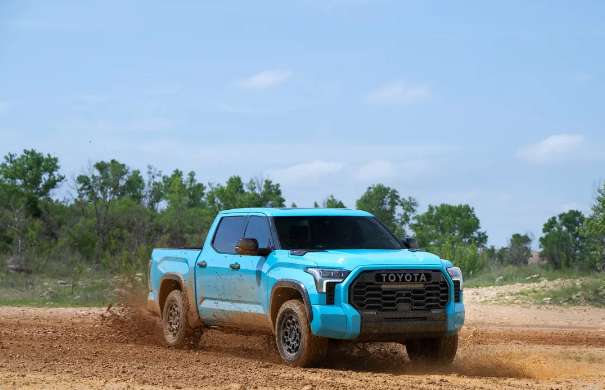
As we analyze the fallout of this event, it is clear that the Toyota Tundra recall for a single 2026 pickup is more than just a quirky news headline. It is a testament to the uncompromising nature of highway safety standards. The National Highway Traffic Safety Administration does not grant exemptions for “small mistakes,” and major distributors cannot afford to sweep even minor labeling errors under the rug. This specific Toyota Tundra recall proves that the system works. It proves that internal audits are being conducted thoroughly, and that consumer safety—even the safety of just one consumer—is prioritized over the embarrassment of filing a microscopic safety campaign. It is a fascinating snapshot of the automotive industry’s meticulous operational standards.
Are you looking to modify your own pickup, or do you want to ensure your current rig complies with all safety and payload regulations? Don’t leave your payload limits to chance or risk skyrocketing auto insurance premiums due to an accidental overload. Click the link below to download our comprehensive expert guide on understanding GVWR, safely installing aftermarket accessories, and keeping your truck perfectly compliant for the road ahead!