
The Elusive Dream: Why French Luxury Cars Can’t Conquer the Premium Auto Market
France is globally universally recognized as the undisputed capital of high-end lifestyle goods. From haute couture fashion houses to premium spirits, the nation practically invented the modern concept of prestige. Yet, having analyzed the global automotive industry for over a decade, I find a glaring and fascinating paradox: the complete inability of French luxury cars to establish a lasting, dominant foothold in the premium vehicle market.
I recently evaluated the new electric DS No 8—the latest flagship EV brought to market by the Stellantis automotive conglomerate. While it is certainly an interesting engineering exercise, it left me wishing the brand had taken a different direction. It represents a long-standing case of reach exceeding grasp, a hubristic cycle that has plagued French automakers for nearly a century.
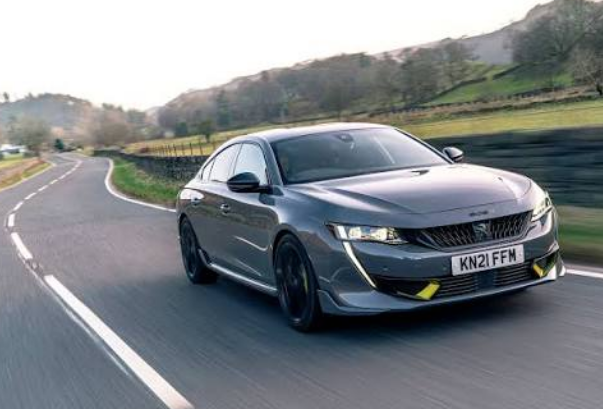
To understand why modern French luxury cars continuously struggle against the entrenched German monopoly, we have to look past the marketing gloss and dig into the engineering history, government policies, and shifting consumer expectations that define the best luxury car brands 2025 has to offer.
The Goddess and the Golden Age of Ambition
The modern DS brand borrows its name from the legendary 1955 Citroën DS (déesse, or “goddess”). Designed by Flaminio Bertoni and engineered by André Lefèbvre, the original DS was a breathtaking masterpiece. The philosopher Roland Barthes famously likened it to an object fallen from space. Its advanced hydropneumatic suspension delivered an otherworldly ride quality that famously saved the life of President Charles de Gaulle during an assassination attempt in 1962.
However, despite selling over 1.45 million units before its discontinuation in 1975, the original DS was never strictly marketed as a traditional luxury vehicle. Instead, it was positioned as a showcase of avant-garde high technology and French engineering brilliance. It possessed a sub-premium technological aura, but it lacked the refined powerplants of its international rivals—ultimately saddled with a pedestrian four-cylinder engine rather than the air-cooled flat-six it was originally designed for.
If you trace the lineage of true French luxury cars, you have to look back before the Second World War. In 1929, Louis Renault launched the Reinastella, a massive 17-foot, 7.1-liter straight-six sedan expressly built to battle Rolls-Royce, Cadillac, Packard, and Daimler. Emblazoned with a star emblem above the classic Renault diamond, it was an absolute behemoth.
Unfortunately, timing in the auto industry is everything. Launching a hyper-expensive, 2.5-ton vehicle on the eve of the Great Depression was disastrous. Despite iterations like the Nervastella and Suprastella, the project was quietly euthanized by 1942. At the time, France was Europe’s largest auto manufacturer. Brands like Peugeot were building undeniably gorgeous, elite automobiles—such as the 601 series with its electrically folding Eclipse roof—aimed squarely at the nation’s wealthiest buyers. During this golden era, the success of French luxury cars seemed like the natural order of things.
Bureaucracy and the Post-War Guillotine
The narrative surrounding French luxury cars fundamentally changed after World War II. The conflict decimated French manufacturing, and the subsequent recovery effectively regulated the domestic luxury auto industry out of existence.
Enter the Pons Plan, a heavily statist initiative orchestrated by civil servant Paul-Marie Pons. The plan forcibly consolidated the surviving French automakers, favoring large conglomerates, commercial utility vehicles, and mass-market exports over individual engineering flair. Companies like Citroën and Renault stubbornly remained independent, but they were forced to pivot their focus entirely toward volume production.
More devastatingly, the government introduced punitive taxation on large-displacement engines. This aggressive tax structure served as a death sentence for independent prestige automakers. Storied names that once defined high-performance luxury vehicles—Delahaye, Delage, Bugatti, and eventually Facel Vega—were systematically starved of their domestic customer base. By the 1960s, France was entirely out of the prestige auto business, even if mainstream domestic executives refused to admit it.
Chasing the German Monopoly
Throughout the 1990s and 2000s, European automakers from France repeatedly attempted to crack the executive sedan market, but they were met with a wall of consumer indifference. The luxury landscape had shifted, and buyers were now conditioned to equate premium quality exclusively with Munich and Stuttgart.
When considering investing in French luxury cars, buyers were repeatedly offered quirky alternatives rather than refined precision. Renault’s quality control issues became so severe in the 1990s that executives famously dragooned middle management into stadiums to aggressively demand better build quality for models like the Safrane and Laguna.
The most audacious modern attempts at reviving French luxury cars came at the turn of the millennium with the Renault Vel Satis and the Avantime. Spearheaded by designer Patrick Le Quément, these vehicles were explicitly designed to disrupt the German hegemony. The Vel Satis cost a staggering €550 million to develop. Renault projected 50,000 sales in its first year; in reality, it took eight grueling years of production just to surpass 62,000 units globally. The Avantime—a radical, pillarless coupe-minivan hybrid—fared even worse, selling barely 8,000 units before its contract manufacturer, Matra, abandoned car production entirely out of sheer disillusionment.
Even Citroën eventually compromised its avant-garde ethos. In 2008, they launched the C5 with a massive advertising campaign touting it as “Unmistakenly German – Made in France.” The campaign was brilliant, but conceding your brand’s unique identity to praise your rivals is the ultimate admission of defeat.
The DS Dilemma and the 2025 Reality
This brings us to the modern era and Stellantis CEO Carlos Tavares’s decision to spin DS into a standalone luxury brand in 2014. From a boardroom perspective, the logic is clear: premium vehicles account for roughly a quarter of the global market but generate a massive 38 percent of the profits. However, you cannot claim a slice of that profit pool if you can’t move inventory.
Today, the modern portfolio of French luxury cars under the DS badge struggles to define its identity. While DS executives frequently claim they are building the “Louis Vuitton of the automotive world,” the sales data tells a much harsher story. The bulk of their volume relies on the mid-sized DS7 and the compact DS4. If you want proof of the brand’s struggles at the true high end, look no further than the DS9 luxury sedan—which recently moved fewer than a dozen units in the UK over a full calendar year. For buyers analyzing the US luxury auto market, DS remains entirely invisible, leaving American consumers to seek out established domestic or German alternatives when looking for premium electric SUVs.
The final nail in the coffin for modern French luxury cars isn’t just market perception; it is, once again, the French government. The malus écologique (green tax) is a brutal penalty system that heavily taxes vehicles based on weight and CO2 emissions. As we navigate through 2025, the French government is tightening the screws, dropping the penalty threshold to 113g/km this year, moving to 106g by 2026, and a suffocating 99g by 2027.
This means a traditional heavy, high-powered luxury SUV could face an annual domestic tax penalty approaching €70,000 to €90,000. While these taxes impact all high-end vehicles, they are particularly ruinous for domestic brands trying to build a foundation. When President Emmanuel Macron was recently paraded down the Champs-Élysées in a specialized midnight-blue DS No 8, the irony was palpable. His administration’s tax policies have effectively torpedoed whatever slim domestic market remained for these high-end vehicles. After all, if affluent French citizens are legislated out of buying French luxury cars, why would the rest of the world step in to save them?
The Road Ahead for Premium Auto Buyers
The history of French luxury cars is a fascinating study in engineering pride repeatedly colliding with harsh market and legislative realities. While French brands continue to produce excellent mass-market hatchbacks and innovative urban EVs, their luxury offerings remain a highly niche proposition that fails to resonate on the global stage.
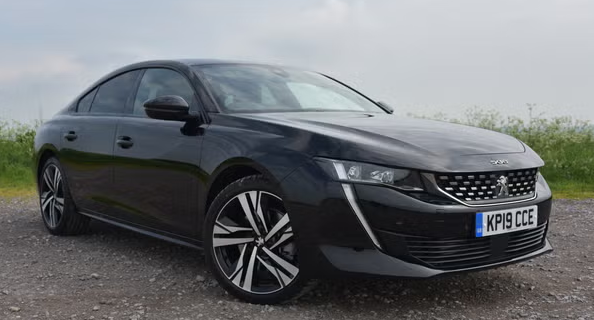
For consumers who demand uncompromising build quality, advanced performance, and retaining value, the current landscape requires looking elsewhere. Whether you are actively visiting local luxury car dealerships, researching the intricacies of luxury auto leasing, or simply looking to safely buy luxury cars online, the market is richer than ever with top-tier German, American, and Asian alternatives that truly deliver on their premium promises.
Ready to upgrade your driving experience? Explore our comprehensive 2025 guide to the top-rated premium electric SUVs and discover competitive luxury auto leasing programs that put you behind the wheel of a proven, world-class vehicle today.