


The End of an Apex Era: The Final Bugatti Mistral and the Legacy of the Bugatti W-16 Engine
The automotive landscape is undergoing a monumental shift, and the physical manifestation of that change has just rolled out of the fabled gates in Molsheim, France. After over two decades of shattering top-speed records and redefining high-performance automotive engineering, the Bugatti W-16 engine is officially concluding its road-going production run. The final Bugatti Mistral—appropriately christened “The last of its kind”—has been completed, marking the absolute end of the quad-turbo W-16 era and officially passing the torch to an entirely new, electrified V-16 generation.
As a seasoned industry observer who has spent the last decade analyzing both the engineering marvels and the complex market dynamics of luxury hypercars, I view this transition as much more than a simple model replacement. The retirement of the Bugatti W-16 engine represents a definitive closing chapter in the history of internal combustion supremacy, signaling a broader evolution in exotic car investments, high-net-worth asset management, and pinnacle automotive design.
The Final Bugatti Mistral: A Masterclass in Bespoke Craftsmanship
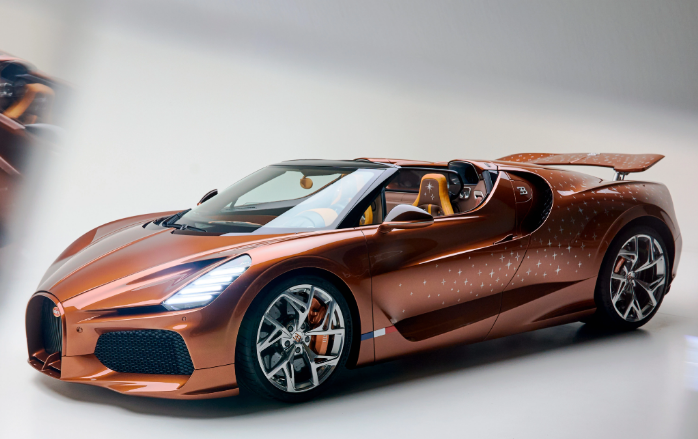
Chassis number 99 is the final vehicle in the ultra-exclusive Mistral production run. For context, while Bugatti produced exactly 500 units of the fixed-roof Chiron, the Mistral is capped at just 99 examples worldwide. This extreme scarcity elevates the vehicle from a mere mode of transportation into the upper echelons of exotic car investments.
This specific Mistral serves as the ultimate tribute to the Bugatti W-16 engine. Visually, the hypercar is finished in an exquisite two-tone Pearl and Sparkle exterior. While capturing the subtle nuances between these two bespoke paint shades through photography proves challenging, in natural light, the finish delivers a mesmerizing depth that accentuates the Mistral’s aggressive, aero-optimized bodywork.
Stepping inside, the cabin is swathed in a sophisticated combination of Magnolia leather and Grey Carbon Matt trim. The brand’s obsessive attention to detail is evident at every touchpoint. Ettore Bugatti’s signature is meticulously etched into the headrests, the aluminum door sills, and directly onto the engine cover housing the legendary Bugatti W-16 engine.
Perhaps the most culturally significant interior detail is the frozen crystal glass plate seamlessly integrated into the armrest. Engraved with the phrase “Spirit of the Wind,” this centerpiece is a direct nod to Bugatti’s century-old, intertwined history with the legendary French glassmaker Lalique. It is a touch of old-world artisanship juxtaposed against the violent, mechanical fury of the quad-turbocharged Bugatti W-16 engine sitting just inches behind the driver’s head.
Engineering the Fastest Open-Roof Production Vehicle
Building a convertible capable of breaking the 250-mph barrier requires overcoming physics that standard supercars simply do not encounter. The Mistral is not merely a Chiron with the roof removed; it is a comprehensively re-engineered hypercar designed to manage immense aerodynamic drag and cabin turbulence at terminal velocity.
The crowning achievement of this specific chassis and its Bugatti W-16 engine is its undisputable performance pedigree. In 2024, at the notoriously demanding Papenburg testing facility in Germany, the Mistral officially claimed the title of the fastest open-roof production vehicle on the planet, recording a verified top speed of 282 mph.
Achieving this required the ultimate iteration of the 8.0-liter quad-turbo Bugatti W-16 engine, producing a staggering 1,578 horsepower. At 282 mph, the air intake systems flanking the driver’s head ingest tens of thousands of liters of air per minute, feeding the four turbochargers while simultaneously producing an induction roar that no enclosed cabin could ever replicate. The structural rigidity required to keep the chassis planted at these speeds, without the structural benefit of a fixed roof, stands as one of the greatest achievements in modern high-performance automotive engineering.
The Financial Mechanics of Hypercar Ownership
From a financial perspective, the delivery of this final Mistral highlights a distinct trend in the ultra-luxury market. Vehicles of this caliber are largely insulated from standard market depreciation. Instead, they operate as blue-chip alternative assets. For buyers coordinating through elite luxury hypercar dealerships in Miami, Beverly Hills, and Monaco, acquiring a piece of automotive history like the final Bugatti W-16 engine is a calculated portfolio maneuver.
The logistics of owning such an asset require specialized financial infrastructure. Securing tailored auto insurance for hypercars of this rarity involves bespoke underwriting, as standard actuarial tables simply do not apply to a vehicle that appreciates in value and costs upwards of $5 million. Similarly, luxury vehicle financing at this tier is rarely about a lack of liquidity; rather, it is a strategic tool utilized by high-net-worth individuals to keep capital fluid for other investments while leveraging the hypercar’s intrinsic value.
Because Bugatti has publicly confirmed that this Mistral writes the “closing chapter” to the road-going story of the Bugatti W-16 engine, its provenance is permanently locked. While Bugatti’s carefully worded press releases do not outright ban the W-16 from returning in a track-only, non-road-going capacity (such as the Bolide), for street-legal homologation, the era is definitively over. This absolute finality guarantees that all 99 Mistrals—and this Pearl and Sparkle unit in particular—will command immense premiums on the secondary market for decades to come.
The Anatomy of an Apex Predator: Why the Bugatti W-16 Engine Matters
To truly appreciate the final Mistral, one must understand the sheer audacity of the Bugatti W-16 engine itself. Conceptualized in the late 1990s under the demanding vision of Ferdinand Piëch, the W-16 was initially deemed an engineering impossibility by industry skeptics. Marrying two narrow-angle V8 engines onto a single crankshaft and force-feeding them with four turbochargers created unprecedented thermal management challenges.
When the Veyron debuted, it required ten separate radiators just to keep the Bugatti W-16 engine from melting itself under full load. Over the past two decades, Bugatti’s engineers iteratively perfected this monolithic powerplant. By the time it was mounted into the Chiron Super Sport and the Mistral, the Bugatti W-16 engine had become lighter, vastly more powerful, and remarkably reliable, idling with the refinement of a luxury grand tourer before unleashing brutal, relentless acceleration. It remains the only 16-cylinder engine to ever see modern, serialized production, cementing its status as an untouchable piece of automotive history.
The Transition to La Manufacture and the V-16 Tourbillon
The timing of this final Mistral’s delivery is deeply symbolic, arriving mere days after Bugatti officially inaugurated its brand-new production facility in Molsheim, known as La Manufacture. This state-of-the-art expansion is strictly dedicated to the future of the brand: the Bugatti Tourbillon and its entirely new powertrain.
As the Bugatti W-16 engine is respectfully retired to the history books, the brand is pivoting to a naturally aspirated 8.3-liter V-16 engine developed in partnership with Cosworth. Unlike the quad-turbo brute force of the W-16, the new V-16 will be paired with a highly sophisticated hybrid-electric system, pushing the mechanical limits to a staggering 9,000 RPM while delivering over 1,775 horsepower.
This transition reflects the shifting demands of the 2026 hypercar market. Buyers still demand ultimate exclusivity and mechanical drama, but there is an increasing appetite for high-revving, naturally aspirated sensory experiences paired with the immediate torque vectoring capabilities of electrification. The Tourbillon will undoubtedly set new benchmarks, but it will do so with a fundamentally different philosophy than the brute-force engineering that defined the Bugatti W-16 engine era.
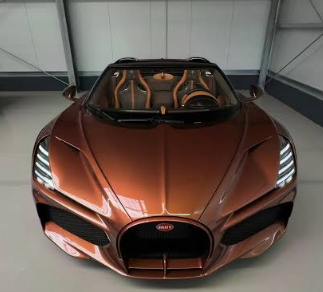
For collectors, enthusiasts, and industry analysts, the delivery of Mistral #99 is a bittersweet milestone. We are bidding farewell to an engine that completely rewrote the rulebook of what a production car could achieve. The Bugatti W-16 engine pushed the boundaries of physics, material science, and thermodynamics, carrying the automotive industry into the 250-mph and 300-mph eras through sheer, unadulterated engineering willpower.
As the industry continues its rapid evolution toward hybridization and eventual electrification, preserving and understanding the legacy of analog, purely mechanical masterpieces becomes increasingly vital for collectors and investors alike. If you are exploring the intricacies of exotic car investments, optimizing your luxury vehicle financing strategy, or simply looking to stay ahead of the curve in the hypercar market, I invite you to subscribe to our premium automotive insights newsletter for real-time market analysis and exclusive acquisition opportunities.