
The Definitive 2025 Porsche 911 GT3 S/C Review: Can a Roofless Track Weapon Truly Deliver?
For over two and a half decades, the automotive industry has operated on a very predictable, highly successful cadence. Whenever Weissach announces a new iteration of its track-bred 911, enthusiasts know exactly what to expect. It is the sports car equivalent of a blockbuster action franchise: the sequel will deliver exactly what the original did, just amplified. You anticipate more aggressive downforce, enhanced mechanical grip, sharper dynamic responses, and an engine note that shatters the atmosphere. The formula is sacred.
So, what happens when a legacy manufacturer does the unthinkable and alters the very DNA of its most purist-focused machine? Imagine a legendary rock band going entirely acoustic for their biggest stadium tour. That is the fundamental dilemma surrounding the Porsche 911 GT3 S/C. By removing the roof from a car whose entire raison d’être is rooted in hardcore, homologation-adjacent track performance, Stuttgart has introduced a model that borders on automotive heresy. How can a machine shorn of its rigid roof structure possibly live up to the legendary GT3 moniker?
As an industry analyst and test driver with a decade of experience evaluating top-tier performance vehicles, I naturally approached this release with heavy skepticism. A trip to Stuttgart was mandatory. I needed to answer three critical questions: Is a convertible GT3 fundamentally an oxymoron? Does the Porsche 911 GT3 S/C actually understand its own identity? And finally, keeping an open mind for the unthinkable—could this roofless variant actually offer a superior driving experience on public roads?
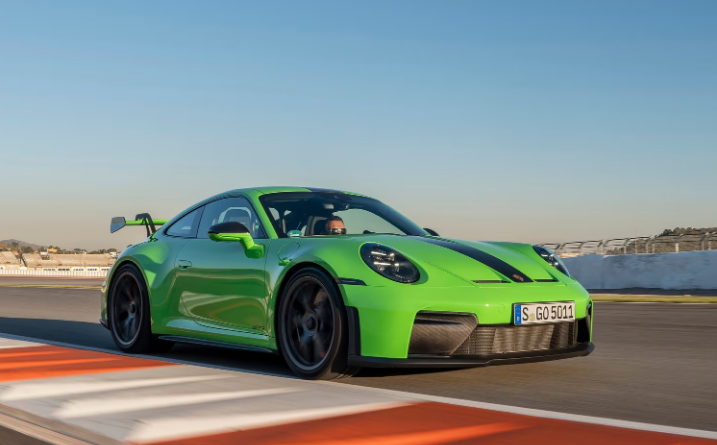
The Philosophy of the Drop-Top Track Car
To address the elephant in the room, I sat down with Andreas Preuninger, the notoriously uncompromising director of Porsche’s GT division. When asked if the Porsche 911 GT3 S/C sacrifices its motorsport soul by ditching the roof, he didn’t hesitate for a fraction of a second. The suggestion was dismissed entirely.
I will admit my own biases upfront: I historically despise convertible conversions of purpose-built hardtop sports cars. The engineering process usually introduces a nightmare of dynamic compromises. You gain excess weight from the reinforced chassis, you introduce structural wobble, and you dilute the razor-sharp handling that made the original coupe so spectacular. Furthermore, packaging constraints usually ruin the aesthetic lines. For collectors who utilize premium auto transport services to ship their vehicles to track days in Southern California or Miami, a floppy, heavy cabriolet simply doesn’t make the cut.
But Preuninger’s counter-argument is compelling. Before dismissing the Porsche 911 GT3 S/C as a marketing gimmick aimed at the boulevard-cruising elite, we have to look at the raw data. Distilled to its essence, this vehicle is essentially a GT3 Touring without a roof. It retains the spectacular 3996cc naturally aspirated flat-six engine. It retains the six-speed manual gearbox—and crucially, there is absolutely no PDK automatic option available here. It also carries over the identical suspension hardware and aggressive geometry from its coupe sibling.
Engineering Marvels and Ruthless Weight Savings
The raw numbers of the Porsche 911 GT3 S/C are staggering for a drop-top. We are looking at 503 brake horsepower, a 0-62 mph sprint of exactly 3.9 seconds, and a V-max of 194 mph. But the most shocking statistic is the curb weight: 1497 kg. That is a mere 36 kilograms heavier than the famously stripped-down manual Touring model. A fully automatic convertible roof mechanism that operates in just 12 seconds, yet the car remains exceptionally light.
How did Weissach achieve this? The engineers essentially raided the exclusive parts bin of the ultra-limited 911 S/T. The Porsche 911 GT3 S/C utilizes the S/T’s carbon fiber doors, front wings, front trunk lid, rear anti-roll bar, and rear shear plate. It sits on the same forged magnesium wheels. Carbon ceramic brakes (PCCB) are fitted as standard equipment to shed unsprung mass, and the roof mechanism itself features large sections forged from magnesium. These extreme, cost-no-object weight-saving measures offset exactly half of the mass gained from utilizing the reinforced cabriolet body shell and the hydraulic roof mechanism.
From a structural standpoint, the Porsche 911 GT3 S/C refuses to compromise. Fitting the GT3’s sophisticated double-wishbone front suspension was non-negotiable. To achieve this, engineers utilized the wider, stiffer Carrera 4 body-in-white rather than the Carrera 2 shell. This specific chassis was chosen not for all-wheel drive, but because the hollow space usually reserved for the front differential allowed for an expanded fuel tank capacity, making it a far better grand tourer.
Torsional rigidity—the ultimate enemy of any convertible—is rated at a phenomenal 27,000 Nm/degree. To put that in perspective, that represents a 25 percent structural improvement over the previous 991-generation Speedster, making the Porsche 911 GT3 S/C dynamically comparable to purpose-built, fixed-roof aluminum chassis sports cars like the Lotus Emira. Preuninger confidently stated that even the most sensitive driver would be completely unable to detect chassis flex on a public road.
Aerodynamics and the GT Experience
Aerodynamics play a massive role in modern performance cars, and convertibles usually suffer horrific lift at high speeds. The Porsche 911 GT3 S/C, however, retains the complete underbody strake system of the standard GT3, paired with a subtle gurney flap on the active rear spoiler. While it lacks the massive swan-neck wing of the standard car, it still generates 16 kg of actual downforce at high speeds. Compare this to standard luxury cabriolets that can generate up to 200 kg of dangerous aerodynamic lift on the Autobahn, and the engineering gap becomes obvious.
When you configure this car, specifying the carbon bucket seats over the 18-way electric sports seats is absolutely mandatory. The sophisticated damping of the Porsche 911 GT3 S/C was explicitly tuned in harmony with the resonance and padding of the carbon buckets. In a vehicle where tactile feedback is everything, muting the chassis communication with heavily padded touring seats ruins the analog intent.
Perhaps the most delightful revelation from the GT product team is that the Porsche 911 GT3 S/C is intentionally the most drift-happy vehicle in the current GT lineup. The slight rearward shift in weight balance, courtesy of the roof mechanism, makes it exceptionally playful at the limit. Preuninger’s definition of the GT badge is telling: “The most connected, immersive driving experience for either road or track.” When you frame it that way, removing the sound-deadening roof to expose the driver to the mechanical symphony of a 9,000-rpm flat-six perfectly aligns with the GT ethos.
The Brutal Learning Curve: First Drive Impressions
The morning after my technical briefing, I walked out to a stunning Slate Grey Neo Porsche 911 GT3 S/C. Dropping into the carbon buckets, the cabin feels instantly familiar—perfect ergonomics, analog controls right where you need them, and a driving position that accommodates any frame.
However, familiarity bred a false sense of security. As I pulled out to follow our camera car into the German countryside, I completely fell apart as a driver. I struggled to execute a smooth gear change. My braking was jerky. I couldn’t seem to modulate the throttle gracefully, and to my absolute horror, I stalled the car pulling out of a scenic lay-by. I felt like a teenager learning to drive a manual transmission for the very first time.
It took a moment of deep reflection to understand what was happening. I had spent the previous week wrestling a heavy, vintage muscle car where every mechanical input required brutal, deliberate force. But the Porsche 911 GT3 S/C is a precision instrument. Honed to within a millimeter of perfection, it despises lazy, heavy-handed inputs.
This car operates like a tightly coiled spring. As we navigated the winding, bucolic roads of the Schwäbische Alb, slowed by local morning traffic, the car felt restless. Unlike standard high-performance convertible leasing options that happily cruise coastal highways, the Porsche 911 GT3 S/C refuses to mooch. It is a highly strung athlete. At a moderate pace, the chassis quivers, demanding you push harder. Every control surface is engineered for microscopic, hyper-communicative inputs. If you drive it at five-tenths, there is a distinct tension. The engine, the steering, and the bespoke damping struggle to find their harmonic fluency until you absolutely commit.
Finding the Sweet Spot on the Tarmac
It took the better part of a day to rewire my brain to the demands of the Porsche 911 GT3 S/C. But when the roads opened up and the speed limits vanished, the epiphany arrived.
Downshifting into third gear to execute a high-speed overtake, the absence of the roof transformed the experience from a mere dynamic exercise into a visceral, overwhelming sensory assault. Without a layer of glass and steel separating you from the exhaust, the howl of the naturally aspirated flat-six echoing off the canyon walls is intoxicating.
Because the steering requires only the most delicate, telepathic inputs, you guide the car with your fingertips. The chassis communication is so pure that you can feel the microscopic changes in tarmac camber through the steering column and the base of the carbon seat. Once you match the car’s intensity, the Porsche 911 GT3 S/C dances. The slight hesitancy at partial throttle vanishes completely when you pin the accelerator to the floorboard. The heavy, mechanical thunk of the manual gearbox slotting perfectly into place at 8,800 rpm is one of the most satisfying analog experiences available in the modern automotive world.
By the time I reached the unrestricted sections of the route, my initial skepticism was entirely obliterated. This isn’t a compromised GT3; it is a GT3 magnified. It trades a fraction of absolute, stopwatch-measured track pace for a massive increase in emotional engagement on the public road. For drivers in markets like Los Angeles or Miami, where track days are occasional but canyon carving or coastal driving is a weekly ritual, this variant makes significantly more sense than the standard winged coupe.
The 2025 Exotic Market: Valuations, Logistics, and Ownership
From a professional industry perspective, analyzing the Porsche 911 GT3 S/C requires looking beyond just its apex-hunting capabilities and examining its place in the 2025 luxury automotive market. With the broader industry rapidly downsizing engines and shifting toward heavy, muted hybrid powertrains, a naturally aspirated, manual-only convertible of this caliber is a genuine unicorn.
Because of this rarity, the financial ecosystem surrounding this vehicle is intense. Allocations at local luxury dealerships are nearly impossible to secure without an extensive buying history. Consequently, we are seeing a massive surge in demand through luxury auto brokers who specialize in sourcing off-market hypercars.
If you are fortunate enough to acquire one, you are looking at a highly protected asset. This is squarely in the realm of investment-grade sports cars. Buyers aren’t just purchasing a weekend toy; they are parking capital. As a result, the secondary services market is booming. Owners are meticulously researching exotic sports car insurance policies that offer agreed-value coverage, ensuring their investment is protected against market fluctuations.
Furthermore, the mechanics of acquiring these vehicles have evolved. With base prices cresting well over the $200k mark and options pushing transaction prices much higher, high-net-worth buyers are frequently leveraging sophisticated luxury car financing structures. Rather than tying up liquid capital, they utilize bespoke lending to maintain liquidity for other investments. And because these cars are often purchased out of state, the reliance on enclosed, premium auto transport services to safely deliver vehicles from Stuttgart or elite domestic showrooms directly to private garages in Southern California or New York has become a standard part of the acquisition process.
The Porsche 911 GT3 S/C is not just a car; it is a blue-chip financial asset wrapped in magnesium and carbon fiber. Its retained value will likely eclipse standard models simply because the sensory experience it offers is rapidly going extinct.
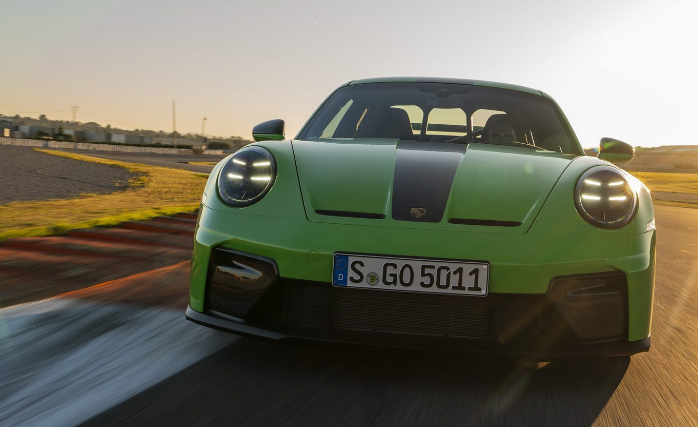
Final Verdict
To return to the original questions: Is a convertible GT3 an oxymoron? If done by any other manufacturer, perhaps. But Porsche’s GT division has essentially defied the physics of chassis compromise. Does the Porsche 911 GT3 S/C know what it is? Absolutely. It is the ultimate distillation of analog road driving.
And the unthinkable third question—is it actually better than the coupe? If your primary goal is shaving tenths of a second off your lap time at Willow Springs, stick to the hardtop. But if you measure a car’s worth by the sheer volume of adrenaline it pumps into your bloodstream on a Sunday morning drive, the roofless S/C is the superior machine. It strips away the isolation, forcing you to intimately engage with every mechanical nuance of the engine and road. It is demanding, occasionally exhausting, and utterly magnificent.
If you are ready to experience the pinnacle of naturally aspirated, open-top motoring before the analog era completely fades away, do not wait. Contact your preferred luxury auto brokers today to inquire about available allocations, or reach out to our team of specialists to help you navigate exotic car financing and secure your place in the driver’s seat of automotive history.