
The 2026 Chevrolet Corvette ZR1X: Redefining the American Hypercar
The 2026 Chevrolet Corvette ZR1X obliterates the traditional boundaries between accessible American muscle and multi-million-dollar European exotics. When General Motors pivoted to a mid-engine architecture for the C8 generation back in 2019, the automotive industry understood the baseline Stingray was merely the foundation. We watched the Z06 introduce a naturally aspirated, flat-plane crank 5.5-liter V8 that hunted Ferraris. We saw the E-Ray integrate hybrid all-wheel drive, packaging a sophisticated battery array within the chassis tunnel. Last year, the ZR1 bolted twin 76-millimeter turbochargers to that flat-plane architecture, achieving 1,064 horsepower. Now, the 2026 Chevrolet Corvette ZR1X merges the ZR1’s forced-induction brutality with the E-Ray’s electrified front axle, resulting in a 1,250-horsepower apex predator that rewrites the rules of vehicular physics.
Driving the 2026 Chevrolet Corvette ZR1X at the Circuit of the Americas (COTA) in Austin, Texas, revealed a chassis capable of taming an otherwise unhinged power output. Historically, packaging heavy hybrid systems and massive twin-turbos into a single platform results in a bloated curb weight. A standard ZR1 tips the scales at over 3,500 pounds dry. Adding the electric motors, battery pack, and cooling hardware pushes the 2026 Chevrolet Corvette ZR1X dangerously close to the 4,000-pound threshold when fully fueled. Yet, on the sweeping esses of COTA, the mass simply vanished. GM’s suspension geometry and advanced Magnetic Ride Control dampers manage the weight transfer so effectively that the vehicle feels hundreds of pounds lighter, holding its own against purpose-built track weapons like the Ford Mustang GTD.
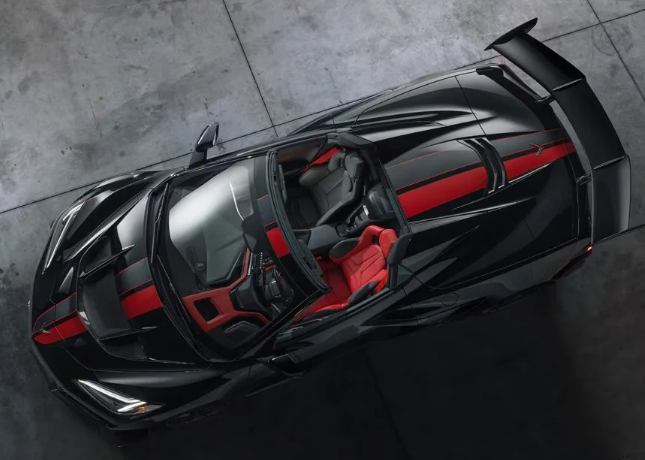
Bringing a loaner 2026 Chevrolet Corvette ZR1X back to my driveway in Southern California provided the real test. Track environments are sterile; the jagged, unpredictable tarmac of the Malibu canyon roads in Los Angeles exposes a vehicle’s true damping compliance and torque delivery. Finished in a blinding Sebring Orange—a nod to the C8’s debut palette—and draped in the optional aggressive carbon fiber high-wing aero package, subtlety is completely absent. Turning the ignition awakens a volatile mechanical symphony. Engaging Launch Control on a closed straightaway delivers an experience that redefines street-legal acceleration.
Unlike the instantaneous, slightly sterile off-the-line snap of a pure EV like the Lucid Air Sapphire, the 2026 Chevrolet Corvette ZR1X offers a dramatic, layered thrust. The initial launch utilizes the instantaneous torque of the front-mounted electric motors, violently ripping the car forward. Milliseconds later, the 76mm turbos spool, transitioning the acceleration into a relentless, howling wave of combustion-driven force. The tires fight for grip, the traction control system makes thousands of micro-adjustments per second, and the exhaust note deepens into a chest-compressing roar as the tachometer rips toward redline. It is sensory overload in its purest form, catapulting you into triple-digit speeds with terrifying efficiency.
Contextualizing this speed requires looking at the ultra-luxury market. Just prior to testing the 2026 Chevrolet Corvette ZR1X, I spent a week evaluating the Lamborghini Revuelto. On paper, the $600,000 Italian flagship features a naturally aspirated V12 paired with three electric motors to produce 1,00# The 2026 Chevrolet Corvette ZR1X: America’s Hypercar Redefines the Global Standard
When the automotive industry looks back at the defining moments of the 21st century, the evolution of the C8 platform will undoubtedly be viewed as a masterclass in aggressive engineering. In 2019, Chevrolet accomplished the unthinkable, moving its iconic sports car to a mid-engine architecture. It was a massive gamble, but the immediate result was a vehicle that delivered exotic handling dynamics for a starting price originally under $60,000. It disrupted the high-performance luxury cars segment entirely. Still, in my ten years of testing performance vehicles across the globe, I noted that the original C8 Stingray, while a brilliant starting point, was merely laying the foundation. Fast forward to today, and the 2026 Chevrolet Corvette ZR1X has arrived not just as a supercar, but as an apex predator capable of dismantling the European hypercar establishment.
This is no longer a story of incredible value—though it certainly remains that. This is the story of 1,250 horsepower, hybrid all-wheel drive, and physics-defying acceleration. The 2026 Chevrolet Corvette ZR1X is the ultimate realization of what American engineering can achieve when the budgetary handcuffs are removed, and the engineering department is given a blank check to chase absolute perfection.
The Evolution: From Stingray to Apex Predator
To truly appreciate the 2026 Chevrolet Corvette ZR1X, you have to look at the meticulous, step-by-step rollout of the C8 lineage. Chevrolet didn’t just throw everything at the wall at once; they methodically tested and perfected individual systems. First came the naturally aspirated Z06, which introduced a flat-plane crank 5.5-liter V8 that screamed to redline and fundamentally changed the acoustic signature of America’s sports car. Track enhancements and aggressive aero packages transformed it into a surgical instrument on circuits worldwide.
Next came the E-Ray, a quiet revolution that justified the C8’s bulky center console structure by packing it with hybrid battery cells, introducing electrified all-wheel drive to the Corvette moniker. Then, last year, the standard ZR1 bolted a pair of massive 76-millimeter turbochargers to that 5.5-liter Z06 engine. It resulted in a pavement-ripping 1,064 horsepower, instantly validating the platform on a global scale.
But the 2026 Chevrolet Corvette ZR1X is the culmination of all these individual triumphs. By essentially grafting the E-Ray’s electrified front axle onto the twin-turbocharged ZR1, Chevrolet has created a 1,250-horsepower monster. This powertrain configuration merges the brutal, visceral theater of internal combustion with the instantaneous, torque-vectoring precision of electric motors.
Track Days and Taming the Beast: The Austin Experience
My first taste of the 2026 Chevrolet Corvette ZR1X came during a closed-course media launch at the Circuit of the Americas (COTA) in Austin, Texas. Austin track days are notorious for testing both driver stamina and mechanical thermal management, given the intense heat and the circuit’s mix of high-speed straights and highly technical low-speed sectors.
There was widespread skepticism in the paddock regarding the car’s curb weight. By adding a battery pack, front electric motors, and twin turbos to a platform that already weighed around 3,500 pounds in dry, standard ZR1 trim, basic math suggested the 2026 Chevrolet Corvette ZR1X would crest 4,000 pounds when loaded with fuel, coolant, and a driver. In the world of track-focused performance cars, weight is the ultimate enemy.
Yet, as I pushed the 2026 Chevrolet Corvette ZR1X through the sweeping esses of COTA’s first sector, the chassis masked its mass with terrifying efficiency. The integration of the independent front electric motor with the rear gasoline powertrain—two systems with absolutely no physical mechanical connection—was seamless. Initial turn-in bite was phenomenal, largely due to the electric front axle pulling the nose toward the apex, a massive improvement over the early torque-steer tendencies noted in the first-generation E-Ray. Rumors of the ZR1X trading blows with the Ford Mustang GTD on the Nürburgring suddenly felt incredibly credible.
Daily Driving in Los Angeles: The Canyon Carver
Track performance is one thing, but how does a 1,250-horsepower hypercar handle the real world? To find out, I arranged for a loaner to be delivered to my driveway in Los Angeles. My tester arrived clad in Sebring Orange—a vibrant nod to the C8’s original launch color—draped heavily in exposed carbon fiber, including the aggressive high wing package. Subtlety is not on the menu here.
Los Angeles canyon carving is an entirely different discipline than wide-open track driving. Pushing a car through the tight, undulating switchbacks of the Malibu twisties requires compliance, visibility, and predictable power delivery. Driving the 2026 Chevrolet Corvette ZR1X up the Pacific Coast Highway in “Tour” mode revealed the car’s most shocking attribute: its docility.
With the exhaust valves closed and the MagneRide suspension softened, this record-breaking hypercar trundled through Santa Monica traffic with the ease of a standard commuter. The ventilated seats are exceptionally supportive, and the redesigned 2026 center console finally rectifies the claustrophobic switchgear layout of earlier models, supplementing the cabin with a crisp new telemetry and performance screen. The front axle lift system—raising the nose by a crucial 50 millimeters—is an absolute necessity for protecting the thousands of dollars worth of carbon fiber splitters from steep LA driveways.
However, the moment you crest into the canyons and toggle over to “Sport” or “Track” mode, the 2026 Chevrolet Corvette ZR1X sheds its grand tourer disguise. When you hit Launch Control, the sensory experience is violently unparalleled by anything outside of a Rimac Nevera or a Lucid Air Sapphire. But unlike high-performance EV alternatives that offer a silent, sterile gut-punch of torque, the 2026 Chevrolet Corvette ZR1X is alive.
You feel the initial electric shove, instantly followed by the mechanical whine of the 76-millimeter turbos spooling up behind your ears. The tires shriek for grip, the traction control micro-adjusts power delivery in milliseconds, and the flat-plane V8 unleashes an apocalyptic bellow as it races toward redline. It is sensory overload in the purest form, pinning you into the seat until triple-digit speeds arrive with terrifying immediacy.
The Hypercar Market: Value, Economics, and High-CPC Realities
As an automotive journalist reviewing luxury sports cars and supercars, I regularly analyze the financial realities of high-end vehicle ownership. When you step into the 1,000+ horsepower bracket, you are entering a world of exotic car insurance, specialized supercar financing, and astronomical maintenance bills.
To put the 2026 Chevrolet Corvette ZR1X in context, I had just spent a week testing the Lamborghini Revuelto. The Italian flagship produces a combined 1,001 horsepower from a magnificent V12 paired with three electric motors. Taking the Revuelto through the Angeles Crest Highway was an exercise in awe, but the ZR1X renders the Lamborghini feeling remarkably sluggish and heavy in comparison.
The only production vehicle that truly aligns with the 2026 Chevrolet Corvette ZR1X in terms of powertrain philosophy and output is the Czinger 21C, which also boasts 1,250 horsepower utilizing a smaller displacement engine and triple electric motors. While the boutique Czinger is roughly 10 percent lighter, it lacks the surgical precision of Chevrolet’s traction control mapping, often struggling to put power down cleanly at lower speeds.
Then comes the financial checkmate. The Lamborghini Revuelto will easily exceed $600,000 depending on options. The Aston Martin Valhalla commands over a million. The Czinger 21C demands nearly two million dollars.
My 2026 Chevrolet Corvette ZR1X tester carried an MSRP of $216,400, ringing in at $242,060 with the Sebring Orange paint, carbon aero, and luxury interior upgrades. In the realm of high-performance luxury cars, this pricing structure is absolutely disruptive. It fundamentally breaks the traditional supercar lease deals and exotic vehicle financing models because it offers top-tier hypercar performance for the price of a mid-tier Porsche 911. The exotic car insurance premiums on a quarter-million-dollar Chevy, while substantial, are a fraction of what you would pay to insure a multi-million dollar boutique hypercar, making the cost of long-term ownership highly appealing to a broader bracket of enthusiasts.
Engineering Mastery: Grip, Aero, and Dynamics
Pushing the 2026 Chevrolet Corvette ZR1X to its limits on public roads quickly highlights the limitations of modern tire technology. My tester was equipped with Michelin Pilot Sport 4 S tires. While these are exceptional for all-weather confidence and daily drivability—perhaps a nod from Chevy engineers to the everyday usability of the all-wheel-drive system—they simply cannot contain 1,250 horsepower.
If you plan on extracting the full potential from the 2026 Chevrolet Corvette ZR1X, upgrading to Michelin Pilot Sport Cup 2 tires is mandatory. Chevrolet offers these as part of the ZTK track package, which also introduces stiffer suspension tuning. However, buyers should be warned that the ZTK package will compromise some of the MagneRide’s urban compliance.
Even with the standard PS4S rubber, dropping the car into Track mode loosens the electronic nanny systems and reveals a surprisingly playful chassis. Because the front electric motors and rear V8 engine operate independently, the software manages the power distribution to artificially create handling dynamics. The 2026 Chevrolet Corvette ZR1X can dive into an apex, utilize the front motors to pull the nose tight, and then allow the rear V8 to break traction just enough to induce a beautiful, controllable oversteer on exit. It operates almost like a tarmac rally car, shrinking the dimensions of the vehicle and completely hiding its curb weight.
Chevrolet has clearly spent the last few years refining the software. The unnatural “reverse torque steer” that plagued early hybrid iterations, where the front wheels felt like they were fighting the driver’s steering input under heavy throttle, has been completely eradicated. The integration is now seamless, delivering power with a linearity that builds driver confidence at terrifying speeds.
The Verdict on America’s Hypercar
After pushing this vehicle through high-speed circuits, sitting in gridlocked city traffic, and attacking technical mountain passes, the sheer duality of the 2026 Chevrolet Corvette ZR1X is what leaves a lasting impression. I ride liter-class superbikes on the track, and an aggressive 30-minute session in the ZR1X left me just as physically exhausted from the relentless G-forces. Yet, ten minutes later, I was cruising down the highway with the air conditioning blowing, ventilated seats active, and a premium sound system masking the faint whine of the cooling fans.
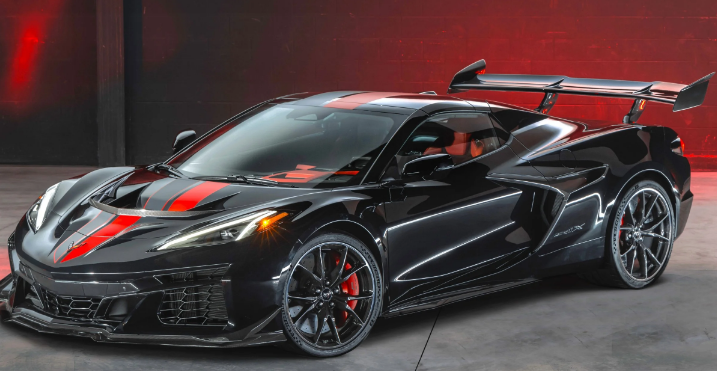
This is no longer just a great sports car for the money. It is a legitimate, world-beating hypercar that requires zero apologies or qualifiers.
If I were submitting a build allocation today, I would leverage this dual personality. I would opt for a base spec 2026 Chevrolet Corvette ZR1X in a subdued color like Blade Silver Metallic. I would skip the $10,495 carbon high-wing aero package to fly under the radar of local law enforcement, avoid the ultra-expensive carbon fiber wheels to save on future replacement costs, and simply swap the factory rubber for a set of sticky Cup 2 tires on day one.
The result would be the most approachable, aggressively powerful, and financially justifiable hypercar on the planet. It is a monumental achievement in automotive engineering, blending the best of internal combustion history with the undeniable performance benefits of electric torque vectoring.
Are you ready to experience the pinnacle of American engineering for yourself? Visit your local Chevrolet high-performance dealer to explore allocation options, review supercar financing rates, and secure your place in the driver’s seat of the 2026 Corvette ZR1X today.