
The 2026 Nissan Leaf Nismo: Engineering the Ultimate Handling Electric Crossover Without Adding Horsepower
For over a decade, the standard Nissan Leaf has been defined by affordability, practical range, and a quiet, unassuming daily driving experience. The words “track-capable” or “high-performance” have historically never shared a sentence with Nissan’s mass-market electric pioneer. However, as the automotive industry rapidly transitions into a new era of zero-emission vehicles, the definition of performance is shifting. Enter the 2026 Nissan Leaf Nismo. Rather than opting for the brute force approach of adding a third motor or pushing horsepower figures into the stratosphere, Nissan’s fabled motorsport division has taken a purist route.
The newest Nissan Leaf Nismo focuses entirely on chassis rigidity, aerodynamic precision, and suspension geometry to deliver what engineers describe as a “glider-like” coasting sensation and razor-sharp handling. As an automotive industry analyst with a decade of experience evaluating vehicle dynamics and market trends, I can confidently say this vehicle represents a fascinating pivot in how we build high-performance electric cars. It proves that raw acceleration is not the only metric that matters in the EV era.
Powertrain Philosophy: Why the Nissan Leaf Nismo Keeps Its Standard Motors
When enthusiasts hear the Nismo badge is being applied to a vehicle, they immediately anticipate massive power upgrades—a philosophy borrowed from the legendary GT-R and Z platforms. However, the Nissan Leaf Nismo takes a different path, one that aligns with traditional grassroots track tuning. The powertrain outputs remain completely unchanged from the standard model.
Buyers have two options in this front-wheel-drive layout. The base B5 Nissan Leaf Nismo delivers 130 kW, producing 174 horsepower and 254 lb-ft of torque. The higher-tier B7 variant pushes 160 kW, which translates to a respectable 214 horsepower and 262 lb-ft of torque. In an era where rival electric vehicles are casually throwing down 500-plus horsepower, these numbers might seem modest. But viewing the Nissan Leaf Nismo strictly through the lens of a spec sheet completely misses the point of its engineering.
Rather than re-engineering the electric motors, which would have added significant weight, complexity, and cost, the engineering team focused on powertrain calibration. Throttle maps have been aggressively retuned to deliver approximately 20 percent stronger initial acceleration response. The result is a vehicle that feels significantly lighter on its feet, providing the instantaneous torque punch EVs are known for, but sustained in a linear, predictable manner. It is not about winning a drag race; it is about corner-exit speed and maintaining momentum through winding backroads.
Chassis and Suspension: The True Value of the Nismo Treatment
If the motors remain unchanged, where exactly does the magic happen? The answer lies underneath the floorboards. The 2026 Nissan Leaf Nismo receives a comprehensive suspension overhaul designed to transform the crossover from a relaxed commuter into an agile, intelligent sports vehicle.
The suspension architecture benefits from Nismo-exclusive springs and thicker anti-roll stabilizers. To address the inherent heavy curb weight of battery electric vehicles—the B5 variant weighs in at around 4,012 pounds (1,820 kg)—engineers integrated specially selected member bushes. These upgraded bushings significantly increase overall suspension rigidity, resulting in razor-sharp steering response and vastly improved feedback through the wheel.
Perhaps the most crucial mechanical upgrade is the implementation of swing valve-equipped shock absorbers, a technology borrowed directly from the X-Trail Nismo. These advanced dampers dynamically reduce initial body roll upon corner entry, while still allowing the suspension to articulate smoothly over changing, imperfect road surfaces. You do not get the punishing, bone-rattling ride typically associated with aftermarket coilovers. Instead, the Nissan Leaf Nismo remains compliant for daily driving while offering a taut, planted stance when pushed to its handling limits.
Connecting this revised chassis to the pavement is a set of sticky Michelin Pilot Sport 5 tires. Gone are the hard, low-rolling-resistance eco tires designed strictly for maximizing range. These high-performance summer tires are wrapped around lightweight, highly rigid 19-inch two-tone Enkei aluminum wheels. The combination of lightweight unsprung mass and superior tire grip elevates the handling characteristics of the Nissan Leaf Nismo far beyond its commuter-car origins.
Aerodynamics: Functional Downforce Meets Aggressive Styling
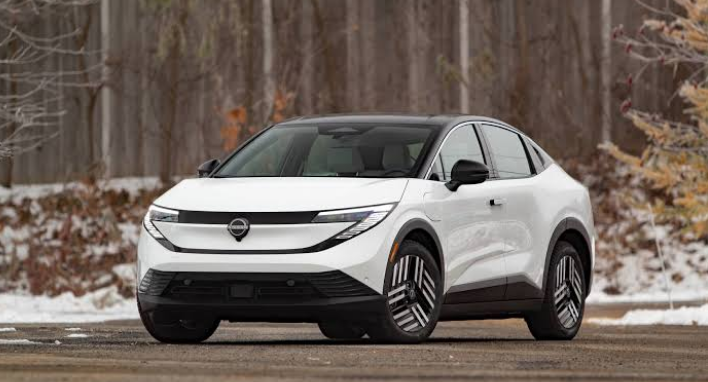
The transition of the third-generation Leaf into a crossover body style provided Nismo designers with a larger canvas for aerodynamic optimization. The exterior of the Nissan Leaf Nismo is not just about looking aggressive; every styling cue serves a functional aerodynamic purpose designed to increase high-speed stability and downforce.
The front bumper features exclusive corner finishers equipped with larger fins. These are specifically engineered to cut through turbulent air and smoothly guide the airflow along the sides of the vehicle. Lower door trim and pronounced side skirting further manage the air moving beneath the chassis.
At the rear, the vehicle utilizes a redesigned bumper incorporating a boat-hull-shaped under spoiler, working in tandem with an extended rear ducktail spoiler. This combination effectively reduces aerodynamic lift at highway speeds, keeping the rear tires glued to the tarmac. Aesthetically, the vehicle is distinguished by the signature Nismo Arterial Magma red pinstriping running along the lower edges, aggressively styled mirror caps, and the exclusive availability of Nismo Stealth Gray exterior paint.
Interior Cabin: Tailored for Driver Engagement
Step inside the cabin of the Nissan Leaf Nismo, and the motorsport heritage is immediately apparent. The standard beige or light gray plastics of the base model are replaced with a purposeful, dark-themed cockpit highlighted by vivid red accents.
The driver interacts with a completely new TailorFit faux leather-wrapped steering wheel, complete with a red 12 o’clock center marker—a subtle nod to its track-day aspirations. The 12.3-inch or 14.3-inch digital instrument displays are injected with red power meters and Nismo-specific graphics, ensuring that vital telemetry is easily readable at a glance.
For the true enthusiast, the ultimate interior upgrade lies in the seating. While the standard seats are reupholstered with red perforations and embroidered Nismo logos, buyers of the B7 variant can opt for premium Recaro heated bucket seats. Trimmed in a luxurious combination of leather and suede, these seats offer manual slide and powered recline adjustments. More importantly, they provide the aggressive lateral bolstering required to keep the driver firmly planted when those Michelin Pilot Sport 5 tires find their maximum lateral grip.
Software Integration: Nismo Mode and Regenerative Braking
In an electric vehicle, software is just as critical to the driving experience as mechanical hardware. The Nissan Leaf Nismo features deeply revised software tuning for its drive modes. The standard Eco and Standard modes have been gently optimized to complement the stiffer chassis, but the real star of the show is the newly designated “Nismo Mode.”
Replacing the traditional Sport setting, Nismo Mode fundamentally alters the throttle mapping. It delivers a powerful, linear acceleration profile that maximizes the electric motor’s potential without simulating fake internal combustion engine noises or mimicking artificial gearshifts. It embraces the unique characteristics of an EV powertrain—silent, immediate, and unrelenting forward thrust.
Additionally, the Nissan Leaf Nismo is the first Nismo EV to feature dedicated regenerative braking control paddles with bespoke calibration. Drivers can select between four distinct levels of deceleration. Interestingly, the engineering team reduced the deceleration force at Level 1 to allow for a smoother “glider-like” coasting sensation, while increasing the braking force on Levels 2 through 4. This setup allows for true one-pedal driving on a winding road, transferring weight to the front tires for better turn-in response simply by lifting off the accelerator.
Pricing, Ownership Costs, and EV Financing Dynamics
Upgrading a vehicle to this level of handling prowess comes at a premium, and the Japanese pricing structure reflects this. The entry-level B5 Nissan Leaf Nismo starts at 6,601,100 yen, which translates to roughly $40,471 in U.S. dollars. Stepping up to the more powerful B7 variant pushes the price to the equivalent of $42,608. For those who demand the pinnacle of interior support, adding the Recaro bucket seats brings the top-tier model to approximately $44,307.
When analyzing a purchase in this price bracket, modern consumers must look beyond the MSRP and evaluate total ownership costs. For automotive buyers in 2025 and 2026, securing competitive EV financing deals is critical to offsetting higher initial purchase prices. As legacy automakers and financial institutions aggressively push for zero-emission adoption, buyers can frequently leverage subsidized auto loan rates for EVs that undercut traditional combustion-engine loans.
If you plan to buy electric car online or through a dealership, it is equally important to research the best EV lease offers. Leasing a high-performance EV often shields the consumer from long-term battery degradation depreciation while allowing them to take advantage of commercial loop-hole structures for the EV tax credit.
Insurance is another vital factor in the total cost of ownership equation. Because the Nissan Leaf Nismo features specialized aerodynamic body panels, 19-inch Enkei wheels, and sophisticated suspension geometry, repair costs in the event of an accident will be inherently higher than those of a standard model. Securing comprehensive electric vehicle auto insurance from a provider that understands the nuances of performance EV parts is paramount. Consumers should actively shop around, as some carriers offer specific discounts for advanced driver-assistance systems (ADAS) like Nissan’s ProPILOT 2.0, which can help offset the premium hike associated with the Nismo badge.

Market Availability: Will the U.S. See the Nismo Leaf?
Currently, the Nissan Leaf Nismo is exclusively available in the Japanese Domestic Market (JDM). American enthusiasts hoping to secure this agile electric crossover at their local dealership will have to exercise patience. While Nissan’s Chief Performance Officer has publicly stated a desire to expand the global Nismo lineup and introduce this model to North America and Europe, no official launch timeline has been confirmed for the United States.
The hesitation likely stems from the American market’s historical preference for straight-line speed and total driving range over cornering dynamics. Because the Nissan Leaf Nismo utilizes sticky Michelin tires and aggressive aerodynamic drag-inducing elements, its driving range takes an estimated 10 percent penalty compared to the standard Leaf. In a U.S. market deeply affected by range anxiety, a reduction in total miles per charge is a difficult hurdle for marketing departments to overcome. However, as EV charging infrastructure matures and secondary household EVs become more common, the appetite for handling-focused, driver-centric electric vehicles is inevitably going to grow.
The Future of the Driver-Focused EV
The automotive industry is at an inflection point. For the last five years, electric vehicle manufacturers have relied heavily on party tricks—sub-three-second 0-60 mph times, massive curb weights, and overwhelming horsepower—to capture consumer attention. The 2026 Nissan Leaf Nismo proves that there is another way. By prioritizing suspension tuning, tire grip, aerodynamic downforce, and throttle linearity, Nissan has created a vehicle that rewards driving skill rather than just a heavy right foot.
It is a testament to the fact that you do not need 500 horsepower to have an engaging time behind the wheel of an electric car. The meticulously tuned chassis and the integration of high-quality components like Enkei wheels and Recaro seats transform a practical family crossover into a canyon-carving instrument. As the EV market matures, we will likely see more manufacturers adopt this philosophy—focusing on how a car feels through the steering wheel rather than just how fast it can complete a quarter-mile sprint.
The 2026 Nissan Leaf Nismo may not win every spec-sheet battle, but for the discerning driver who values chassis communication, cornering stability, and motorsport heritage, it is a brilliantly executed machine.
If you are ready to explore the rapidly evolving world of zero-emission performance and want to see how these vehicles fit into your budget, your next step is crucial. Compare the latest EV financing deals in your local market today, and request customized electric vehicle auto insurance quotes to ensure your transition to a high-performance EV is as thrilling financially as it is on the open road.