
The New Chrysler Arrow Crossover: How the Fiat Grizzly Previews Chrysler’s Decade-in-the-Making Comeback
For the past decade, the Chrysler brand has been operating in a state of suspended animation. If you have walked into a showroom recently, you have likely noticed the echoing space. Since the retirement of the beloved Chrysler 300 sedan, the brand’s entire identity has rested solely on the shoulders of the Pacifica minivan. Now in its tenth model year, the Pacifica has been a reliable workhorse, but a single-vehicle lineup is not a sustainable business model in today’s hyper-competitive automotive industry. Thankfully, the long drought is finally coming to an end.
Stellantis has officially laid out a comprehensive survival roadmap for its American heritage brand, and at the center of this revival is the highly anticipated Chrysler Arrow crossover. Recently, the automotive world got a massive hint at what this future entails when Stellantis pulled the cover off the new Fiat Grizzly in Europe. After analyzing the corporate roadmap, platform-sharing strategies, and industry trends, it is overwhelmingly clear: the new Chrysler Arrow crossover and its sibling, the Arrow Cross, will borrow heavily from their European cousin.
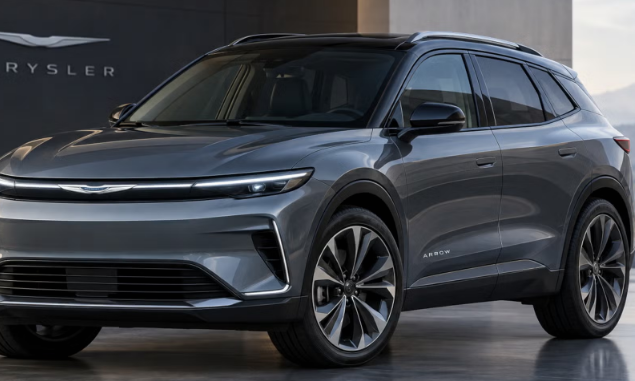
In this deep dive, we will explore what the unveiling of the Fiat Grizzly means for the American market, how Stellantis plans to adapt this compact SUV for US drivers, and why the Chrysler Arrow crossover could be the pivotal vehicle that saves one of America’s most storied automotive nameplates.
The Stellantis Strategy: Global Platforms, Local Flavors
To understand the Chrysler Arrow crossover, you must first understand how Stellantis operates. As the world’s fourth-largest automaker, Stellantis commands an empire of 14 distinct brands. To maintain profitability, the company relies heavily on shared modular architectures. This means that a Peugeot in France, an Alfa Romeo in Italy, and a Dodge in the United States often share the exact same internal skeleton.
This platform-sharing strategy is the driving force behind the new Chrysler Arrow crossover. In May of this year, Stellantis executives unveiled a roadmap promising three brand-new vehicles for the stagnant Chrysler brand. Two of these models, designated as the Arrow and the Arrow Cross, were explicitly described as entry-level crossovers built upon a proven European architecture.
When you look at the silhouettes presented in that May investor briefing and overlay them with the newly unveiled Fiat Grizzly, the puzzle pieces snap perfectly into place. The Chrysler Arrow crossover will essentially be the American translation of the Fiat Grizzly, utilizing the STLA Small or STLA Medium platform. This strategy allows Chrysler to bypass years of expensive ground-up development, bringing a fresh, market-ready vehicle to desperate American dealerships in record time.
Meet the European Blueprint: The Fiat Grizzly
Before we dissect the American adaptation, we have to look closely at the source material. The Fiat Grizzly made its European debut recently, available in two distinct body styles: a traditional, boxy standard model and a sleeker “fastback” variant. This dual-body approach is exactly what Chrysler plans to mimic with the standard Chrysler Arrow crossover and the sloped-roof Arrow Cross.
In Europe, the Fiat Grizzly is positioned as an affordable, versatile small crossover. It is designed to navigate tight historic city streets while offering enough utility for weekend getaways. The powertrain lineup reflects European market demands, offering standard gasoline internal combustion engines (ICE), efficient mild hybrid systems, and fully battery-electric (BEV) configurations. Fascinatingly, in certain European regions, the standard gas models will even offer a manual transmission—a feature we can almost certainly guarantee will not make the jump across the Atlantic.
In its most potent European form, the Fiat Grizzly maxes out at roughly 145 horsepower. While this is perfectly adequate for navigating the autostradas of Italy or the congested streets of Paris, it is a glaring weak point when translated to the open highways of the United States.
Adapting the Blueprint: Creating the Chrysler Arrow Crossover
American car buyers have vastly different expectations than their European counterparts. We demand more space, better standard technology, and, most importantly, more power. For the Chrysler Arrow crossover to succeed in a fiercely competitive market, Stellantis engineers must heavily revise the Grizzly’s mechanicals for US consumption.
First and foremost is the powertrain. A 145-horsepower subcompact might pass muster in Europe, but the new Chrysler Arrow crossover will require significantly more grunt to compete with domestic rivals. Industry insiders expect the base engine for the American market to produce closer to 180 or 200 horsepower, likely utilizing a turbocharged four-cylinder setup.
Furthermore, hybrid SUVs are currently dominating the 2026 automotive sales charts. As consumer interest in pure electric vehicles experiences a slight cooling period due to infrastructure concerns, the demand for plug-in hybrids (PHEVs) and traditional hybrids has skyrocketed. The Chrysler Arrow crossover is practically guaranteed to offer a robust hybrid powertrain option at launch. Chrysler already has extensive experience in this arena, having pioneered the segment with the Pacifica Hybrid. Integrating a high-efficiency hybrid system into the Chrysler Arrow crossover will allow the brand to target eco-conscious buyers while offering exceptional fuel economy.
We also anticipate a fully electric variant of the Chrysler Arrow crossover. With federal electric vehicle tax credits still heavily influencing purchasing decisions, offering a BEV Arrow will be crucial. If Stellantis can source battery components locally to ensure the electric Chrysler Arrow crossover qualifies for the maximum tax incentives, it could become one of the most compelling options for first-time EV buyers in the US market.
The Appeal of the Fastback: Enter the Arrow Cross
One of the most fascinating aspects of this launch is the inclusion of the Arrow Cross. Historically, the “coupe-SUV” or fastback crossover design was reserved for luxury German automakers like BMW and Mercedes-Benz. However, the trend has rapidly trickled down to mainstream brands.
The Arrow Cross will serve as the sportier, more style-conscious sibling to the utilitarian Chrysler Arrow crossover. By slightly lowering the roofline and giving the rear end a sweeping, aggressive rake, Chrysler can appeal to younger demographics and empty nesters who want the ride height of an SUV without the blocky, family-hauler aesthetic. The Arrow Cross will trade a small amount of rear cargo space for a massive boost in curb appeal, a trade-off that modern American car buyers have shown they are more than willing to make.
Where the Chrysler Arrow Crossover Fits in the Future Lineup
The introduction of the Chrysler Arrow crossover and the Arrow Cross is just the beginning of a larger renaissance. Chrysler dealers have spent years relying exclusively on the Pacifica minivan. While the Pacifica recently received a handsome, modern facelift to keep it competitive, minivans alone cannot sustain a brand network.
The Chrysler Arrow crossover will serve as the crucial entry-level gateway into the brand. Positioned below the upcoming mid-sized Airflow crossover—which was teased in concept form back in June—the Arrow will be the volume seller.
This three-tier approach (Arrow for entry-level, Airflow for mid-size, and Pacifica for large family transport) gives Chrysler a coherent, logical lineup for the first time in over a decade. The Chrysler Arrow crossover will be tasked with bringing new, younger buyers into the showroom, introducing them to the brand’s new design language and technology suite.
Tackling the Competitive Landscape
The compact and subcompact SUV segments are the most ruthlessly competitive battlegrounds in the global automotive market. When the Chrysler Arrow crossover arrives, it will not be fighting in a vacuum. It will face immediate, entrenched opposition from heavyweights like the Chevrolet Equinox, the Ford Escape, the Hyundai Tucson, and the Toyota Corolla Cross.
To win market share, Stellantis must position the Chrysler Arrow crossover strategically. It cannot simply blend into the background. It must offer distinct advantages, whether that comes in the form of class-leading infotainment technology, superior hybrid fuel economy, or aggressive pricing structures.
This is where the financial aspect of the launch becomes critical. In an era of fluctuating auto loan rates and shifting consumer budgets, affordability is paramount. To attract buyers away from established competitors, expect Stellantis to heavily subsidize the launch with some of the best SUV lease deals on the market. A competitive lease program for the hybrid and electric variants of the Chrysler Arrow crossover will be the quickest way to put these new vehicles in American driveways.
Local Impact: Reinvigorating Dealerships
We cannot overlook the human element of this product launch. Across the country, local Chrysler dealerships have been starved for fresh inventory. Sales teams have had to survive by selling slightly updated versions of a 10-year-old minivan platform and relying heavily on the success of sister brands like Jeep and Ram sharing the same lot.
The arrival of the Chrysler Arrow crossover represents a lifeline for these local businesses. A competitively priced, highly efficient crossover will generate the kind of organic showroom traffic that Chrysler hasn’t seen since the debut of the PT Cruiser or the original 300 sedan. When consumers search for “Chrysler dealers near me,” they will finally find a modernized, electrified, and relevant vehicle waiting for them on the lot. The Chrysler Arrow crossover isn’t just a new car; it is a vital economic catalyst for thousands of dealership employees nationwide.
Design and Technology: Stepping into 2026
If the Fiat Grizzly is any indication, the interior of the Chrysler Arrow crossover will represent a massive leap forward for the brand. The industry trend for 2026 demands minimalist, technology-forward cabins dominated by high-definition displays.
Expect the Chrysler Arrow crossover to feature the latest iteration of Stellantis’s Uconnect 5 infotainment system. This Android-based operating system has consistently been praised as one of the most intuitive and responsive interfaces in the industry. The cabin will likely feature a prominent central touchscreen seamlessly integrated with a fully digital driver’s gauge cluster.
Given Chrysler’s historic positioning as a near-premium brand—sitting just above mainstream but just below pure luxury—the interior materials of the Chrysler Arrow crossover should reflect a higher standard than its Fiat counterpart. Soft-touch plastics, premium sustainable fabrics, and advanced driver-assistance systems (ADAS) like adaptive cruise control and lane-centering will likely be standard features.
The Road Ahead: Challenges and Opportunities
While the blueprint provided by the Fiat Grizzly is promising, the execution of the Chrysler Arrow crossover must be flawless. Stellantis is attempting to resuscitate a brand that many consumers had already written off.
The biggest challenge will be brand perception. The Chrysler Arrow crossover must convince buyers that Chrysler is a forward-thinking, modern automaker, not just a relic of the past clinging to a single minivan model. Marketing the advanced hybrid and EV powertrains, emphasizing the sleek fastback design of the Arrow Cross, and leaning into the brand’s legacy of American innovation will be vital.
Furthermore, supply chain logistics must be iron-clad. If the Chrysler Arrow crossover is indeed heavily based on a European platform, Stellantis must ensure that manufacturing and parts distribution are localized enough to prevent the crippling delays that have plagued other cross-continental vehicle launches. Whether the Chrysler Arrow crossover is assembled in North America or imported, availability must meet the anticipated demand immediately upon launch.
Final Thoughts: The Rebirth of an American Icon
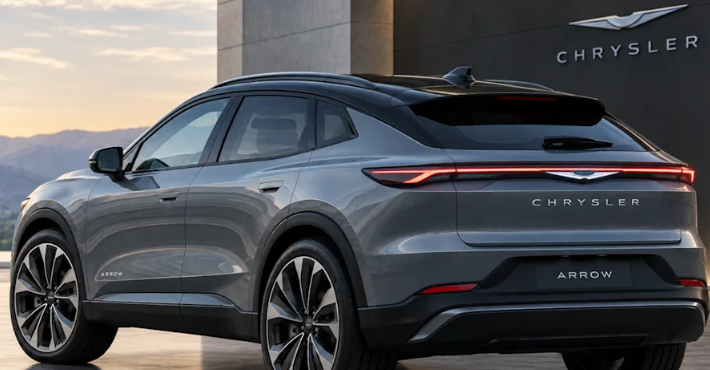
The automotive landscape of 2026 is unforgiving. Brands that fail to adapt, electrify, and meet consumer demands are quickly left behind. For ten years, Chrysler has been dangerously close to the edge, surviving on the undeniable excellence of the Pacifica minivan but desperately lacking the product diversity required to thrive.
The unveiling of the Fiat Grizzly in Europe has finally provided the hard evidence we needed that Chrysler’s promised revival is real. By adapting this versatile, multi-powertrain platform for the American market, Stellantis is giving Chrysler the exact weapon it needs to fight back.
The new Chrysler Arrow crossover and the stylish Arrow Cross represent more than just new sheet metal; they represent the survival and evolution of one of America’s oldest automotive brands. With the right mix of increased horsepower, advanced hybrid technology, premium interior appointments, and aggressive pricing, the Chrysler Arrow crossover has the potential to completely rewrite the brand’s trajectory for the next decade.
Are you ready to see what the next generation of American automotive innovation looks like? Don’t wait until the showroom floors are crowded. Contact your local Chrysler dealer today to sign up for exclusive updates on the upcoming Chrysler Arrow crossover, and be the first to test drive the vehicle that is redefining a legendary brand.