
The 2026 Toyota Land Cruiser Commercial: Off-Road Dominance Meets Fleet Utility
Step into the most unforgiving environments on earth—from the scorched trails of the Sahara to the rutted expanses of the Australian Outback—and you will find a Toyota Land Cruiser doing the heavy lifting. Automotive endurance is measured byThe Ultimate Tax-Busting Cargo Rig: Driving the 2026 Toyota Land Cruiser Commercial
Venture into the most unforgiving, rugged, and isolated corners of the globe, and one universal truth becomes immediately apparent: the Toyota Land Cruiser reigns supreme. Across the scorched expanses of the Sahara Desert to the unforgiving washboards of the Australian Outback, this vehicle’s reputation for indestructible reliability is a matter of survival. When you operate in environments where mechanical failure equates to a severe risk of death, you do not compromise. This pedigree was on full display during a recent expedition to Morocco, where dozens of trail-hardened Land Cruisers from various generations dominated the rocky, sun-baked landscape.
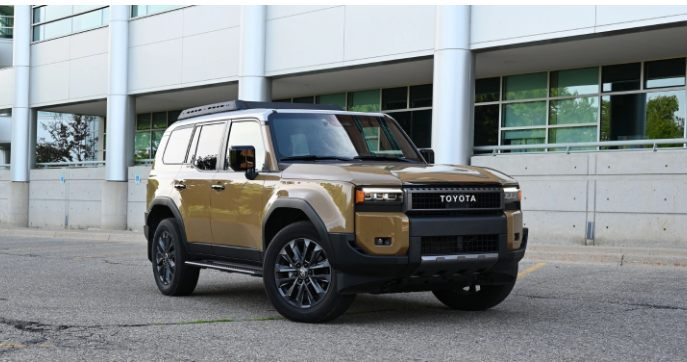
But there is a strange, highly specialized offshoot within this legendary dynasty that most drivers in North America will never see on their local showroom floors. Enter the Toyota Land Cruiser Commercial, a dedicated cargo conversion of the highly praised “J250” generation. Stripped of its second and third-row passenger seating and transformed into a heavy-duty two-seater, this vehicle’s primary mission isn’t just surviving the wilderness—it is designed to meticulously circumvent heavy tax burdens for business owners.
The Anatomy of a Hybrid Manufacturing Process
The existence of the Toyota Land Cruiser Commercial is a fascinating case study in international automotive manufacturing and local legislative compliance. Surprisingly, this dedicated off-road cargo van does not roll off the primary assembly line in Japan in this configuration. Instead, it begins its life as a standard, fully equipped passenger SUV. It is then shipped to the United Kingdom, where it undergoes a radical transformation at Toyota’s manufacturing facility in Derbyshire—the very same plant responsible for producing the U.S.-bound GR Corolla.
This conversion process is highly specific, engineered to meet stringent regulations in the U.K., the Republic of Ireland, and select European markets that offer massive financial incentives for utilizing dedicated commercial fleet vehicles. By homologating the vehicle as a commercial van, Toyota opens the door for business owners to leverage significant tax-deductible business vehicle benefits, shifting the purchasing logic from luxury SUV indulgence to a shrewd corporate asset acquisition.
The Financial Loophole: Why the Toyota Land Cruiser Commercial Exists
To truly understand the appeal of the Toyota Land Cruiser Commercial, you must understand the punitive vehicle tax structures in Europe. While this rig certainly possesses the capability to haul awkwardly shaped, heavy equipment far better than its plush passenger counterpart, the core motivation for its existence is fiscal preservation.
In Britain, business owners and fleet managers who utilize vans for commercial purposes are subject to drastically reduced tax rates for any “private” use compared to standard passenger cars. Furthermore, commercial vehicles benefit from heavily reduced purchase taxes and favorable commercial auto financing rates. To put this in concrete numbers: a buyer of the Toyota Land Cruiser Commercial faces a U.K. Vehicle Excise Duty (VED) charge of just £345 (roughly $460 USD). In stark contrast, a private buyer purchasing the standard passenger Land Cruiser is hit with a staggering £5,490 ($7,340 USD) VED bill.
This multi-thousand-dollar delta explains why premium SUV van conversions represent a rapidly expanding, high-demand niche. Competing manufacturers have recognized this loophole as well, with Land Rover offering the Defender Hard Top and Ineos pushing the Grenadier Commercial to capture the exact same demographic of tax-conscious contractors, agricultural workers, and utility fleet managers. For American business owners, the concept is highly analogous to Section 179 tax deductions, where heavy SUVs and trucks are written off to offset corporate tax liabilities.
Inside the Cabin: A Luxurious Paradox
Approaching the Toyota Land Cruiser Commercial, the visual cues of its utilitarian destiny are immediate. While it retains the factory glass in the rear doors—preserving the handsome, boxy aesthetic of the J250—these windows are permanently fixed. Behind the glass, heavy-duty protective screens are installed to prevent shifting cargo from shattering the panes from the inside during abrupt maneuvers.
The interior conversion is a masterclass in thorough, compliance-driven engineering. Inside the rear side doors, the original window motors remain hidden behind the door cards, but the switches have been entirely removed and replaced with unyielding blanking plates. The driver’s door switchgear receives the same treatment; a solid piece of factory-matched plastic covers where the rear window toggles would normally sit. In the rear compartment, overhead grab handles and passenger seatbelts have been surgically extracted. Yet, in a humorous nod to its passenger-car origins, the third-row cupholders remain perfectly intact within the rear plastic side moldings, offering a secure spot for a contractor’s thermos.
Toyota is acutely aware that clever buyers might attempt to purchase the Toyota Land Cruiser Commercial for the tax break, only to illegally retrofit passenger seats later. To prevent this, the factory mounting points for the rear seats are physically cut out of the chassis structure. The space is then overlaid with a perfectly flat, heavy-duty load floor. A full-height, reinforced steel mesh bulkhead separates the two front occupants from the cargo bay, and multiple integrated lashing points are bolted directly to the frame to secure heavy loads safely.
Because it originates from a high-specification European trim, this is arguably one of the most luxurious commercial vehicles on the market. Anomalies abound: the van retains its power-operated tailgate, complete with a separately opening upper glass section. Ironically, without a raised trunk floor, dropping items through the upper glass means they plummet awkwardly to the deep load floor below. In the cabin, the driver and passenger are treated to power-operated seats with both heating and active ventilation, a premium high-fidelity audio system, and advanced radar adaptive cruise control. It is a rugged workhorse wrapped in the trappings of a luxury executive car.
Powertrain and Performance: The Forbidden Diesel
For American driving enthusiasts, reviewing the European-market Toyota Land Cruiser Commercial offers a tantalizing look at a forbidden-fruit powertrain. Under the sculpted hood sits a robust 2.8-liter turbocharged inline-four diesel engine, a powerplant entirely withheld from the U.S. market but universally favored by those venturing into true, off-grid wilderness.
For the 2026 model year, this proven block generates 202 horsepower and a stump-pulling 369 lb-ft of torque. Toyota has further modernized this powertrain by integrating a 48-volt mild-hybrid system, designed to smooth out the auto start-stop function and provide fractional low-end torque fill to improve efficiency. On paper, 202 horsepower might seem underwhelming against the vehicle’s substantial 5,200-pound unladen curb weight. However, spec sheets rarely tell the whole story. With maximum torque available at an ultra-low 1,600 rpm, managed by an intelligent, rapid-shifting eight-speed automatic transmission, this diesel off-road SUV rarely feels starved for momentum.
That said, the diesel engine is an unapologetically gruff companion. Compared to the buttery-smooth inline-six diesels found in the European Land Rover Defender or the BMW-sourced engine in the Ineos Grenadier, the four-cylinder Toyota block transmits noticeable vibration at idle and a vocal, mechanical roar under heavy acceleration. It also displays a distinct aversion to high RPMs. Left in standard ‘Drive’, the transmission software ruthlessly upshifts before the needle ever crosses 3,800 rpm, even with the accelerator pinned to the floorboard. Accessing the digital tachometer’s 4,400-rpm redline requires switching to the gearbox’s manual mode and forcing the issue.
But once you settle into highway cruising speeds, the engine noise recedes, and refinement becomes highly acceptable—vastly superior to traditional commercial cargo rigs like the Ford Transit or Mercedes-Benz Sprinter. Toyota claims a 10.2-second sprint from zero to 62 mph, a metric entirely irrelevant to its target demographic. Under hard acceleration, the soft, off-road-biased suspension causes the Toyota Land Cruiser Commercial to squat dramatically on its rear axle, adopting a nose-high posture that quickly reminds you of its sheer mass. Highway driving demands attention; the aggressive Dunlop AT23 Grandtrek tires tend to wander slightly within the lane at high speeds, and the aerodynamic profile means the windshield wipers begin to lift and struggle at speeds exceeding 75 mph.
Load-Bearing Dynamics and Heavy-Duty Towing Capacity
Like all dedicated trucks engineered for hauling, the Toyota Land Cruiser Commercial actually rides significantly better when it is burdened. Driven completely unladen, the heavy-duty rear suspension feels slightly underdamped over broken pavement, transmitting a jagged, unrefined feedback over potholed streets.
However, the suspension geometry fundamentally transforms once weight is introduced to the cargo bay. During testing, we strapped a 220-pound historic brass fire pump into the rear lashing points. With the rear axle properly loaded, the harshness vanished, allowing the Toyota to absorb aggressive bumps and undulations with the plush composure the Land Cruiser badge is famous for.
Off the pavement, this vehicle is an absolute titan. It retains the exact same mechanical four-wheel-drive hardware as the premium passenger model. This includes a robust two-speed transfer case for low-range crawling, a manually locking center differential, and an advanced electronic traction-management suite designed to continuously route power to the wheels with the most grip. While dry conditions during our test window prevented deep mud bogging, the Toyota Land Cruiser Commercial effortlessly scrambled through deeply rutted, sunbaked clay trails that would have easily immobilized a standard all-wheel-drive crossover.
Its commercial viability is further cemented by its heavy-duty towing capacity. Toyota has rated this specific conversion to tow a maximum of 7,700 pounds (3,500 kg)—the absolute legal maximum permissible for a vehicle of this class under European highway regulations. Furthermore, the reinforced flat rear bed is certified to carry up to 1,780 pounds of internal payload. If your business requires dragging heavy generators, agricultural trailers, or construction equipment into deeply inhospitable terrain, this is the machine for the job.
Practicality Assessment: Is It Actually a Good Van?
For all its off-road prowess and tax-evading brilliance, the Toyota Land Cruiser Commercial has one glaring weakness: as a pure cargo van, its dimensions are compromised by its SUV origins.
The physical load space measures 66.4 inches in length, 50.6 inches in width, and 42.9 inches in height. While this is certainly spacious, the fundamental architecture of a body-on-frame off-roader means the load floor is situated incredibly high off the ground. Lifting heavy, awkward cargo—like bags of cement or heavy tools—up to waist height before sliding it in requires significant physical effort. While access is slightly mitigated by the ability to load items through the rear passenger doors, it simply cannot compete with the knee-height load floors of dedicated unibody delivery vans.
Additionally, the massive, single-piece top-hinged tailgate is a logistical hindrance in tight commercial environments. Unlike conventional vans that utilize dual side-hinged “barn doors,” the Land Cruiser’s tailgate requires a massive amount of rear clearance to swing upward. If you are backed tightly up to a loading dock, a wall, or another vehicle, opening the rear hatch becomes an impossibility.
The Ultimate Verdict on the Toyota Land Cruiser Commercial
No rational fleet manager is going to purchase the Toyota Land Cruiser Commercial as a direct, one-to-one replacement for a Ford Transit or a Ram ProMaster. Those vehicles are designed for sheer cubic volume and urban delivery logistics. This vehicle serves an entirely different, highly specialized purpose. It is built for the site manager who needs to transport specialized surveying equipment across a muddy, rutted construction site. It is for the agricultural veterinarian who must drag a 7,000-pound horse trailer through an unpaved, snow-covered pasture.

From an enthusiast’s perspective, it is impossible not to love this oddball variant. It represents one of the most capable, durable vehicles on the planet, distilled down to its absolute most utilitarian form. Yes, the lack of rear seats is inherently frustrating for daily family life, and the high lift-over height is a compromise. But the financial math is undeniable.
Priced at £50,640 ($67,800 USD) before U.K. taxes, this commercial variant undercuts the absolute cheapest passenger-carrying Land Cruiser by nearly £9,000 ($12,000 USD). When you factor in the annual tax savings, the write-offs, and the superior commercial auto financing rates, it represents a massive financial victory for business owners who require uncompromised off-road capability. It is a seriously useful tool, strictly limited to two occupants, built to conquer both the wilderness and the tax code with equal ruthlessness.
If you are a business owner, fleet manager, or independent contractor looking to optimize your tax liabilities while securing a vehicle that will outlast the next decade of hard labor, evaluating commercial van conversions like this is a mandatory step. Review your current fleet depreciation schedules, consult with your tax advisor regarding vehicle weight deductions in your local jurisdiction, and explore how a heavy-duty commercial rig could transform your operational overhead this year.