
The 2026 Porsche 911 GT3 S/C: Can a Convertible Keep the Track-Bred Crown?
For more than two decades, the arrival of a new Porsche 911 GT3 has followed a familiar, highly anticipated script. It is the automotive equivalent of a blockbuster action franchise. The core promise is always identical: the new iteration will be exactly like the old one, only dialed up to an eleven. You get more aerodynamic downforce, more mechanical grip, sharper turn-in, and an even more explosive naturally aspirated flat-six engine.
So, imagine the collective gasp from purists when Weissach announced the unthinkable. What happens when the engineers take a track-bred homologation special and chop the roof off? Does removing the very structural integrity that defines a track car ruin the magic? This is the exact existential crisis facing the brand-new Porsche 911 GT3 S/C. Stripped of its foundational purpose—a fixed-roof, ultra-stiff, track-centric focus—how could it possibly live up to the legendary badge?
To answer this, I flew to Stuttgart with ten years of automotive journalism baggage in tow, seeking to answer three burning questions. First, is a convertible GT3 simply an oxymoron? Second, does the Porsche 911 GT3 S/C actually know what its purpose is? And third—a thought so heretical I barely dare whisper it—could an open-top GT3 actually be the superior driver’s car for the public road?
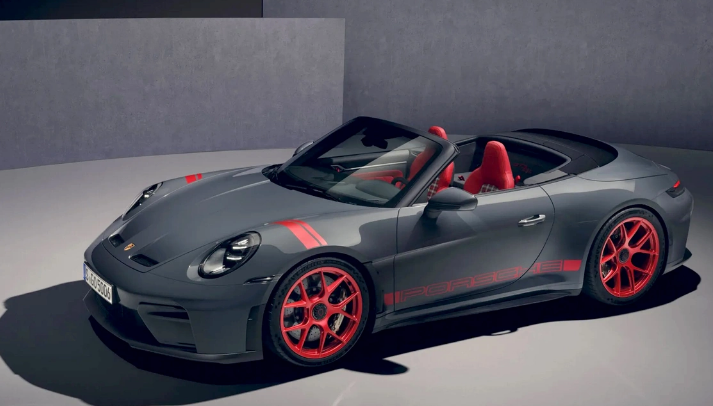
Overcoming the Convertible Stigma
I will freely admit my own biases upfront: I historically despise convertible versions of purpose-built sports cars. Chopping the roof typically introduces a cascade of dynamic compromises. The structural rigidity vanishes, forcing engineers to add hundreds of pounds of heavy bracing to stop the chassis from flexing like wet cardboard. This extra weight blunts the acceleration, ruins the turn-in response, and makes the car fundamentally worse at its primary job. Furthermore, the wind noise and compromised packaging can be infuriating on long drives. And let’s face reality—whether you are pulling into a high-end Los Angeles Porsche dealership or cruising through downtown Miami, convertibles almost always look awkwardly proportioned with the fabric roof raised.
When I sat down with Andreas Preuninger, the notoriously uncompromising director of Porsche’s GT division, I bluntly asked if the Porsche 911 GT3 S/C was just a marketing exercise to sell luxury sports cars to wealthy buyers who care more about optics than lap times. He didn’t hesitate for a microsecond. He dismissed the suggestion entirely.
To understand Preuninger’s confidence, you have to look at what the Porsche 911 GT3 S/C actually is under the skin. Reduced to its absolute simplest terms, this car is a GT3 Touring without a roof. It packs the exact same naturally aspirated 4.0-liter flat-six engine. It features the exact same six-speed manual transmission. Splendidly, and to the joy of purists everywhere, there is no PDK automatic option available here. The suspension hardware, the spring rates, and the damper setups are virtually identical to its hardtop sibling.
The raw numbers are staggering. The Porsche 911 GT3 S/C delivers 503 horsepower, sprints from 0 to 60 mph in 3.9 seconds, and hits a top speed of 194 mph. Even more incredibly, it tips the scales at just 3,300 pounds (1,497 kg). That is merely 80 pounds heavier than the notoriously svelte Touring model. The fact that a modern convertible with a fully automated roof—one that deploys in just 12 seconds—can maintain that kind of weight discipline is an absolute engineering marvel.
Engineering the Impossible Drop-Top
My initial assumption was that this car would be a floppy, compromised spin-off. I was spectacularly wrong. The genesis of the Porsche 911 GT3 S/C came directly from the hardcore GT product team, not the marketing department. However, Preuninger set two non-negotiable conditions before greenlighting the project: the car had to weigh under 1,500 kg with all fluids brimmed, and it had to meet the exact same dynamic standards as every other GT car to leave Weissach.
To hit that aggressive weight target, Porsche essentially raided the parts bin of the ultra-exclusive, ultra-expensive 911 S/T. The Porsche 911 GT3 S/C features carbon-fiber doors, carbon front fenders, a carbon frunk lid, and a carbon rear anti-roll bar. It rolls on gorgeous forged magnesium wheels. Carbon-ceramic brakes (PCCB), which cost a small fortune on lesser models, are fitted as standard equipment. Even the folding roof mechanism incorporates large magnesium elements to keep the center of gravity as low as possible. These aggressive lightweighting measures effectively canceled out the 167 pounds gained by utilizing a convertible body shell and the hydraulic roof mechanism.
The chassis engineering is equally fanatical. Maintaining double-wishbone front suspension was an absolute prerequisite. Because of this, Porsche opted to use the wider, stiffer body-in-white from the Carrera 4 cabriolet rather than the standard Carrera 2. This wider shell allowed the engineers to utilize the space normally reserved for the front differential to house an extended-range fuel tank. The resulting torsional rigidity of the Porsche 911 GT3 S/C is rated at an immense 27,000 Nm/degree. That represents a 25 percent improvement over the previous-generation 991 Speedster, making it as stiff as many modern fixed-roof aluminum sports cars. Preuninger confidently stated that it is practically impossible for even a professional driver to discern any chassis flex on a public road.
Aerodynamics and Driver Connection
Unlike standard drop-tops that generate massive amounts of aerodynamic lift at highway speeds, the Porsche 911 GT3 S/C remains planted. It retains all the complex underbody aerodynamic strakes from the standard GT3 and adds a subtle gurney flap on the rear decklid. While it obviously lacks the massive swan-neck wing of the standard car, it still generates positive downforce at speed. When you are looking at exotic car insurance premiums and high-performance vehicle financing, you want to know the car won’t get dangerously light at 150 mph. Preuninger noted that comparable convertibles can generate up to 400 pounds of dangerous lift at Autobahn speeds, making the aerodynamic stability of the S/C a massive safety and performance advantage.
Inside the cabin, specifying the full carbon bucket seats over the 18-way electric comfort seats is practically mandatory. The GT engineering team honed the car’s suspension damping in direct harmony with the padding and rigidity of those specific carbon seats. In a car where tactile feedback is the entire point, the road texture transmitted directly to the base of your spine is a critical part of the Porsche 911 GT3 S/C experience.
Interestingly, Preuninger revealed a hidden Easter egg for driving enthusiasts: the Porsche 911 GT3 S/C is actually the most drift-happy vehicle in the current GT lineup. The removal of the roof and the specific packaging requirements subtly shifted the weight balance, making the rear end slightly more playful on corner exit.
When asked what the “GT” badge actually means if it doesn’t strictly mean track homologation, Preuninger’s answer was telling: “It stands for the most connected, immersive driving experience for either road or track.” When you view the Porsche 911 GT3 S/C through that lens, it makes perfect sense. Removing the roof of a 9,000-rpm, naturally aspirated, manual-transmission sports car removes the final barrier between the driver, the mechanical symphony of the engine, and the rush of the outside world.
First Drive: Stalling and Stumbling
After an hour of intense technical briefing, my skepticism had been thoroughly dismantled. The philosophy, the engineering, and the execution of the Porsche 911 GT3 S/C represented everything I value in high-end automotive design. I was practically vibrating with anticipation when I tossed my bags into a stunning Slate Grey Neo example the following morning.
The cabin is a masterclass in ergonomics. Unlike modern luxury sports cars that bury every function in a maddening touchscreen menu, this interior features perfectly placed physical buttons. The driving position is flawless, offering immense adjustability whether you are tall or short. Given my decade of experience testing 911s, I expected to slide in and immediately feel like a driving god.
That is not what happened.
Pulling out of the hotel to follow the camera car, I was a clumsy mess. I couldn’t match the revs on downshifts, my braking was jerky, and I found the car tramlining aggressively across the undulating pavement. To make matters infinitely worse, I stalled the Porsche 911 GT3 S/C dead in the middle of a busy intersection. I felt like a teenager learning to drive a stick shift for the very first time.
The problem became apparent as we hit the sweeping, open A-roads an hour south of Stuttgart. I pulled out to overtake a slower truck. Knowing I had 9,000 rpm to play with, I went for a mid-maneuver shift into third gear. The moment I took my right hand off the steering wheel, the front tires caught a subtle camber in the road. Because the steering ratio is so incredibly fast and the front end is so fiercely communicative, the car darted instantly to the right. The Porsche 911 GT3 S/C may not have a sub-three-second 0-60 time, but it builds speed with vicious intensity. Deviations at 80 mph are terrifying. I corrected the slide, exhaled sharply, and wondered if I had completely forgotten how to drive.
The Epiphany: Rewiring the Brain
Then, it hit me. I had just spent a week wrestling a heavy, unassisted classic muscle car back in the United States, where steering and clutching require brute force and massive physical inputs. The Porsche 911 GT3 S/C, honed to absolute microscopic precision, despises heavy-handed driving. It requires fingertip delicacy.
Cruising through tight, twisty local villages further highlighted the car’s aggressive nature. If you are looking to buy a Porsche 911 simply to cruise down Ocean Drive and look wealthy, this is the wrong car for you. The Porsche 911 GT3 S/C hates going slowly. It feels like a highly strung racehorse trapped in a petting zoo. Every mechanical element—the rigid mounts, the instantaneous throttle response, the firm brake pedal—quivers with pent-up kinetic energy. At anything less than seven-tenths of its capability, the car feels restless. There is a palpable tension between the machine, the asphalt, and the driver.
It took a full day of driving to recalibrate my brain to the machine’s frequency. By late afternoon, we had left the congested villages behind and found a completely derestricted, deserted stretch of winding mountain road. This is the exact environment where luxury car financing and exotic car insurance premiums finally feel justified.
With the roof down, the sensory experience of the Porsche 911 GT3 S/C is nothing short of transcendent. Without a metal roof to muffle the sound, the induction howl of the 4.0-liter flat-six is piped directly into your eardrums. Passing 7,000 rpm, the engine note shifts from a mechanical growl into a frantic, motorsport-grade shriek. Because you have to manually row the gears, every perfectly executed heel-and-toe downshift feels like a monumental personal achievement.
Once you learn to trust the front end and use minute, relaxed inputs on the steering wheel, the car transforms. It stops darting and starts flowing. The chassis talks to you in high-definition, feeding exact grip levels straight through the carbon bucket seat. You can feel the precise moment the rear tires begin to slip, allowing you to easily manage that “drift-happy” balance Preuninger mentioned.
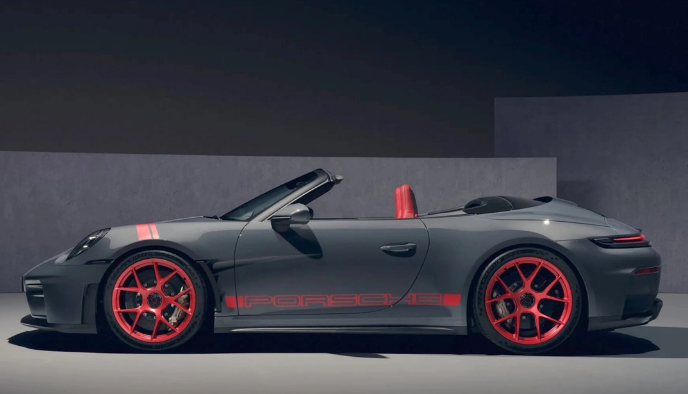
The Ownership Proposition in the Modern Market
For American buyers looking at high-performance vehicle financing, the Porsche 911 GT3 S/C presents a fascinating value proposition. Traditional convertibles depreciate rapidly, but limited-production, manual-transmission Porsche GT cars are notoriously bulletproof investments. While luxury auto loan rates and exotic car insurance might be steep for a vehicle in this price bracket, the historical value retention of a naturally aspirated GT3 makes it one of the smartest automotive purchases in the high-end sector. Whether you are navigating sports car leasing options or buying outright, this is a vehicle that protects your capital while delivering unrivaled driving joy.
It completely redefines what a drop-top can be. By refusing to compromise on the suspension, weight, and drivetrain, Weissach has created a car that offers all the visceral, wind-in-the-hair romance of a classic roadster, backed by the ballistic, physics-defying capability of a modern track weapon. It takes the clinical perfection of the GT3 Touring and injects it with a massive dose of sensory theater.
The Porsche 911 GT3 S/C isn’t just a worthy bearer of the GT3 badge; it might actually be the most purely enjoyable road car the division has ever produced. It forces you to pay attention, demands respect, and ultimately rewards you with an experience that a fixed-roof car simply cannot match. If you have the means, the garage space, and the desire to own the pinnacle of open-top combustion motoring, there is nothing else on the market that comes close.
Ready to experience this unmatched naturally aspirated thrill for yourself? Contact your local authorized Porsche dealership today to explore allocation availability, discuss custom Weissach-tailored build options, and secure your place in the driver’s seat of automotive history.