
The Ultimate Compliance Test: Inside the Single-Vehicle 2026 Toyota Tundra Recall
In my decade of experience navigating the complex, often chaotic world of automotive manufacturing and federal compliance, I have seen safety campaigns scale into the millions. We are accustomed to headlines announcing vast swaths of cars and trucks being called back to dealerships for faulty airbags, erratic software modules, or deteriorating brake lines. It is the nature of mass production; when a localized manufacturing flaw occurs on an assembly line, it usually ripples across tens of thousands of units before the supply chain catches it.
However, it is not every day that a federal safety campaign targets a population of exactly one. Yet, that is exactly what has happened with a highly unique 2026 Toyota Tundra recall. Originating from a prominent Florida auto dealer network, this solitary Toyota Tundra recall highlights the astonishing granularity of modern automotive tracking and the uncompromising rigidity of federal safety laws.
As a seasoned industry professional, I view this specific Toyota Tundra recall not just as a quirky news item, but as a fascinating case study in payload capacities, aftermarket accessories, and strict National Highway Traffic Safety Administration (NHTSA) compliance. In this comprehensive breakdown, we will examine exactly why Southeast Toyota Distributors is tracking down one specific truck, how load carrying capacity modification labels dictate vehicle safety, and what this means for the broader pickup truck market in 2026.
The Anatomy of a Uniquely Singular Toyota Tundra Recall
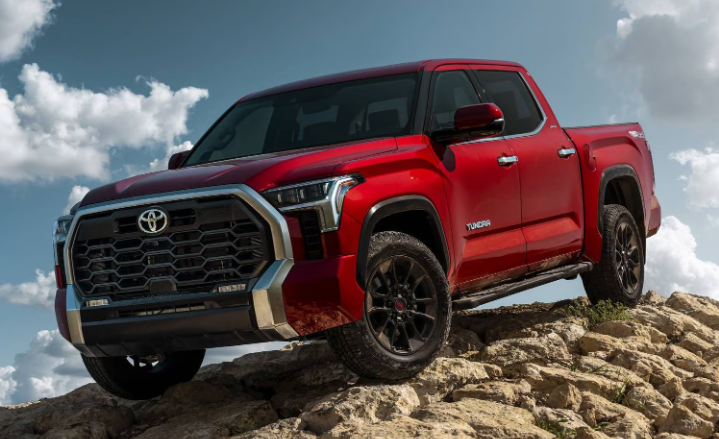
To understand this highly specific Toyota Tundra recall, we have to look at how vehicles are processed between leaving the factory and arriving in the customer’s driveway. On July 6, 2026, a recall document was submitted to the NHTSA by Southeast Toyota Distributors, an independent distributor operating in the Southeastern United States. Using their internal database of vehicles, the distributor pinpointed a single 2026 Toyota Tundra pickup that had received port-installed accessories that were not properly accounted for in the truck’s final weight certification.
The company first caught wind of this discrepancy in April 2026. A local dealer notified the distributor that a truck arrived with an accessory package completely missing from its factory build sheet. Due to an inadvertent accessory package deletion in the digital tracking system, the added weight of these undisclosed aftermarket accessories was not factored into the vehicle’s certified gross vehicle weight rating (GVWR).
While the dealership correctly recognized that weight had been added and applied a load carrying capacity modification label, the math was wrong. Federal regulations require that this label be accurate to within one percent (1%) of the total weight of the accessories installed between final certification and the first retail sale. Because the weight calculation on this single truck exceeded that 1% margin of error, a formal Toyota Tundra recall was legally mandated.
Why Gross Vehicle Weight Rating (GVWR) Matters
You might be wondering why a slightly inaccurate weight sticker triggered a federal mandate. As anyone working in fleet management software or heavy-duty logistics will tell you, Gross Vehicle Weight Rating is the absolute holy grail of truck safety. GVWR is the maximum operating weight of a vehicle as specified by the manufacturer, which includes the truck’s chassis, body, engine, fluids, fuel, accessories, driver, passengers, and cargo.
When you purchase a full-size pickup, the payload capacity—the amount of weight you can safely put in the bed and the cabin—is calculated by subtracting the truck’s curb weight from its GVWR. If a distributor adds heavy aftermarket auto parts, such as a robust winch, heavy-duty bed liners, or steel running boards, the curb weight of the truck increases. Consequently, the available payload capacity must decrease.
In this specific Toyota Tundra recall, the issue is entirely about accurate payload communication. The NHTSA recall documents clarify that the added accessory weight on this specific truck did not actually exceed the vehicle’s remaining payload capacity. However, because the sticker was inaccurate, the owner could hypothetically look at the door jamb, assume they have more payload capacity than they actually do, and inadvertently overload the truck.
The Hidden Dangers of Overloading a Pickup Truck
Overloading a vehicle is not merely a technical foul; it alters the fundamental physics of the truck. When you exceed the GVWR, you put immense, uncalculated stress on the transmission, suspension, and braking systems. The stopping distance increases exponentially, the steering becomes dangerously light, and the risk of a catastrophic tire blowout at highway speeds skyrockets.
From a liability standpoint, overloading a vehicle carries severe financial and legal ramifications. If an overloaded truck causes a catastrophic collision, the aftermath is rarely simple. In these scenarios, a skilled car accident lawyer or personal injury attorney will immediately investigate the vehicle’s black box data, the payload at the time of the crash, and the accuracy of the door jamb stickers. If an owner overloads their truck because of a factory miscalculation, the manufacturer or distributor could be held liable. Conversely, if the owner willfully ignores an accurate label, they bear the brunt of the liability.
This strict adherence to accurate GVWR labeling is also a major factor in the insurance industry. Commercial truck insurance providers and standard auto insurance companies base their risk assessments and premium calculations on these federal certifications. If you operate a vehicle that is not federally compliant, securing affordable auto insurance rates becomes incredibly difficult, and claims can be denied if it is proven the vehicle was operated beyond its certified limits. Thus, this single-vehicle Toyota Tundra recall is a preemptive strike against a cascade of potential legal and financial disasters.
The Role of Independent Distributors and Aftermarket Accessories
One of the most interesting aspects of this Toyota Tundra recall is the entity issuing it. Toyota relies on independent distributors in certain regions, like Southeast Toyota Distributors in Florida, to process and transport vehicles from ports to local dealerships. These facilities are massive logistical hubs where thousands of vehicles are outfitted with regional accessory packages before they ever see a showroom floor.
In the modern truck market, buyers want their vehicles customized off the lot. To secure the best truck financing rates, consumers often roll the cost of aftermarket accessories—like lift kits, custom wheels, and towing packages—directly into their primary auto loan. Distributors handle these installations to maintain factory warranties and streamline the buying process.
However, every time a technician bolts a new accessory onto a truck, the vehicle’s weight dynamics change. Tracking this across thousands of vehicles requires incredibly sophisticated inventory and fleet management software. The fact that an “inadvertent accessory package deletion” occurred is not surprising; human and software errors happen. What is genuinely impressive, and a testament to the rigorous quality control of the 2026 automotive landscape, is that the system successfully flagged a single truck out of a production run of thousands.
Federal Motor Vehicle Safety Standards and the 1% Rule
The National Highway Traffic Safety Administration operates under a rigid set of guidelines known as the Federal Motor Vehicle Safety Standards (FMVSS). These standards are not suggestions; they are the absolute law of the land for automotive manufacturing in the United States.
The specific standard at play in this Toyota Tundra recall involves the 1% threshold. The FMVSS dictates that if the weight of accessories added to a vehicle between its final factory certification and its first retail sale exceeds the lesser of 1.5% of the GVWR or 100 pounds, a new load carrying capacity modification label must be applied. Furthermore, the values on that new label must be mathematically accurate to within 1% of the actual added weight.
In the case of our solitary Toyota Tundra recall, a new label was indeed applied by the facility, but the numbers crunched did not fall within that strict 1% margin of error. Even though the truck is mechanically sound and structurally perfectly safe to drive, it is technically out of compliance with federal law.
The industry cannot afford to be lax regarding FMVSS regulations. Ignoring a minor labeling error opens the door for massive federal fines and reputational damage. It is far more cost-effective—and legally prudent—to file a formal safety recall for a single vehicle than to ignore the discrepancy and hope an inspector or a car accident attorney never notices.
The Remedy: Hilariously Simple, Legally Essential
When we think of automotive recalls, we usually picture our vehicles sitting in a dealer service bay for days while technicians dismantle dashboards or replace entire engine sub-assemblies. The remedy for this particular Toyota Tundra recall is hilariously simple, yet legally essential.
The owner of this specific 2026 Tundra will receive a formal notice of noncompliance in the mail, accompanied by a brand-new, mathematically accurate load-carrying capacity modification label. The owner simply needs to peel the backing off the new sticker and apply it over the old one on the driver’s side door jamb. Once that piece of adhesive paper is correctly installed, the pickup truck magically transforms back into a road-legal, federally compliant vehicle.
It is a mundane fix to a bureaucratic problem, but it underscores the immense administrative overhead that governs road safety. Whether it is a software patch delivered over-the-air or a sticker sent via standard mail, the mechanisms of compliance must always be satisfied.
What This Means for Truck Owners in 2026
While this specific Toyota Tundra recall only impacts a single driver in the Southeastern United States, it serves as a powerful reminder for all truck owners, fleet managers, and off-road enthusiasts.
First, it highlights the critical importance of understanding your vehicle’s true capabilities. When you look to buy a new truck, do not simply trust the payload numbers listed in the glossy marketing brochures or the generic specifications on the manufacturer’s website. Those numbers usually reflect the lightest, most stripped-down base model available. The moment you start adding luxury trim levels, four-wheel drive systems, panoramic sunroofs, and heavy dealer-installed accessories, your payload capacity plummets.
Always check the physical stickers inside your specific vehicle’s driver-side door jamb. That label is the final, legally binding word on what your truck can safely handle.
Secondly, this scenario is a warning to those who heavily modify their vehicles in the aftermarket. If you take your truck to an independent shop to add heavy steel bumpers, a camper shell, and a winch, you are fundamentally altering your vehicle’s payload capacity. While independent shops are not legally required to print you a new federal compliance sticker like an official distributor is, you are still bound by the physical limits of your truck’s GVWR. Failing to account for the weight of your own modifications can lead to dangerous overloading, premature wear on your powertrain, denied auto insurance claims, and severe liability in the event of an accident.
The broader takeaway from this singular Toyota Tundra recall is a reassuring one. The automotive supply chain is more deeply monitored and regulated than ever before. Ten years ago, a missing build sheet and a slightly inaccurate weight sticker would have slipped through the cracks, lost in a sea of paperwork. Today, integrated databases and stringent self-auditing protocols allow distributors to pinpoint a single mathematical error on a single truck before it results in a tragedy on the highway.
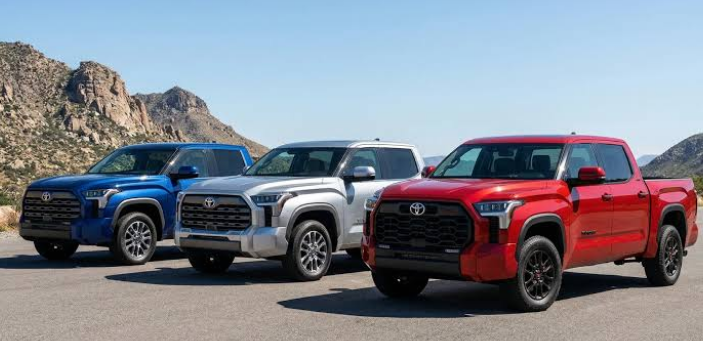
Safety is not just about robust crash structures and advanced driver-assistance systems; it is about accurate data. It is about ensuring the driver has the precise information they need to operate a 6,000-pound piece of heavy machinery safely among the rest of the motoring public.
Taking the Next Step with Your Vehicle’s Safety
Whether you drive a heavily modified 2026 Toyota Tundra or a standard commuter sedan, staying informed about your vehicle’s compliance and safety standing is paramount. Recalls, even those affecting millions of vehicles, often go unnoticed by second or third owners. Unresolved safety campaigns can impact everything from your family’s safety to your yearly vehicle registration fees and insurance premiums.
Don’t wait for a letter in the mail that might never arrive. Take a moment today to locate your 17-digit Vehicle Identification Number (VIN)—found on your dashboard or inside your driver-side door jamb—and run it through the official NHTSA recall check website or your manufacturer’s dedicated safety portal. Ensuring your vehicle is fully compliant takes less than two minutes, providing you with absolute peace of mind for the miles ahead.