
The Ultimate Loophole: Testing the 2026 Toyota Land Cruiser Commercial
Venture into the most unforgiving, isolated corners of the globe, and you will inevitably encounter a familiar silhouette. Whether you are navigating the scorching dunes of the Sahara, conquering the jagged trails of the Australian Outback, or trekking through remote South American highlands, the Toyota Land Cruiser reigns supreme. It is a vehicle built on a foundation of undeniable strength and bulletproof reliability—a lifeline in regions where a mechanical failure isn’t just an inconvenience, but a genuine threat to survival. Recently, while testing EVs in the rugged atlas mountains of Morocco, the enduring presence of trail-battered, expedition-ready Land Cruisers served as a stark reminder of the model’s unyielding global dominance.
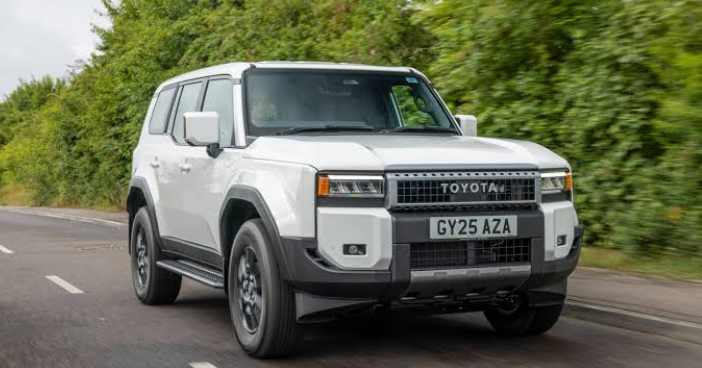
Yet, within this prestigious lineage exists a fascinating and highly pragmatic anomaly: the 2026 Toyota Land Cruiser Commercial. This unique J250-generation cargo conversion represents a sharp pivot from the platform’s traditional passenger-hauling duties. Designed for specific European markets, the Toyota Land Cruiser Commercial strips out the second and third rows of seating, replacing them with a cavernous, flat load area. It is a strange, highly capable beast—a luxurious off-roader disguised as a work van, born not out of a primary desire for supreme utility, but out of the savvy pursuit of extreme tax efficiency.
The Economics of the Commercial SUV Conversion
To understand the Toyota Land Cruiser Commercial, you must first understand the financial landscape that willed it into existence. In much the same way that US business owners leverage Section 179 tax deductions to write off heavy SUVs for commercial use, European fleet operators face their own labyrinth of vehicular taxation.
In markets like the United Kingdom and the Republic of Ireland, the tax code heavily favors vehicles classified as commercial vans. For a business owner or fleet manager, deploying a traditional passenger SUV for work purposes incurs punitive tax rates, both at the point of purchase and through annual registration fees.
By classifying the Toyota Land Cruiser Commercial as a bona fide cargo vehicle, buyers unlock substantial financial incentives. In the UK, the Vehicle Excise Duty (VED) for this commercial variant sits at a highly palatable £345 (roughly $460). Conversely, a standard passenger Land Cruiser buyer is slapped with a staggering £5,490 ($7,340) VED bill. When you factor in the complexities of commercial vehicle financing, business vehicle tax deductions, and highly competitive commercial auto insurance rates, the fiscal argument for this two-seat cargo rig becomes impossible to ignore.
This financial loophole has spawned a lucrative niche in the European market. The Toyota Land Cruiser Commercial isn’t alone in this arena; heavy hitters like the Land Rover Defender Hard Top and the Ineos Grenadier Commercial are also capitalizing on the demand for tax-efficient SUVs that can genuinely perform off-grid. For enterprises needing rugged fleet management solutions, these vehicles offer an unbeatable blend of tax relief and all-terrain capability.
Anatomy of a Factory Hack
The transformation of the Toyota Land Cruiser Commercial from a plush family hauler to a commercial fleet vehicle is an intriguing logistical dance. The vehicle does not roll off the primary assembly line in Japan in this two-seat configuration. Instead, it arrives in the UK as a standard J250 passenger model. The actual transformation is executed at Toyota’s manufacturing facility in Derbyshire—the very same plant responsible for prepping the US-bound GR Corolla.
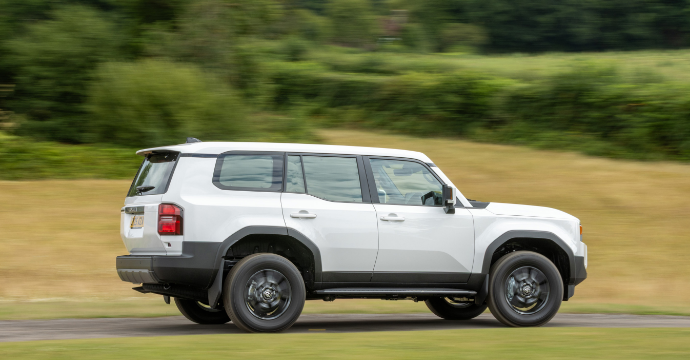
Up close, the compromises of retrofitting a passenger cabin into a cargo hold are apparent, yet cleverly executed. The Toyota Land Cruiser Commercial retains its rear door glass, maintaining its handsome exterior profile. However, these windows are permanently fixed, backed by robust hard covers designed to protect the glass from shifting payloads.
Inside, the ghost of its passenger past lingers. The power window motors remain inside the rear doors, but the factory installs hard blanking plates over the switches to physically prevent their use. The driver’s door controls for the rear windows are similarly capped with precision-molded plastic. In the cargo area, the passenger grab handles and seatbelt assemblies have been completely gutted. Yet, in a quirky twist of manufacturing efficiency, the rear side moldings still feature the original third-row cupholders.
Toyota’s engineers are acutely aware that some opportunistic buyers might attempt to purchase the tax-advantaged Toyota Land Cruiser Commercial and illicitly reinstall the rear seats. To prevent this, the factory permanently severs the structural mounting points for the rear bench. A heavy-duty, completely flat load floor is then bolted into place over the modified chassis. Safety for the driver and passenger is paramount, provided by a full-height steel mesh bulkhead that decisively separates the cockpit from the cargo bay, along with multiple heavy-duty lashing points to secure heavy equipment.
The Anomaly of Luxury in a Work Van
Because the Toyota Land Cruiser Commercial is built upon the foundation of a high-specification European J250, it features a jarring, yet delightful, juxtaposition of utilitarian purpose and executive luxury. Traditional panel vans are Spartan, hollow echoes of cost-cutting. This Toyota, however, is lavishly appointed.
It retains the power-operated rear tailgate, complete with a separately opening upper glass hatch. Admittedly, without a traditional trunk, the utility of this upper glass is questionable—drop something through it, and it plummets to the distant cargo floor.
More importantly for the driver, the cabin is an oasis. The Toyota Land Cruiser Commercial boasts power-adjustable front seats that are both heated and ventilated. It retains the premium, multi-speaker audio system, a massive central infotainment screen, and an advanced suite of driver assistance tech, including radar-guided adaptive cruise control. When evaluating commercial truck leasing options, fleet managers rarely encounter a vehicle that treats its operators to this level of flagship comfort. It is, without exaggeration, one of the most luxurious two-seat commercial 4x4s on the global market.
Forbidden Powertrain: The 2.8-Liter Turbodiesel
For American off-road enthusiasts, the powertrain of the European Toyota Land Cruiser Commercial represents the ultimate forbidden fruit. Under the sculpted hood sits a robust 2.8-liter turbocharged inline-four diesel engine, augmented by a modern 48-volt mild-hybrid system. This is the exact powertrain favored by expedition leaders venturing into the world’s most remote, demanding environments.
On paper, the output figures—202 horsepower and 369 lb-ft of torque—might seem modest, especially when tasked with moving a 5,200-pound unladen mass. However, diesel power delivery is all about the low-end grunt. The Toyota Land Cruiser Commercial delivers its peak torque at an incredibly accessible 1,600 rpm. Mated to an intelligently calibrated eight-speed automatic transmission, the vehicle rarely feels sluggish or out of breath in real-world driving conditions.
That said, this four-cylinder oil-burner is a decidedly gruff companion. While competitors like Land Rover and Ineos offer buttery-smooth six-cylinder diesels in their commercial variants, the Toyota’s four-cylinder exhibits noticeable vibration at idle and a distinctly agricultural clatter under heavy acceleration.
It also possesses a profound aversion to high RPMs, a trait common to heavy-duty diesels but pronounced here. When left in standard Drive, the eight-speed gearbox aggressively short-shifts, refusing to breach the 3,800-rpm mark even when the throttle is pinned to the floorboard. To reach the digital tachometer’s 4,400-rpm redline, you must engage the transmission’s manual mode.
Yet, once you settle into a steady highway rhythm, the acoustic refinement is entirely acceptable, far surpassing the hollow booming noise typical of a standard commercial panel van. Toyota claims a 0-62 mph sprint of 10.2 seconds. It’s a largely irrelevant metric for a vehicle of this nature, especially considering the pronounced rearward squat and nose-up pitch the suspension exhibits under hard launches. This rig is engineered for steady, relentless progression, not quarter-mile sprints. At speeds exceeding 75 mph, the steering requires minor corrections to track straight on its aggressive Dunlop AT23 Grandtrek tires, and the aerodynamic drag begins to overwhelm the windshield wipers.
Payload, Towing, and Pragmatic Limitations
The primary weakness of the Toyota Land Cruiser Commercial is that, from a pure volumetric standpoint, it isn’t an exceptional van. The bespoke cargo area measures 66.4 inches in length, 50.6 inches in width, and 42.9 inches in height.
The main hurdle is the vehicle’s inherent architecture. Because it is built on a high-clearance off-road chassis, the load floor sits significantly higher than that of a standard commercial transit van. This elevated liftover height makes loading heavy, awkwardly shaped cargo—like generators, engine blocks, or industrial tools—a physically demanding task. While you can utilize the rear side doors to access the front of the cargo bay, the overall ergonomics of loading remain compromised by the off-road geometry.
Furthermore, the massive, top-hinged tailgate is less practical in tight urban loading zones than the split, side-hinged “barn doors” found on purpose-built commercial vehicles. Opening the tailgate requires a significant amount of vertical and rearward clearance, which can be frustrating in cramped commercial lots.
However, where the Toyota Land Cruiser Commercial sacrifices pure cubic volume, it compensates with raw, load-bearing muscle. It boasts a maximum payload capacity of up to 1,780 pounds on the reinforced rear bed. More impressively, it commands a maximum towing capacity of 7,700 pounds—hitting the absolute legal ceiling for a vehicle of this class under European fleet regulations. For businesses that need to drag heavy trailers through knee-deep mud to remote job sites, this towing prowess is a decisive factor.
Dynamics: Thriving Under Pressure
Like all heavy-duty trucks, the suspension geometry of the Toyota Land Cruiser Commercial is fundamentally designed to operate with weight over the rear axle. When driven completely unladen, the ride quality feels decidedly underdamped over broken pavement, transmitting a jagged, nervous energy through the chassis on rougher terrain.
However, introduce some ballast, and the vehicle’s personality transforms. During our testing, we secured a 220-pound antique fire pump into the cargo bay for transport. Instantly, the rear suspension settled. The Toyota Land Cruiser Commercial began to absorb undulating highway bumps and harsh impacts with the composed, imperious ride quality the nameplate is famous for. Proper payload optimization is the key to unlocking this vehicle’s on-road comfort.
Off the pavement, it remains completely uncompromised. The Toyota Land Cruiser Commercial retains the exact same arsenal of off-road hardware as the flagship passenger model. This includes a robust two-speed transfer case for low-range crawling, a manually locking center differential to guarantee power distribution, and Toyota’s advanced traction-management software designed to electronically mimic differential locks when mechanical grip evaporates. Whether navigating deep, sunbaked ruts on dried mud tracks or crawling over technical rock faces, the capability remains absolute and unchallenged.
The Verdict on the Ultimate Workhorse
The 2026 Toyota Land Cruiser Commercial is a brilliant contradiction. It is an imperfect cargo van, hampered by a high load floor and a cumbersome tailgate. Yet, it is an absolutely spectacular commercial 4×4.
For fleet buyers, agricultural workers, and remote-site engineers, the frustrations of its passenger-car origins are easily eclipsed by its sheer mechanical capability and the massive financial advantages it offers. In the UK, the commercial variant commands a pre-tax price of roughly £50,640 ($67,800). This aggressively undercuts the absolute cheapest passenger-carrying version by nearly £9,000 ($12,000).
That is a phenomenal capital saving for what is, fundamentally, one of the most durable, capable, and luxurious 4x4s on the planet. It is a strictly two-seat affair, but for those who need a rugged, tax-efficient powerhouse that can comfortably tow a heavy load to the ends of the earth and back, it exists in a class of its own.
If you are a business owner or fleet manager looking to optimize your commercial vehicle tax strategy while upgrading your all-terrain capability, it’s time to reevaluate your fleet lineup. Contact your local commercial dealership today to explore the financial benefits, secure competitive business vehicle financing, and see how a commercial SUV conversion can transform your daily operations.