
The Polestar US Sales Ban: Unpacking the Connected Vehicle Tech Ban and the Brand’s American Exit
The global automotive landscape is undergoing a massive regulatory earthquake, and the epicenter has just claimed its first high-profile casualty. Following intense scrutiny and regulatory gridlock, the Polestar US sales ban is now an irreversible reality. The Swedish electric vehicle brand, deeply intertwined with the China-based Geely automotive group, will officially wind down its American sales operations. With the U.S. Department of Commerce effectively blocking the brand from introducing 2027 model year vehicles, Polestar has confirmed it will not pursue an appeal.
As an industry analyst observing the evolution of automotive trade policy for over a decade, it is clear that this decision is not merely a localized corporate retreat. Instead, the Polestar US sales ban represents a watershed moment in global manufacturing. It signals a hardline pivot in how the United States regulates software-defined vehicles (SDV), data privacy, and EV supply chain risk. For automakers, tech providers, and dealership networks, understanding the mechanics of this unprecedented exit is critical for navigating the volatile years ahead.
The Catalyst: The Connected Vehicle Tech Ban
To fully grasp the magnitude of the Polestar US sales ban, we must first examine the legislative framework that triggered it. The exit is the direct result of the Commerce Department vehicle rules—specifically, the Connected Vehicle Rule finalized by the Bureau of Industry and Security. Designed as part of sweeping federal national security bans, this regulation explicitly targets the import and sale of vehicles equipped with connected hardware and software linked to “foreign adversaries,” namely China and Russia.
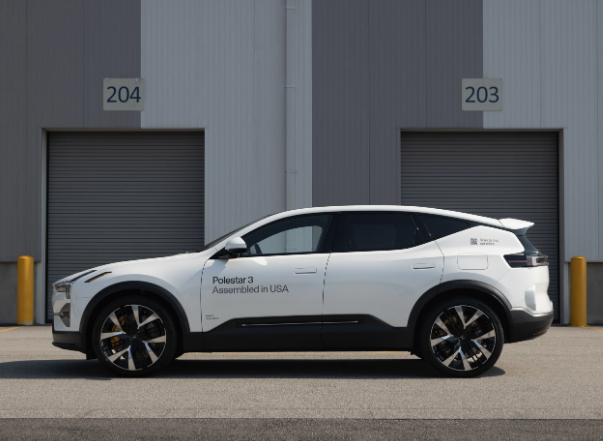
Modern electric vehicles are essentially rolling supercomputers. They rely on vast arrays of outward-facing cameras, LiDAR sensors, and internal cabin monitoring systems to facilitate advanced driver-assistance systems (ADAS). Furthermore, these software-defined vehicles (SDV) utilize constant cloud connectivity for over-the-air (OTA) updates, telematics, and battery management. Federal regulators argue that Chinese connected vehicle technology poses a severe national security threat, fearing that foreign entities could exploit these data streams to map critical U.S. infrastructure or harvest sensitive consumer data.
Under the new regulatory timeline, restrictions on software with Chinese origins take effect for the 2027 model year, while a total ban on Chinese vehicle-connected hardware kicks in by 2030. Despite manufacturing the new Polestar 3 at a plant in Ridgeville, South Carolina, Polestar’s deep technological integration with the Geely automotive group rendered the brand non-compliant. Ultimately, the location of final assembly was irrelevant; the overarching EV supply chain risk and corporate data architecture were the deciding factors.
The Geely Paradox: Why Volvo Stayed While Polestar Fell
Perhaps the most perplexing element of the Polestar US sales ban is the stark contrast between Polestar’s fate and that of its sister brand, Volvo. Both automakers trace their roots to Sweden, both share manufacturing facilities in South Carolina, and most importantly, both are owned by the Geely automotive group. Yet, while the Polestar US sales ban forces the brand to abandon the market, Volvo was granted a special authorization to continue American sales.
How did the government look at two brands sharing the same corporate parent and deem only one a national security threat? The answer lies in the nuances of enterprise data security compliance.
According to industry insiders and subsequent Commerce Department filings, Volvo successfully demonstrated that its software architecture, data siloing, and corporate governance are sufficiently insulated from its Chinese parent company. Volvo has spent decades cultivating a distinct, localized operational structure in the U.S. market. The company established that it integrates rigorous, localized cybersecurity software that prevents driving data from being routed through or accessed by foreign servers.
Conversely, Polestar’s engineering footprint is much more tightly bound to Geely. The brand relies heavily on shared platforms and integrated Chinese connected vehicle technology. When faced with the Commerce Department vehicle rules, Polestar could not untangle its software architecture fast enough to meet strict U.S. standards. Polestar executives engaged in significant dialogue with federal authorities, but when the gap in enterprise data security compliance proved insurmountable, the company chose to pivot rather than fight a costly, likely unwinnable legal battle.
The Dealership Dilemma: Franchise Law and Financial Fallout
While corporate executives strategize in Gothenburg and Hangzhou, the immediate victims of the Polestar US sales ban are the 32 independent American dealerships that invested heavily in the brand. Over the last few years, franchise owners spent millions constructing bespoke “Polestar Spaces”—minimalist, high-end retail environments dictated by the automaker’s strict corporate identity guidelines.
The abrupt withdrawal triggers a complex web of legal liabilities governed by automotive dealership franchise law. In the United States, state franchise laws heavily protect automotive dealers from manufacturer abandonment. Because Polestar is not declaring bankruptcy, but rather voluntarily ceasing future U.S. sales, the automaker will likely be on the hook for massive compensation payouts.
Under standard automotive dealership franchise law, exiting manufacturers are typically required to buy back unsold vehicle inventory, specialized diagnostic equipment, brand-specific tools, and expensive signage. Furthermore, dealers may demand payouts for the loss of future business, drastically impacting the overall EV dealership valuation of their portfolios. Given the high stakes, many franchise owners are already consulting with an automotive trade litigation attorney to ensure they receive fair market value for their stranded investments.
For the time being, Polestar has stated it will not immediately terminate these dealerships. Instead, it aims to manage the transition by allowing retailers to sell off the remaining inventory of 2025 and 2026 Polestar 3 and Polestar 4 models. The brand has also promised to honor warranties and maintain service access for existing owners. However, as the 2027 model year approaches and the supply of new vehicles dries up, the question of long-term parts availability and technical support remains murky. Consequently, businesses managing corporate vehicle fleets may need to reassess their fleet management solutions, while insurance carriers may adjust commercial auto insurance premiums for a brand with a disappearing domestic footprint.
Tariffs, Financial Strain, and the Strategic Pivot to Europe
While the connected vehicle tech ban is the official cause of the Polestar US sales ban, the brand’s relationship with the American market was already on life support. The broader EV trade policy between Washington and Beijing has been increasingly hostile. Last year, the U.S. government imposed a staggering 100% tariff on Chinese-built electric vehicles, a move that forced Polestar to prematurely kill off the popular Polestar 2 sedan in America.
Faced with mounting tariffs, the Polestar US sales ban simply served as the final nail in the coffin for an already unviable market strategy. Financially, the decision to abandon the U.S. makes pragmatic sense for the automaker. Despite the prestige of the American auto market, it only accounted for roughly 6% of Polestar’s global sales volume. In the first quarter of 2026, an overwhelming 94% of the brand’s retail deliveries occurred outside the United States.
Instead of burning capital on an appeal against federal national security bans, Polestar is redirecting its resources toward regions where it possesses a strong brand position and a clear path to profitability. The company has announced a massive strategic pivot heavily weighted toward Europe. Recent expansions into Baltic markets—including Estonia, Latvia, and Lithuania—demonstrate this localized focus. Furthermore, Polestar intends to aggressively market lucrative luxury EV lease deals across Europe, Latin America, and Canada, regions where EV trade policy remains more accommodating to Chinese-backed manufacturers.
By localizing future manufacturing in Europe (including the upcoming Polestar 7), the company aims to insulate itself from further geopolitical crossfire. However, the financial strain of the transition cannot be ignored. In early 2026, Polestar reported widening net losses, driven by global pricing pressures and the administrative costs of reorganizing its supply chain away from heavily tariffed zones.
The Broader Industry Impact: Who is Next?
The Polestar US sales ban is not an isolated incident; it is a glaring warning sign for the entire automotive sector. The rigid enforcement of the Commerce Department vehicle rules signifies that the U.S. government is willing to lock out major international players to mitigate EV supply chain risk.
This sets a troubling precedent for other automakers utilizing Chinese connected vehicle technology. Brands like Lotus, which is also owned by the Geely automotive group, face identical existential threats in the U.S. market. Even legacy automakers are not immune to the shockwaves of this connected vehicle tech ban. Geely’s founder famously holds a 9.7% stake in Mercedes-Benz’s parent company, making him the single largest shareholder. While Mercedes-Benz currently operates freely in America, the arbitrary lines drawn by federal regulators regarding corporate control versus mere investment leave massive blind spots in global compliance.
Furthermore, domestic giants like General Motors and Ford, which rely on globalized supply chains to source basic microchips, batteries, and infotainment components, are now under immense pressure to audit their networks. As vehicles transition completely into software-defined vehicles (SDV), the origin of every line of code becomes a matter of national security. Automakers will be forced to pour billions of dollars into domestic software development and third-party cybersecurity software to ensure they do not inadvertently trigger the same regulatory tripwires that caused the Polestar US sales ban.
This environment of hyper-regulation will undoubtedly stifle market competition, limit consumer choice, and artificially inflate the price of advanced EVs in the United States. Without access to the cost-efficiencies provided by Chinese battery and software ecosystems, American automakers must build redundant, localized supply chains from the ground up.
Navigating the Future of the Auto Industry
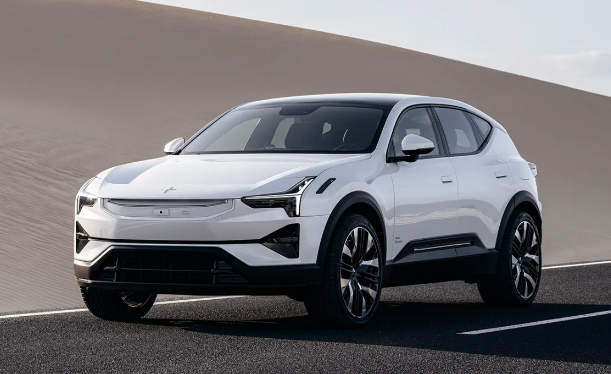
The Polestar US sales ban is a defining chapter in the modern automotive era. It underscores a stark reality: the future of the car business is no longer just about horsepower, battery range, or exterior design. It is fundamentally about data sovereignty, geopolitical alignment, and software security.
As the 2027 model year deadline looms, the fallout from the Polestar US sales ban will continue to ripple through the industry. Dealerships will battle for compensation under automotive dealership franchise law, foreign manufacturers will scramble to untangle their EV supply chains, and consumers will watch as the electric vehicle market fractures along geopolitical fault lines. The era of the truly globalized automobile has seemingly come to a close, replaced by a segmented, highly scrutinized technological cold war.
For businesses operating within this complex web—whether you are a dealership group assessing your EV dealership valuation, an insurance provider calculating commercial auto insurance risk for orphaned vehicle fleets, or an enterprise trying to optimize fleet management solutions in a volatile regulatory climate—staying ahead of the curve is no longer optional.
If your organization is struggling to navigate the rapid shifts in EV trade policy, or if you need expert guidance on enterprise data security compliance within your connected vehicle fleets, proactive strategy is your best defense. Contact our premier automotive consulting services today to ensure your business remains compliant, competitive, and secure in this rapidly shifting automotive landscape.