
Defining the Peak of Water-Cooled Performance: The Ultimate GT3 RS 4.0, 911 R, and S/T Showdown
Three of the most revered modern water-cooled Porsche 911s—the GT3 RS 4.0, the 911 R, and the 911 S/T—stand at the absolute summit of automotive engineering. Each represents a distinct philosophy of what the ultimate driver’s car should be. The RS 4.0 delivers unfiltered, track-focused aggression; the 911 R strips back the aerodynamic theater for pure, road-biased engagement; and the S/T represents a masterclass in modern balanced evolution.
When conducting a definitive Porsche 911 comparison, the goal is not merely to look at spec sheets. It is to uncover which of these limited-production legends best captures the elusive soul of the brand. From the raw character of a naturally aspirated flat-six to the tactile perfection of a manual transmission, each of these vehicles offers a drastically different Porsche driving experience. By dissecting their design, performance, and everyday usability, this ultimate Porsche 911 comparison aims to crown the single greatest modern iteration of Stuttgart’s most famous silhouette.
The Genesis of an Unprecedented Evaluation
I distinctly recall my first stint behind the wheel of the 911 S/T on a blistering July afternoon last year. Stepping out of the carbon bucket seats, my immediate assessment was that for anyone who genuinely understands vehicle dynamics, the S/T felt entirely untouchable. It was extraordinary, possessing a level of damping and chassis compliance that made it feel tailor-made for canyon carving. I noted at the time that if I had a fantasy hangar filled with luxury sports cars USA collectors dream of, the S/T would be parked right by the door, gassed up and waiting for the perfect Sunday morning run.
But automotive journalism requires a healthy dose of self-reflection. When you label a car “untouchable,” experience teaches you that such hyperbole can quickly backfire. Was it truly untouchable? Among comparable street cars rolling off assembly lines today, undoubtedly. But among the greatest hits of the last two decades? That question sits at the very foundation of any comprehensive Porsche 911 comparison.
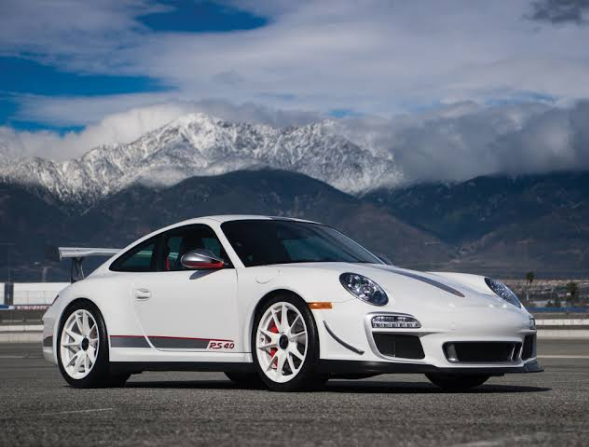
We realized that to truly know, we had to get the cars together. The S/T is not the only limited-edition, water-cooled model to carry the mantle of greatness. The 997-generation GT3 RS 4.0 and the 991-generation 911 R came before it, both worshipped by enthusiasts and commanding massive premiums in the Porsche investment cars market. Through a stroke of sheer luck and a few well-placed phone calls, we managed to source pristine examples of the older cars just as Porsche allowed us an extended loan of the S/T. The stage was set for a GT3 RS vs 911 R vs S/T showdown that few have ever had the privilege to orchestrate.
Sizing Up the Icons: The Technical Blueprint
To appreciate this Porsche 911 comparison, you must first look at the engineering blueprints. Of all the water-cooled flat-sixes ever bolted into the rear of a 911, these three represent the absolute pinnacle. Seeing them parked side-by-side on an empty stretch of winding tarmac is a moment of profound gravity for any enthusiast.
On paper, the similarities are striking. All three utilize a naturally aspirated 4.0-liter engine. All three demand the driver’s active participation via a six-speed manual gearbox. And all three eschew turbocharging in favor of a sky-high redline and immediate throttle response. The 997 GT3 RS 4.0 utilizes the legendary ‘Mezger’ engine architecture, characterized by a slightly wider bore and shorter stroke than the modern units.
Remarkably, despite the tightening grip of safety and emissions regulations over the last fifteen years, Porsche’s obsessive weight management has kept these cars incredibly close on the scales. Over two distinct generational shifts, the 992-based S/T carries only about 45 pounds (20kg) more than the 997-based RS 4.0, with the 911 R sitting neatly in the middle.
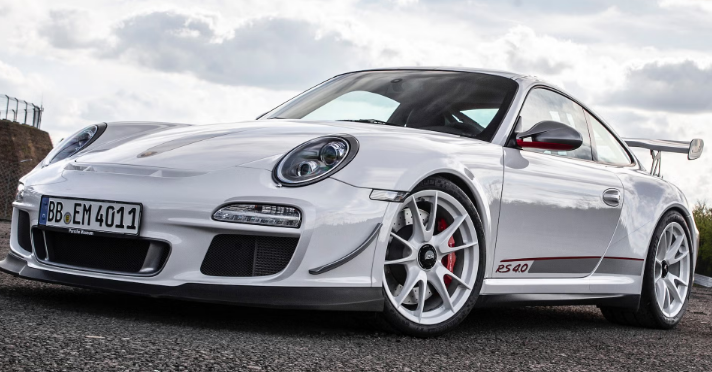
But a true Porsche 911 comparison reveals massive philosophical differences beneath the skin. The RS 4.0 was forged for track dominance. Its aggressive dive planes and massive rear wing generate real downforce, telegraphing its motorsport intentions. Conversely, the 911 R and S/T are unashamedly optimized for the street. Furthermore, the RS 4.0 is the only car in this trio to feature hydraulic steering, an analog touchpoint that many purists argue has never been bettered by modern electric racks.
Wheelbase geometry also plays a pivotal role. Between the 997 and 991 generations, engineers extended the wheelbase by over four inches to enhance high-speed stability. The 911 R masked this extra length through the clever use of rear-wheel steering. However, in a bold move for the S/T, Porsche ripped the rear-wheel-steering system out entirely to save weight and maximize the purity of feedback.
The 997 GT3 RS 4.0: Mechanical Brilliance
Dropping into the cabin of the 997 GT3 RS 4.0 is like stepping into a time machine. The switchgear, the analog dials, and the overall dash architecture unapologetically reflect an era when infotainment screens were an afterthought. The origins of this interior trace back to the late 1990s, and it shows. But you do not buy one of the best modern Porsche 911 models to look at a navigation screen.
Twist the key on the left, and the 4.0-liter Mezger barks into life with a harsh, metallic rattle. There is no artificial sound enhancement here; it is pure, mechanical clatter. Engaging first gear requires real physical effort. The clutch is heavy, demanding deliberate input, and the stubby shifter slots into the gates with the resistance of a rifle bolt. This tactile, heavy-duty feel forms the bedrock of the RS 4.0’s legendary status.
Out on the road, the RS 4.0 wastes no time establishing its dominance in this Porsche 911 comparison. The ride is unyielding. It sniffs out cambers and transmits every surface imperfection directly to your palms and spine. Its track-bred DNA is impossible to ignore. Yet, it is this exact lack of compromise that makes it so intoxicating. The car communicates with an immediacy that modern vehicles have almost entirely engineered out.
Above 6,000 RPM, the exhaust note transforms into a piercing, motorsport howl. By the time you execute a high-RPM upshift at 8,500 RPM, you are entirely consumed by the experience. Unlike the standard 3.8-liter GT3 of its era, the 4.0-liter unit delivers a massive swell of mid-range torque, allowing you to pull hard out of tight corners without constantly dancing on the shifter. It is a car that demands your total focus, rewarding you with an analog thrill that leaves you breathless and wondering how any newer model could possibly eclipse it.
The 911 R: The Revelation of Usability
Stepping directly from the RS 4.0 into the 911 R provides the single biggest shock of this Porsche 911 comparison. If you ever doubted Porsche’s claim that the R was specifically optimized for grand touring and backroad joy rather than lap times, it takes precisely one mile to become a believer.
The cabin feels lightyears ahead in refinement. The steering wheel, lifted from the 918 Spyder hypercar, is a tactile delight. But the real revelation is the chassis tuning. The clutch is noticeably lighter, the gearshift is slicker, and the suspension compliance is downright astonishing. Compared to the hyper-caffeinated RS 4.0, the 911 R glides over broken pavement. While none of these are intended to be daily drivers, the 911 R could effortlessly play that role if required. The tire roar is subdued, and the overall ride quality is brilliantly judged.
When pushing hard, the differences become starker. The RS 4.0 requires heel-and-toe precision, while the 911 R features a flawless auto-blip downshift function (which can be turned off). The 911 R allows you to cover massive distances at high speeds without the physical fatigue induced by the 997. The rear-wheel steering gives it a hyper-agile turn-in, completely masking the longer wheelbase. However, the steering feedback, while excellent for an electric setup, feels highly polished and synthesized next to the gritty, granular hydraulic rack of the 4.0.
Yet, the 911 R holds a trump card that I did not see coming. Among the hardcore Porsche cognoscenti, it is practically heresy to speak against the Mezger engine, but in this specific Porsche 911 comparison, I actually found myself preferring the engine in the R. It spins up with a fraction more freedom, feels slightly more eager at the top of the tachometer, and produces an induction wail that is undeniably sweeter.
The 911 S/T: The Apex of Modern Evolution
Which brings us back to the 911 S/T. After experiencing the raw violence of the RS 4.0 and the polished grace of the 911 R, how does the newest contender hold up in this ultimate Porsche 911 comparison?
The S/T’s ability to decimate a backroad is awe-inspiring. While the horsepower figures on paper only show incremental gains, the reality is entirely different. By pairing the fire-breathing engine from the current 992 GT3 RS with aggressively shortened gear ratios and a lightweight clutch, the S/T accelerates with a ferocity that leaves the other two trailing in its wake. The engine is a masterpiece—a genuine race motor barely tamed for the street.
Going into this test, I worried that removing the rear-wheel steering would make the 992 chassis feel cumbersome. It doesn’t. Because the S/T utilizes the double-wishbone front suspension setup from the latest GT3—whereas the older cars rely on MacPherson struts—the front-end bite is telepathic. It doesn’t need rear-steer to pivot into a corner; the mechanical grip at the front axle handles the rotation beautifully.
In terms of suspension tuning, the S/T finds the elusive middle ground. It is more tied down and focused than the 911 R, but significantly more forgiving than the bone-shaking RS 4.0. For many buyers looking to secure the ultimate piece of Stuttgart metal, positioning the S/T precisely between its two illustrious ancestors is a stroke of genius. Any comprehensive Porsche 911 S/T review will conclude that it is the most capable, technically advanced road car Porsche has ever built.
Choosing the Ultimate Champion
Drawing a definitive conclusion in a Porsche 911 comparison of this magnitude is agonizing. These are not just cars; they are cultural touchstones in the automotive world. They represent the absolute zenith of the manual transmission sports cars segment.
If we look at this objectively, the 911 S/T is the “best” car here. It is undeniably the fastest, it features the most sophisticated suspension architecture, its interior seamlessly blends modern tech with heritage design, and it covers ground at a pace the older cars simply cannot match. If you are shopping the luxury sports cars USA market for the ultimate modern weapon, the S/T is the logical peak.
However, if I were handed the keys to just one to keep forever, it wouldn’t be the S/T.
The 911 R makes a tremendously powerful argument for itself. The metric of a great sports car is often defined by how much joy it brings multiplied by how often you actually want to drive it. By that formula, the 911 R is the winner. It is usable, comfortable, and endlessly charming. If I owned one, and if I didn’t care about preserving its value in the Porsche investment cars portfolio, I would rack up tens of thousands of miles in it and cherish every single one.
By contrast, the GT3 RS 4.0 is the car I would undeniably drive the least. It demands a specific mood, an empty road, and a driver willing to expend real physical and mental energy. It is uncompromising and exhausting.
Yet, when all logic is stripped away, the RS 4.0 is the victor of this Porsche 911 comparison. The rarity—only 600 units ever produced compared to 991 for the R and 1,963 for the S/T—certainly helps its investment profile. But the true value of the 4.0 lies in its soul. It is about how a machine communicates with its driver on a cellular level.
When you finish a drive in the RS 4.0, pull into the garage, and turn off the ignition, you don’t just walk away. You sit there in the carbon bucket seat, listening to the exhaust ping as it cools, replaying every rev-matched downshift and high-speed sweeper in your mind. It imprints itself on your memory in a way that the newer, more polished cars simply cannot replicate.
The 997 GT3 RS 4.0 is not just the greatest car in this ultimate Porsche 911 comparison; it remains the most spectacular production driver’s car built this century.
Are you ready to elevate your own garage? Whether you are hunting for a blue-chip air-cooled classic or looking to source a modern GT-division masterpiece, sign up for our exclusive enthusiast newsletter today to get market insights, deep-dive reviews, and expert buying advice delivered directly to your inbox.