
Beyond the Polestar US Sales Ban: Decoupling, Security, and the Future of Global EVs
The automotive landscape is currently undergoing a seismic geopolitical shift, and the recent Polestar US sales ban serves as the definitive fracture point for international trade and mobility. After an extensive, highly publicized review by the Department of Commerce, the Swedish-born, Chinese-backed electric vehicle manufacturer has officially confirmed it will not appeal its impending exile from the American market. For industry analysts who have watched the steady tightening of US electric vehicle market policy over the past decade, this outcome is both shocking in its finality and entirely predictable in its execution. We are no longer operating in an era of borderless technological integration; we have entered an era of digital protectionism.
Effectively, the Polestar US sales ban dictates that starting with the 2027 model year, the brand can no longer market, import, or deliver new vehicles stateside. The immediate corporate response has been a complete strategic pivot toward a massive European EV market expansion, leaving American consumers, a burgeoning dealership network, and thousands of early adopters in a state of sudden, localized transition. As a strategy analyst with ten years embedded in automotive supply chain dynamics, I view this abrupt exit not merely as a localized corporate setback, but as the clearest signal yet that rigorous smart car cybersecurity compliance is rewriting the rules of global automotive commerce from the ground up.
The Regulatory Genesis of the Polestar US Sales Ban
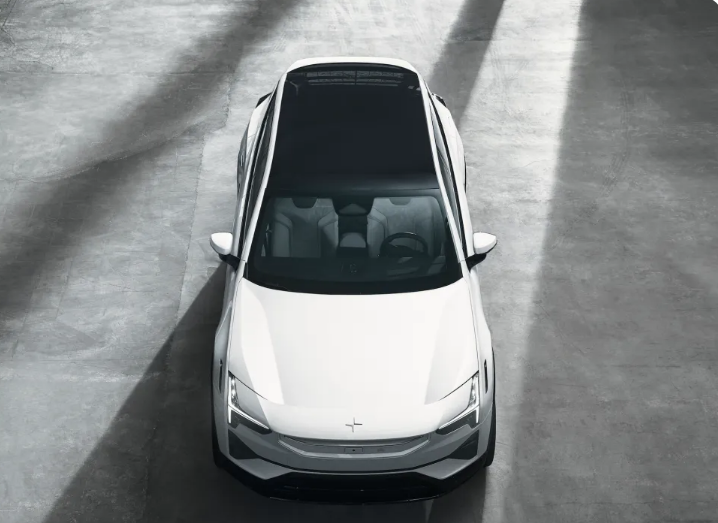
To comprehend the sheer scale and economic gravity of the Polestar US sales ban, we must critically examine the regulatory architecture that precipitated it. The direct catalyst is the highly controversial U.S. Connected Vehicles Rule—a sweeping federal mandate explicitly designed to restrict the import and sale of vehicles equipped with internet-connected technology linked to foreign adversaries, primarily China and Russia. Modern electric vehicles are no longer traditional cars; they are effectively rolling data centers processing terabytes of information every hour. The Commerce Department’s rationale centers on the undeniable premise that advanced cameras, LiDAR systems, localized GPS modules, and high-speed telematics suites could theoretically be weaponized for unauthorized espionage, infrastructure mapping, or even disrupted en masse via remote access.
Because Polestar relies heavily on its parent company Geely’s hardware architecture and underlying software ecosystems, the brand found itself directly in the crosshairs of this aggressive connected vehicle regulation. Historically, physical assembly locations dictated tariffs, import duties, and market viability. However, the Polestar US sales ban proves that the origin code of a vehicle’s software and the nationality of its parent company’s servers are now the primary metrics for market access. This marks a fundamental evolution in automotive supply chain decoupling, proving that digital provenance now heavily outweighs traditional manufacturing geography in the eyes of federal regulators.
The Volvo Anomaly and the Evolving Geely Auto EV Strategy
One of the most heavily scrutinized elements surrounding the Polestar US sales ban is the stark, almost jarring contrast in how federal regulators treated Polestar’s direct corporate sibling, Volvo. Both premium brands operate under the vast financial umbrella of Geely Auto. They share platforms, engineering resources, and even manufacturing facilities. Yet Volvo secured the necessary authorizations to bypass the restriction and continue its North American operations. How does one brand survive and thrive while the other faces a terminal Polestar US sales ban? The answer lies in the deep, often opaque nuances of corporate governance, lobbying efficacy, and highly localized technology stacks.
Volvo successfully demonstrated a sufficient isolation of its critical software infrastructure, engaging in aggressive, transparent dialogue with U.S. officials and demonstrating distinct, verifiable operational firewalls. This critical divergence forces a massive realignment of the broader Geely Auto EV strategy. Moving forward, Geely must logically treat the American market as a fundamentally hostile regulatory environment for its heavily integrated subsidiary brands. They will likely utilize Volvo as their sole, highly protected bridgehead in North America, while routing heavily integrated brands like Polestar entirely away from the continent. Consequently, the Polestar US sales ban establishes a vital precedent regarding Volvo connected cars national security optics versus the perceived vulnerabilities of newer EV entities deeply tied to overseas tech consortiums.
Immediate Ramifications for Current Owners and Residual Values
Whenever a prominent manufacturer abruptly exits a massive geographic market, the immediate fallout lands squarely on the shoulders of the consumer base. Despite the Polestar US sales ban effectively ending the brand’s future in the States, current owners and lessees of models like the popular Polestar 2 and the newly introduced Polestar 3 are legally protected under existing consumer frameworks. The corporate leadership has explicitly stated that current customer support will remain uninterrupted and existing warranties will be honored. However, the harsh reality of the automotive aftermarket tells a slightly more complex and financially volatile story.
First, we must critically address long-term EV warranty coverage solutions. While corporate promises guarantee that factory warranties will be honored, the logistical reality of maintaining a robust service network for a discontinued brand often leads to elongated repair times, specialized technician shortages, and severe parts scarcity. Furthermore, the Polestar US sales ban is highly likely to disrupt electric vehicle insurance rates for current American owners. Insurance actuaries price premiums meticulously based on repairability and rapid parts availability. As localized distribution centers scale down their inventory footprints over the coming years, replacement components will inevitably become costlier and slower to source, driving those electric vehicle insurance rates upward for the remaining fleet.
For drivers currently holding active lease agreements, understanding comprehensive EV lease transfer options might quickly become a priority if they wish to exit the brand prematurely to avoid steep residual value depreciation. Historically, “orphan brands” suffer severe, accelerated depreciation on the secondary market. If you are an owner assessing the direct financial impact of the Polestar US sales ban, securing third-party EV warranty coverage solutions while proactively investigating early EV lease transfer options could significantly mitigate your upcoming financial exposure.
The Ripple Effect on US Electric Vehicle Market Policy and Local Hubs
Zooming out from the immediate consumer level, the Polestar US sales ban fundamentally alters the competitive equilibrium of the entire domestic automotive sector. For years, progressive states with aggressive green mobility initiatives relied on a diverse, highly competitive global marketplace to drive down consumer costs and spur innovation. In highly concentrated regions like the lucrative Los Angeles EV market—historically the ultimate bellwether for American electric mobility adoption—the sudden, mandated removal of a premium competitor actively stifles pricing pressure on domestic manufacturers.
State-level legislative mandates, such as the exceptionally strict California zero-emission vehicle compliance framework, demand a massive, uninterrupted influx of battery-electric vehicles to meet impending carbon reduction deadlines over the next decade. The Polestar US sales ban forcibly removes a critical, high-volume premium player from that delicate equation. This is particularly painful for enthusiasts and the broader industry, as the highly anticipated Polestar 4 SUV coupé and the stunning flagship Polestar 6 roadster are now permanently sidelined from U.S. showrooms. This blunt regulatory action essentially forces affluent buyers to look elsewhere, rapidly accelerating the search for the best luxury EV alternatives.
Premium brands like Rivian, Lucid, Porsche, BMW, and Mercedes-Benz stand to directly absorb the lucrative market share left behind by the Polestar US sales ban. As high-net-worth consumers pivot aggressively toward these best luxury EV alternatives, domestic legacy automakers gain a momentary, artificial reprieve from overseas pricing pressure. However, true, lasting innovation requires fierce, unyielding global competition. Shielding the domestic market through stringent connected vehicle regulation might temporarily secure data networks, but it risks heavily isolating American manufacturers from the rapid, relentless technological advancements occurring globally—particularly in solid-state battery chemistry and unified software integration.
Shifting the Paradigm: The European EV Market Expansion
With the American door now firmly, legally shut, corporate survival for the Swedish marque mandates a hyper-focused, incredibly aggressive European EV market expansion. In recent financial quarters, sales data already indicated a heavy tilt away from North America, with over ninety percent of Polestar’s total global volume being generated outside the United States. While the Polestar US sales ban is undeniably a bruising public relations nightmare and a strategic defeat on the global stage, it is far from a fatal blow to the company’s overall ledger. Europe presents a vastly different regulatory ecosystem and consumer environment—one that is currently far more receptive to the brand’s unique blend of minimalist Scandinavian design and immense Chinese manufacturing efficiency.
The European automotive landscape, however, is not without its own severe friction points. E.U. tariffs on Chinese-built EVs remain a significant and growing financial hurdle. Yet, crucially, they function merely as an economic tariff rather than an outright, impenetrable prohibition like the Polestar US sales ban. To maximize their footprint and profitability across the Atlantic, I expect to see Polestar pivot heavily into B2B operations, aggressively pursuing massive commercial EV fleet management contracts. European municipalities, government agencies, and massive corporate logistics networks are rapidly electrifying to meet strict E.U. emissions targets. Securing high-volume, long-term commercial EV fleet management deals will provide the reliable, steady revenue stream required to quickly offset the absolute loss of American retail buyers.
This mandated European EV market expansion will force the brand to rapidly localize its physical supply chains, perhaps shifting a far greater percentage of assembly and component sourcing to its European facilities to cleverly circumvent steep import duties. In a strategic sense, the Polestar US sales ban essentially serves as the painful but necessary catalyst for the company to fully realize its core identity as a Euro-centric mobility provider, decisively severing the immense financial distraction of attempting to penetrate an increasingly hostile and unpredictable American regulatory perimeter.
The Broader Geopolitical and Economic Forecast
As an industry veteran analyzing the long-term trajectory of smart mobility, I view the Polestar US sales ban not as an isolated, one-off administrative action, but as the opening salvo in a prolonged, highly disruptive era of technological protectionism. The utopian era of the truly “global car”—a vehicle designed seamlessly for every market using a unified, planetary supply chain—is officially dead. Moving forward, the automotive industry will violently fracture into localized regional technological blocs. We are witnessing real-time, undeniable automotive supply chain decoupling, where global manufacturers must now fund and develop distinct, non-overlapping software architectures, data centers, and telematics suites specifically tailored for Western versus Eastern markets.
This incredibly inefficient dual-track development process will astronomically increase baseline research and development costs across the entire sector. Consequently, the underlying mechanics of the Polestar US sales ban serve as a stark preview of the regulatory friction that will inevitably drive up the baseline cost of producing electric vehicles worldwide. When automakers can no longer achieve true global economies of scale with a single, unified software platform due to strict, localized smart car cybersecurity compliance mandates, those massive developmental inefficiencies are always passed directly to the end consumer. For American buyers currently navigating the market, this means keeping a very close, highly critical eye on EV financing rates 2026, as the rising cost of consumer borrowing directly intersects with naturally inflating vehicle MSRPs driven by supply chain fracturing.
With the impending, legally mandated departure of this major premium player, authorized dealerships and independent auto brokers will likely offer incredibly aggressive closeout incentives, deep price cuts, and subsidized leases on remaining 2025 and 2026 inventory to clear their lots before the deadline. While financially enticing on the surface, savvy buyers must carefully weigh these immediate discounts against the long-term, structural realities highlighted by the Polestar US sales ban. While current EV financing rates 2026 might look exceptionally favorable for a heavily discounted, outgoing Polestar 3, the true total cost of ownership—when factoring in steadily rising electric vehicle insurance rates and highly unpredictable, likely suppressed secondary market residual values—requires careful, conservative financial modeling before signing a contract.
Final Thoughts on a Fractured Ecosystem
The sheer finality and uncompromising nature of the Polestar US sales ban forces a permanent, industry-wide reevaluation of exactly how we define a modern automaker’s origin and operational identity. It is no longer simply about where the sheet metal is stamped, where the assembly line resides, or where the raw battery cells are forged; market access in the modern era is now entirely dictated by where the proprietary code is compiled, where the data is stored, and exactly which geopolitical corporate entity holds the master digital keys to the servers. The Polestar US sales ban guarantees, without a shadow of a doubt, that the American roadways of the 2030s will look vastly different than we optimistically projected just five short years ago—heavily insulated by invisible, digital regulatory moats that explicitly prioritize national security and data sovereignty over open market globalization.
As we navigate this complex, unprecedented era of forced automotive supply chain decoupling, the strategic fallout from the Polestar US sales ban will echo loudly through every executive boardroom from Detroit to Stuttgart to Tokyo. The fundamental rules of automotive engagement have permanently, irreversibly changed. For large-scale fleet operators, institutional industry investors, and individual premium auto buyers alike, adapting to this rigid new landscape requires proactive strategy, expert foresight, and a willingness to look deeply beyond the sleek sheet metal and directly into the very code that powers our future mobility.
If you are an executive currently managing a large-scale commercial fleet transition, or a consumer carefully weighing the long-term risks of your next premium vehicle purchase in light of these sweeping, historic regulatory changes, you cannot afford to navigate this transition blind. Subscribe to our deep-dive mobility strategy newsletter today for exclusive, data-driven analysis on future EV policies, or contact our dedicated consulting team for a personalized, comprehensive assessment of exactly how this shifting geopolitical landscape directly impacts your automotive investments and future mobility strategy.