
2025 Porsche 911 GT3 S/C Review: Can a Drop-Top Truly Wear the GT3 Badge?
For over twenty-five years, the release of a new Porsche 911 GT3 has followed a beautifully predictable script: more downforce, immense grip, sharper dynamics, and an uncompromising focus on lap times. It is the undisputed benchmark for street-legal track weapons. So, when Weissach unveiled the new Porsche 911 GT3 S/C—a convertible variant—the collective gasp from automotive purists was audible worldwide. Removing the roof from a homologation-special track car feels dangerously close to automotive heresy.
To understand if this open-air machine could possibly honor its legendary lineage, I packed my bags for Stuttgart. My mission was simple: interrogate the minds behind the machine and push the Porsche 911 GT3 S/C to its absolute limits to see where it stands in the 2025 high-performance landscape.
Engineering the Unthinkable: Lightweighting a Convertible
Before firing up the engine, we have to address the elephant in the room. Historically, chopping the roof off a sports car introduces a nightmare of compromises. You gain weight from the reinforced chassis and convertible top mechanisms, while losing vital structural rigidity. For a car bearing the GT3 badge, sloppiness is a cardinal sin.
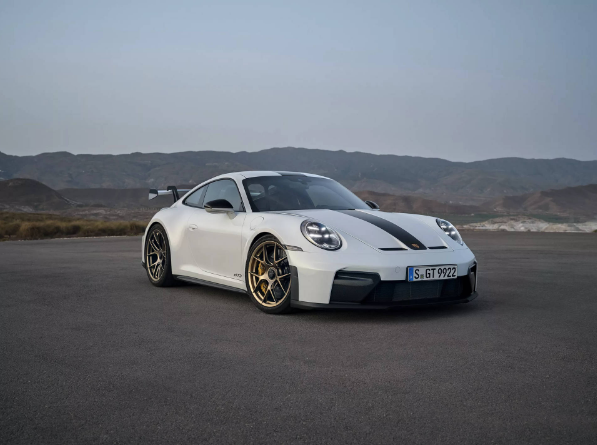
When I sat down with Andreas Preuninger, the mastermind behind Porsche’s GT division, he was uncompromising. The Porsche 911 GT3 S/C only received the green light under two strict conditions: it had to weigh less than 3,300 pounds fully fueled, and it had to deliver the exact dynamic precision expected of any GT product.
Under the rear decklid sits the crown jewel: a naturally aspirated flat-six engine displacing 4.0 liters and screaming to a 9,000-rpm redline. Pumping out 503 horsepower, this motor is mated exclusively to a glorious six-speed manual gearbox—there is no PDK automatic option here. The raw numbers are staggering for a drop-top. It rockets from 0-60 mph in just 3.9 seconds and tops out at 194 mph.
To offset the 80 pounds gained by the folding roof mechanism and convertible body shell, Porsche’s engineers raided the ultra-exclusive S/T parts bin. They integrated carbon fiber doors, a carbon front trunk lid, and forged magnesium wheels. The roof structure itself utilizes magnesium panels to keep the center of gravity impressively low, while Porsche Ceramic Composite Brakes (PCCB) come standard to shave crucial unsprung mass.
The foundation is actually a modified Carrera 4 body-in-white, chosen because the space normally reserved for the front differential allowed Porsche to install a larger fuel tank. Thanks to aggressive bracing, the torsional stiffness of the Porsche 911 GT3 S/C hits an astonishing 27,000 Nm/degree. That is on par with modern fixed-roof aluminum chassis sports cars, virtually eliminating the dreaded cowl shake that plagues lesser convertibles.
The Driving Experience: Rewiring Your Muscle Memory
Slide into the standard carbon bucket seats—an absolute must for feeling the chassis communication—and the cabin feels instantly familiar. Yet, my first hour behind the wheel of the Porsche 911 GT3 S/C was surprisingly humbling.
Leaving the hotel to carve through the sweeping A-roads of the Schwäbische Alb, I found myself fighting the car. I botched shifts, misjudged throttle inputs, and even stalled the 4.0-liter flat-six attempting to pull out of a scenic overlook. The issue wasn’t the car; it was my muscle memory. I had just spent weeks aggressively manhandling vintage sports cars, expecting to wrestle the steering and stomp the clutch.
The Porsche 911 GT3 S/C demands the exact opposite. Every control surface is hyper-calibrated. It doesn’t want to be forced; it wants to be finessed with millimeter precision.
Because it lacks a roof to insulate you from the mechanical symphony, you quickly realize this is not a grand tourer built for lazy Sunday cruising. At moderate speeds, the car feels like a coiled spring. It quivers with nervous energy, the rigid suspension and hair-trigger throttle constantly reminding you of the immense capability lying dormant underneath. It takes genuine focus to tune into the harmonic rhythm of the damping, the steering rack, and that naturally aspirated flat-six.
But once you cross that threshold, the experience is transcendent. Find an open, derestricted stretch of tarmac, plant your right foot, and the Porsche 911 GT3 S/C transforms. The rush of wind amplifies the mechanical wail of the engine in a way the fixed-roof coupe simply cannot match. Interestingly, Preuninger revealed that this is the most drift-friendly GT3 model ever produced, thanks to a subtly adjusted front-to-rear weight distribution. It may not generate the massive downforce of the winged GT3 RS, but the underbody aerodynamics and rear gurney flap still produce 35 pounds of positive downforce at speed—a massive improvement over the dangerous lift generated by typical convertibles.
Market Placement, Pricing, and The 2025 Landscape
As automotive trends shift toward heavy, hybridized, and electrified platforms, the Porsche 911 GT3 S/C stands out as a pure, analog masterpiece. Naturally, exclusivity and mechanical purity come at a premium.
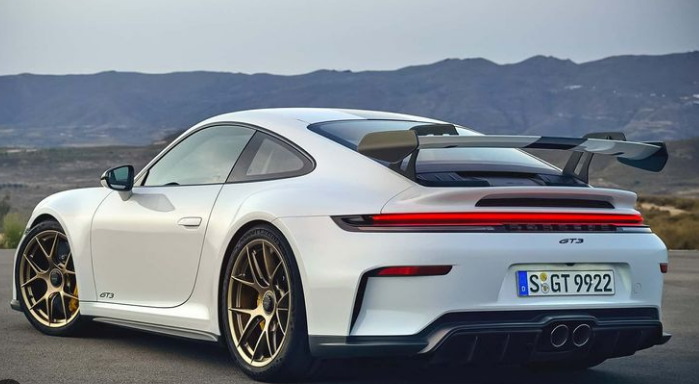
When evaluating the Porsche 911 GT3 price against the broader market, it sits in a fiercely competitive bracket of high-net-worth automotive investments. Buyers searching for luxury sports cars for sale are increasingly looking for vehicles that offer visceral engagement rather than just sterile speed. Whether you are browsing inventory at premier Porsche dealerships in Los Angeles, looking to arrange auto financing for luxury cars with strong residual values, or simply cross-shopping the best track cars 2025 has to offer, the GT3 S/C occupies a unique niche.
It completely redefines open-air performance. It isn’t just a status symbol for a Miami luxury car rental fleet; it is a legitimate precision tool. It is equally at home tearing up the canyons of California as it is pushing limits at high-speed track days in Texas. The removal of the roof hasn’t diluted the GT3 essence—it has distilled it, stripping away the physical barrier between the driver and the explosive mechanical drama happening just inches behind their ears.
Preuninger told me that the GT badge stands for “the most connected, immersive driving experience for either road or track.” After fully recalibrating my driving style to meet the demands of this relentless machine, I have to agree. The Porsche 911 GT3 S/C is not a compromise. It is an absolute triumph.
If you are ready to experience the ultimate fusion of open-air exhilaration and uncompromised track precision, don’t wait. Reach out to your local Porsche authorized dealer today to inquire about allocations, configure your ideal specification, and secure your place behind the wheel of this modern classic.