



Speeding Beneath the Giants: How the Porsche Cayenne Electric Redefined High-Speed Engineering alongside Stratolaunch Roc
For those of us who have spent over a decade navigating the intricacies of high-performance automotive engineering, track testing usually involves controlled environments, strict telemetric monitoring, and predictable variables. We measure lateral acceleration on skidpads, evaluate thermal management during repeated lap cycles, and fine-tune active aerodynamics inside whisper-quiet wind tunnels. Rarely, however, does a production chassis find itself thrust into an environment where traditional automotive metrics collide with aerospace dynamics.
Recently at the Mojave Air and Space Port, Porsche executed a high-speed validation test that shattered standard testing paradigms. Positioned on a scorching strip of tarmac in the high desert, an early-production prototype of the all-electric Porsche Cayenne matched stride with Stratolaunch Roc—the largest flying aircraft on Earth by wingspan. Driven by legendary Porsche factory racer Patrick Long, the high-performance electric SUV sprinted alongside the six-engine twin-fuselage giant at speeds exceeding 160 mph, executing precise formation maneuvers directly beneath the aircraft’s massive center wing section.
Beyond the cinematic spectacle, this joint endeavor between Porsche’s chassis development division and Stratolaunch’s flight control team represents a pivotal moment in EV powertrain performance, high-speed stability, and real-world thermal endurance.
High-Performance Electric Vehicles and Aerospace Aerodynamics
When evaluating high-performance luxury SUVs in 2026, the boundary between automotive design and aeronautical engineering has become increasingly blurred. The physical forces acting upon a vehicle traveling at 160 mph require advanced active aerodynamic management, precise downforce distribution, and structural rigidity capable of handling extreme turbulent wake patterns.
During the Mojave testing sequence, the Porsche Cayenne Electric was subjected to airflow conditions virtually unheard of in standard automotive proving grounds. Operating directly adjacent to—and eventually threading beneath—a twin-fuselage aircraft with a 385-foot wingspan creates severe localized pressure differentials. As Stratolaunch Roc’s six Pratt & Whitney PW4056 turbofan engines spool up for rotation, the wake vortex and thrust slipstream generate immense air displacement.
A lesser vehicle subjected to these dynamic crosswinds and thermal slipstreams could experience severe high-speed lift or dynamic instability. Yet, Porsche’s active aerodynamic system (PAA) adapted dynamically. Utilizing adaptive front air intake flaps, a variable rear roof spoiler, and active air suspension with continuous damper control, the platform maintained unwavering ground contact. Interestingly, telemetric reports from the engineering team indicated that when the SUV slipped into the atmospheric pocket between Roc’s twin fuselages, it encountered a surprisingly stable aerodynamic envelope, effectively drafting within the aircraft’s pressure shadow.
Raw Power and Thermal Efficiency: Breaking Down the 1,139-Horsepower Electric Architecture
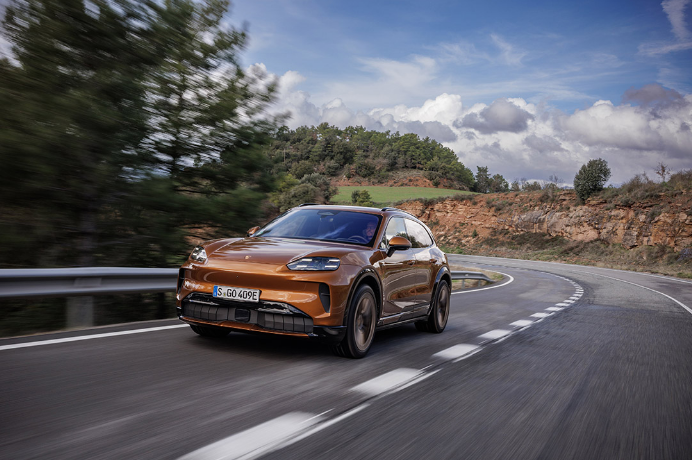
Achieving speeds in excess of 160 mph on a runway is relatively straightforward for modern supercar platforms; doing so repeatedly while carrying dynamic ballast, crew personnel, and telemetry gear demands an entirely different tier of electric vehicle technology. The top-tier electric Cayenne variant utilizes a cutting-edge, high-voltage dual-motor powertrain capable of producing a jaw-dropping peak output of 1,139 horsepower.
To understand how this translates to real-world performance, one must look at the key electrical and mechanical innovations underpinning Zuffenhausen’s latest EV flagship:
800-Volt Premium Platform Electric (PPE) Architecture: High-voltage systems minimize current draw, significantly reducing heat build-up within the wiring harness and stator windings during continuous high-amp discharges.
Permanently Excited Synchronous Motors (PSM): Featuring hair-pin winding technology, these electric motors maximize copper fill density within the stator, delivering immediate torque delivery up to maximum rotor speeds without thermal degradation.
Silicon Carbide (SiC) Inverters: Deployed on the rear axle, SiC power electronics drastically decrease switching losses, enhancing overall power density and inverter efficiency during rapid acceleration passes.
Direct-Liquid Battery Cooling: A highly complex thermal management circuit continuously conditions the high-capacity lithium-ion pack, preventing cell degradation during maximum discharge cycles.
During four full-throttle acceleration and deceleration passes alongside the aircraft, the test vehicle consumed a mere 13% of its total battery charge. From a performance engineering perspective, this statistic is far more impressive than the top speed itself. Sustaining repetitive ultra-high-speed sprints without triggering thermal throttling or rapid SOC (state of charge) depletion proves that next-generation thermal management systems have finally overcome the historical limits of high-performance EVs.
Precision Telemetry and Radio-Guided Maneuvers
Executing a formation drive alongside an aircraft preparing for rotation or touchdown requires microscopic precision. Unlike typical automotive head-to-head drag races, this operation demanded absolute synchronization between air and ground crews.
The mechanical challenge was further complicated by visual reference limitations. As driver Patrick Long noted following the test, timing a high-speed merge during aircraft touchdown presented a unique spatial challenge. The immense scale of Stratolaunch Roc renders conventional ground visual cues almost useless, making it exceptionally difficult to gauge relative velocity and closing distance during the approach phase.
To mitigate operational risk and adhere to strict FAA aviation safety protocols, Porsche integrated Stratolaunch crew chiefs Shauntel Williams and John McKinney directly into the Cayenne’s passenger cabin. Equipped with direct multi-channel aviation headsets, the crew chiefs maintained instantaneous radio comms with the flight deck, relaying real-time airspeed, throttle settings, and glide-slope telemetry to the driver.
This level of inter-industry collaboration highlights the growing crossover between automotive safety technology and flight control mechanics. Advanced traction control systems, such as Porsche Torque Vectoring Plus (PTV+), worked continuously behind the scenes to execute micro-adjustments at each wheel, ensuring that any lateral shift caused by surface variations or turbulent ground wash was corrected in milliseconds without requiring dramatic steering corrections from the driver.
Comparing the Giants: Ground Speed vs. Flight Velocity
To appreciate the raw scale of this high-speed synchronization, it helps to analyze the technical specifications of both machines operating on the Mojave runway:
| Metric / Feature | Porsche Cayenne Electric Prototype | Stratolaunch Roc Testbed Aircraft |
|---|---|---|
| Primary Powerplant | Dual Permanently Excited Synchronous Motors | 6x Pratt & Whitney PW4056 Turbofans |
| Total Power / Thrust | 1,139 Horsepower (850 kW) | 340,000 lbs Total Thrust |
| Top Test Speed / Rotation Velocity | 160+ MPH (Ground Speed) | 140–165 Knots (Rotation Speed) |
| Platform Structure | High-Strength Steel/Aluminum Hybrid Chassis | Twin-Fuselage All-Carbon Composite |
| System Voltage / Architecture | Advanced 800-Volt Architecture | Independent Dual-Cockpit Avionics |
Matching the rotation velocity of an aircraft weighing over 1,200,000 pounds requires sustained torque across the entire rpm curve. While internal combustion engines require complex gear shifts to remain within their optimal powerband, the electric SUV’s instant torque delivery allowed it to match Roc’s sudden acceleration shifts instantly, staying side-by-side from static launch all the way to airborne rotation.
The EV Paradigm Shift: From Commuter Efficiency to Ultimate Performance
For years, skeptics argued that high-voltage battery systems were ill-suited for sustained high-speed driving, severe environmental conditions, or heavy-duty utility applications. The Mojave test serves as definitive proof that modern luxury electric SUVs have transcended early limitations.
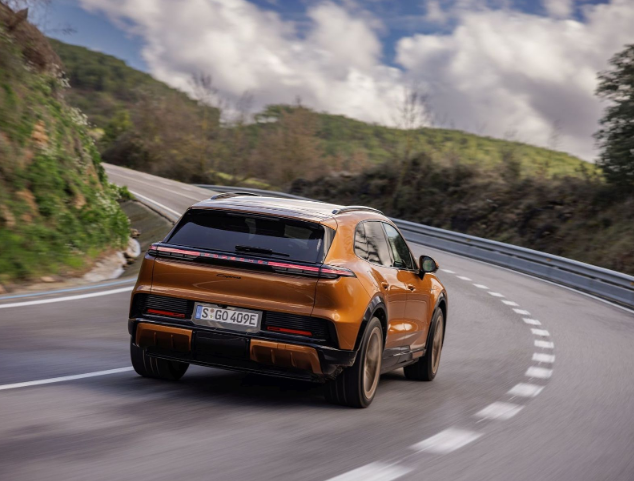
Automotive market trends in 2025 and 2026 clearly demonstrate a pivot toward high-performance electric vehicles that offer uncompromising capability. Drivers seeking ultimate speed, luxury refinement, and long-range convenience no longer have to settle for compromise. Whether navigating steep alpine passes, handling track-day stresses, or sprinting down a desert runway, the fusion of intelligent all-wheel-drive vectoring and active thermal control has established a new benchmark for what a luxury SUV can achieve.
Furthermore, testing under such extreme ambient desert temperatures validates the durability of next-generation drivetrain components. As electric architecture continues to evolve, the lessons learned from specialized field trials like the Stratolaunch project directly inform the calibration of production stability control, battery management software, and regenerative braking algorithms.
What Lies Ahead for High-Performance Mobility
The extraordinary rendezvous between the Porsche Cayenne Electric and Stratolaunch Roc is more than just a captivating video snippet; it is a milestone in modern engineering. It demonstrates that when automotive passion meets aerospace innovation, the boundaries of speed, stability, and vehicle control are fundamentally redefined.
As electric mobility continues to push beyond traditional limits, staying ahead of the curve requires an understanding of where luxury performance, cutting-edge technology, and real-world capability intersect.
Experience the Future of High-Performance Driving
If you are ready to elevate your automotive journey and explore the absolute pinnacle of luxury performance, engineering innovation, and next-generation electric mobility, your path begins here. Visit your authorized luxury performance dealer today to schedule a personalized consultation, configure your bespoke high-performance vehicle, or reserve an exclusive test-drive experience. Discover how world-class engineering can transform every drive into an unforgettable thrill—take the next step and contact our specialist team now.